




























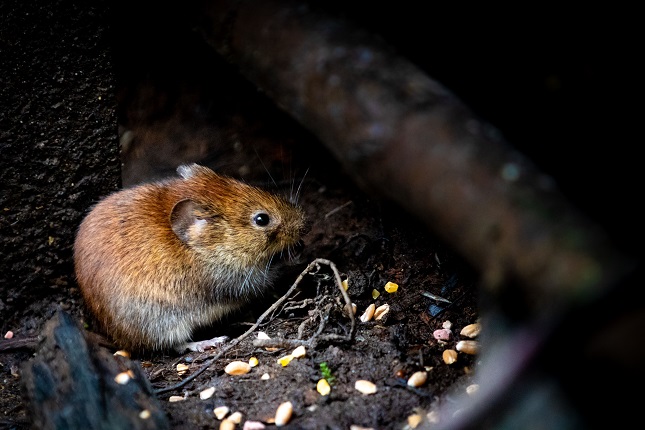
Having to find out about a rat infestation in your house means that your house has been ruined. There is nothing worse than that sinking feeling you get when you have to be in your house and cook in your kitchen, knowing that those rodents are scavenging your precious space.
Rats go through dark cramped spaces, so they won’t walk through your front door for you to find them. While you are ignorant of your home’s broken gaps and hidden spaces, those pests have found the perfect sanctuary. Lizards and other rodents may be seen slithering in and out of your view, but you will never catch that out of sight, out of mind, breeding organism. By the time you see the first rat, it is a huge infestation.
The worst thing to do is think that they will just leave and resolve themselves. What’s reasonable is to get them out before they destroy your walls and insulation and infect you with disease. It is best to act right away if you see any of the obvious infestations in your house.
1) Big Piles of Rat Droppings
First, keep an eye out for big piles of droppings. The discovery of droppings is often a big tell-tale sign! Unlike mouse droppings, rat droppings are much larger and more cylindrical (blunt) in shape. Rat droppings are around a 1/2 inch to a full inch long.
Rats are very predictable as well. You can expect to find droppings in the same areas day after day since they take the same route day after day too. Keep an eye out for them behind the stove, in the corners of the food pantry, and on the floorboards in the attic.
2) Scratching Sounds at Night
You may also be able to hear scratching sounds. Since rats are nocturnal, they do a lot of their running around while you are trying to go to sleep. When everything else in the house is completely still, you may be able to hear scratching and scurrying that is coming from the walls and above the ceiling.
Roof rats tend to be much more active in the attic, while Norway rats are more active in the basement and crawl spaces. Norway rats tend to be the reason you hear the scratching and scurrying that is coming from the subfloor.
3) Fresh Bite Marks and Gnawing Damage
Also check for more recent bite marks. Rats must gnaw on materials constantly throughout their life as their front incisors grow continuously. The more damage caused by greater gnawing indicates a more significant infestation.
Active infestations will show fresh bite marks and gnawing on storage bins, drywall, or even baseboards. Thick wood and heavy vinyl are easily chewed and made into larger entry holes.
4) Chewed Electrical Wires
Rodents gnawing on wires and spouting electrical issues creates great concern for house and home safety. EPA home safety sheets rank rodents as a top, yet hidden, cause of electrical fires.
Gnawing on wires causes insulative coating to be stripped and spout electrical shorts on nearby appliances. Gnawing and burrowing pests need to be eliminated before a fire caused by electrical shorts occurs.
5) Oily Smudge Marks on Walls
Oily and greasy smudges on a wall and baseboards are another sign of a rat infestation. Tracking paths with their whiskers causes rats, who have very poor eyesight, to follow the edges of walls and leave marks.
Greasy fur transfers dirt and other filth on walls. If smudges are repeatedly encountered in the same area, that is a sign of their main travel route.
6) Strong Ammonia Odor
Another sign of serious rat infestations is the smell of things getting worse which presents as a strong stinging stale ammonia smell that hits you in the nose. Unfortunately, rat waste taints the air and it’s due to the urine wasting air with ammonia.
If you step into the basement, attic, and laundry room, and the air has a tainted odor that refuses to leave, there is a nearby rat nest. This especially applies when you open the air to exhaust the musty smell.
7) Shredded Nesting Materials
Rats recently had babies if you find nests looking like a mound of trash that has been shredded into piles. Soft things are in high demand for building rat nests.
Some soft things that rats find are shredded cardboard, insulation, fabric, and old newspapers. The nests are built to hide and you will usually find them behind or inside the void of the big storage cabinets that remain cluttered or are left unused.
8) Burrows and Tunnels Around the Yard
Rats love to dig too. Check outside for hidden burrows and underneath the wooden back yard decks and sealed concrete foundations.
Clear circular holes that are 2-4 inches wide are a telltale sign of digging. A yard full of tunnels is a good sign of an infestation.
9) Unusual Pet Behavior
Pay attention when your pets start behaving abnormally. Long before you find out that there is a rat or hear any sign of it from the ceiling, your dogs and cats will have known.
Pets are extremely observant and can hear and smell things that you cannot. Your pets are detecting something moving when they stare at walls, scratch the fridge, or growl in a seemingly empty room.
By calling some Rat Removal Experts, you can put an end to your pets’ frustration and your issue at the same time.
10) Seeing a Rat During the Day
If you see a rat out in the open, you know you are in trouble. Rats love staying hidden, which is why, if you see a rat out in the open in the day, there is a very serious problem.
It shows that the nest is overcrowded and the weaker and smaller rats are being forced out to the open to find food. Don’t be surprised when you realize how serious of a problem the infestation is.
Conclusion
A few cheap grocery store traps, hardware store traps, or bait blocks won’t adequately address a real rat problem. Unlike everyone else, professional wildlife crews don’t just set the traps for the visible rats.
They figure out the entry points on the exterior side of your home, close them with heavy metal mesh, and properly dispose of the hazardous materials so they can’t come back.
It is better and cheaper to deal with the problem while you can see the signs, since it is a large and difficult issue to fix when damages to the house and safety of your family are at stake in the long run.