





























Biotechnology has always involved a fair amount of trial and error. Researchers develop an idea, test it, examine the results, and make adjustments before trying again. It’s a process that has produced remarkable discoveries, but it can also be expensive and frustratingly slow.
Now, advances in DNA synthesis, laboratory automation and artificial intelligence are beginning to change how that work happens. For businesses investing in biotechnology, these developments could mean shorter research cycles, greater flexibility and new opportunities to turn scientific ideas into commercially useful products.
Research Is Becoming More About Speed and Flexibility
Traditional laboratory research often involves waiting for materials, repeating experiments, and working around technical limitations. Even when scientists know exactly what they want to investigate, obtaining the necessary biological components can take time.
That creates challenges for biotechnology companies operating in competitive markets. Delays during early research can affect development schedules, investment decisions, and the speed at which promising products reach later testing stages.
New technologies are helping researchers approach experiments more efficiently. Rather than treating every stage as a separate process, businesses are looking for ways to connect design, production, and testing more closely.
DNA Synthesis Is Opening Up New Possibilities
DNA synthesis is an important part of modern biotechnology. It allows scientists to create specified DNA sequences for research, supporting work in areas such as medicine, agriculture, and industrial biotechnology.
Conventional chemical synthesis methods have practical limitations, including challenges associated with producing longer DNA sequences.
Emerging approaches such as enzymatic DNA synthesis technology are exploring how enzymes can be used to manufacture DNA, potentially improving the flexibility of sequence production and addressing some limitations of established methods.
For biotechnology businesses, developments in this area could influence how quickly researchers move from a digital sequence design to a physical DNA molecule ready for experimentation.
Of course, commercial value depends on more than scientific potential. Reliability, cost, accuracy and scalability remain essential considerations.
Automation Is Changing Everyday Laboratory Work
Laboratory automation isn’t entirely new, but the technology is becoming increasingly capable.
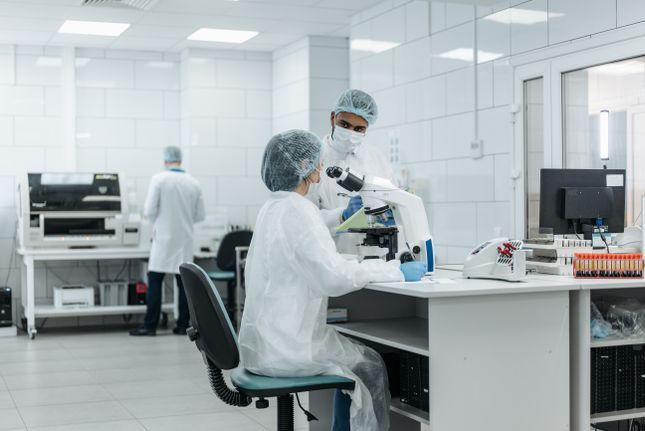
Robotic liquid-handling systems, automated testing equipment and connected laboratory software can help researchers manage repetitive tasks that previously required considerable manual effort.
This doesn’t remove scientists from the process. Instead, it can free up time for experimental design, interpreting results, and investigating unexpected findings.
For smaller biotechnology companies, however, the investment needs careful consideration. Expensive equipment only makes business sense when its capabilities match actual research requirements.
Artificial Intelligence Is Helping Researchers Ask Better Questions
AI is also attracting attention across biotechnology, especially in areas involving large datasets and complex biological relationships.
Machine learning tools can assist with analyzing experimental results, identifying patterns and predicting which research directions might deserve further investigation.
That could help businesses prioritize promising experiments instead of spreading resources across too many possibilities.
Still, computational predictions aren’t the same as laboratory evidence. Results need proper validation, and researchers must understand the limitations of the models they’re using.
The Commercial Opportunities Come With Challenges
Faster research could benefit businesses developing diagnostics, therapeutics, agricultural products and industrial biological processes. However, promising technology doesn’t automatically translate into a profitable product.
Companies must consider intellectual property, regulatory requirements, manufacturing costs, and the practical difficulties of scaling laboratory discoveries.
Investors are also likely to look beyond impressive technical demonstrations. They want evidence that an innovation solves a meaningful problem and can support a sustainable business.
A Different Approach to Biotechnology Research
The next wave of biotechnology innovation isn’t about replacing traditional scientific thinking. It’s about giving researchers better tools to investigate ideas and reducing some of the obstacles that slow progress.
Businesses that combine emerging technologies with sound research practices may find themselves better equipped to explore opportunities and respond to changing markets.
The real breakthrough won’t simply be making experiments faster. It will be helping companies turn more of their promising scientific ideas into developments that make a difference outside the laboratory.