





























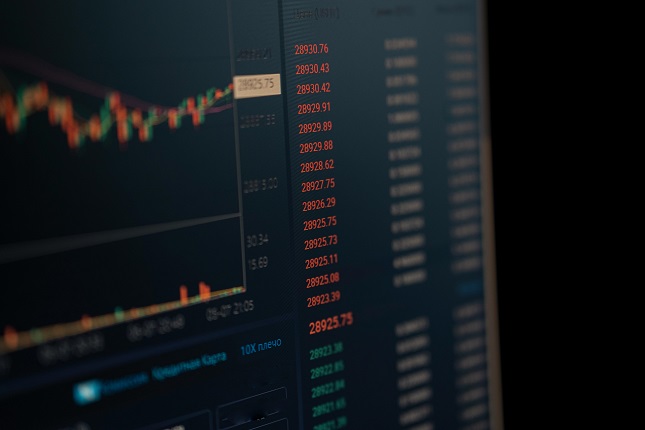
For most of crypto’s history, derivatives trading has been a centralized exchange story. Binance, Bybit, and OKX dominated perpetual futures volume, and decentralized alternatives were a rounding error by comparison. That is no longer the case. Perpetual DEX volume on Solana has grown dramatically over the past eighteen months, and for certain trading profiles, the on-chain venues now offer better execution than their centralized competitors.
The shift is driven by specific Solana-native protocols — Jupiter Perps, Drift, Adrena, Zeta, and others — that have collectively built out deep liquidity and execution quality that rival the major centralized venues. Aggregate perp DEX volume on Solana crossed $1.2 trillion cumulative in early 2026 and continues to grow at double-digit monthly rates.
What makes this migration sustainable rather than temporary is that the user experience has genuinely caught up. A trader opening a position on a well-designed Solana perp DEX now sees execution latency measured in hundreds of milliseconds, tight spreads, deep books on major pairs, and funding rates that are competitive with CEX benchmarks. That is a different product than the on-chain derivatives experience of even two years ago. Teams running professional trading operations on these venues frequently rely on specialized infrastructure like RPC Fast to keep their submission latency below the level that would erode their edge.
Why the user experience matters more than the ideology
Early on-chain derivatives platforms pitched themselves primarily on self-custody and trustlessness. Those properties matter, but they do not drive adoption on their own — most traders care first about execution quality, tight fees, and deep liquidity, and consider self-custody a secondary benefit. The newest generation of Solana perp DEXes has figured out how to deliver all four.
The execution improvements come from multiple directions. Solana’s base-layer finality is fast enough that orders can be placed and filled within the latency window that professional traders expect. Oracle infrastructure (Pyth in particular) provides price feeds with millisecond-scale update frequency. Liquidity-provider models have matured to the point where capital efficiency on a top Solana perp DEX is comparable to a centralized venue.
The trust advantages are real but secondary. A trader using an on-chain derivatives platform does not have to worry about an exchange freezing withdrawals, adjusting leverage mid-crisis, or socializing losses from a counterparty failure. Those advantages become visible in tail-risk scenarios — and since 2022, traders have had enough visceral experience with centralized exchange risk to weight them heavily.
The feature set that closed the gap
Several technical capabilities have come together to make Solana perp DEXes viable for professional trading:
- Oracle-based execution with sub-second price updates, matching the refresh rates of centralized venues
- Cross-margin and portfolio margining systems that allow efficient capital use across multiple positions
- Isolated risk pools that prevent one trader’s blowup from affecting others on the platform
- Advanced order types (limit, stop-loss, take-profit, trailing stops) that previously only existed on CEXes
- API-accessible endpoints designed for algorithmic traders rather than only manual users
The last point is underrated. A platform that supports algorithmic trading well will always attract more volume than one that does not, because market-making and arbitrage flows become possible. Solana perp DEXes with well-designed APIs have all seen significant volume from quantitative trading firms that would never trade manually.
The latency arms race
As perp DEX volume on Solana has grown, the competitive dynamics among traders have shifted. Market making, arbitrage, and liquidation bots all compete on execution speed, and the infrastructure underneath each trader increasingly determines whether their strategy is profitable.
The latency profile of a competitive trader on a Solana perp DEX now looks more like what high-frequency trading looks like in traditional finance. Three components dominate the end-to-end latency:
- Price feed arrival — how fast the trader sees oracle updates
- Decision and construction — time to evaluate the opportunity and build a transaction
- Transaction inclusion — delay between submission and confirmation
Small improvements on any of these stages compound into meaningful edge. That is why professional traders on Solana treat infrastructure quality as a first-order cost of doing business rather than a commodity.
What this means for the broader market
The rise of Solana perp DEXes has implications beyond the platforms themselves. Liquidity that was previously captured by centralized exchanges is now distributed across on-chain venues, which affects price discovery, funding rate dynamics, and the economics of market-making.
For individual traders, the practical takeaway is that the gap between on-chain and centralized execution has narrowed enough that self-custody is no longer a meaningful performance sacrifice. For institutional traders, the takeaway is that on-chain venues are now serious enough to demand real infrastructure strategy — execution quality on-chain is determined by the same kinds of infrastructure decisions that determine execution quality on any low-latency platform.
The centralized exchanges are not going away. But for the first time in crypto’s history, they have real competition from decentralized alternatives, and the competitive pressure is showing up in fee compression, feature parity, and user experience improvements on both sides. That is good for everyone who trades.