





























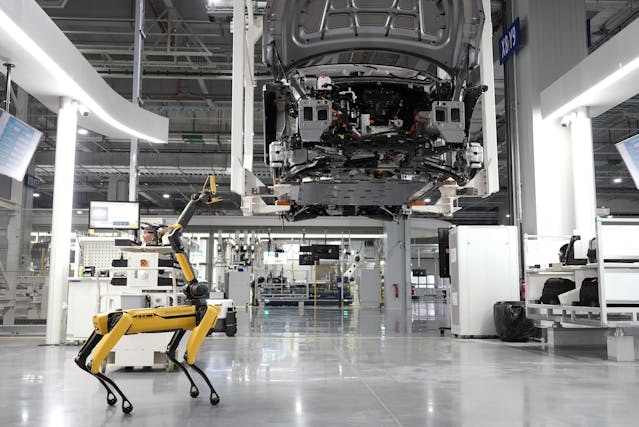
In today’s fast-paced business world, companies aren’t just competing on products or services anymore, they’re competing on how efficiently they can operate. The pressure to deliver exceptional results while keeping costs under control has never been more intense. That’s where automation comes in, transforming how businesses across every industry streamline their operations and eliminate costly errors. By letting automated systems handle the repetitive, time-consuming tasks that can bog down even the best teams, companies free up their people to focus on what really matters: strategy, innovation, and building meaningful relationships. This shift isn’t simply about upgrading a few processes here and there. It’s a fundamental reimagining of how modern businesses approach efficiency and growth. As market dynamics grow increasingly complex, the companies that master automation aren’t just surviving, they’re setting the pace that others struggle to match.
Streamlining Repetitive Tasks and Workflows
Repetitive tasks are the energy vampires of the business world. Data entry, invoice processing, inventory tracking, endless report generation, these activities drain employee time and enthusiasm in equal measure. Automation tackles this problem head-on by executing these workflows with speed and accuracy that human hands simply can’t sustain hour after hour. When businesses automate these routine activities, something remarkable happens.
Reducing Human Error and Improving Quality
Here’s an uncomfortable truth: mistakes happen, no matter how skilled or well-trained your team might be. Fatigue sets in during long shifts. Distractions creep in during complex tasks. Simple oversight occurs even with the best intentions.
Enhancing Data Collection and Analysis
Modern businesses are drowning in data. Customer interactions, operational processes, market activities, all generating information at volumes that would’ve seemed impossible just a decade ago. Yet here’s the challenge: without the right tools, extracting meaningful insights from this data tsunami remains incredibly difficult. Automation excels at collecting, organizing, and analyzing information at scales that would overwhelm even large human teams. Automated monitoring systems track performance metrics in real-time, alerting managers to problems or opportunities as they emerge rather than during those monthly reviews when it’s already too late. Customer relationship management systems automatically capture every interaction, building comprehensive behavioral profiles that enable genuinely personalized service delivery. The speed of automated data analysis means businesses can respond to market shifts before competitors even recognize what’s happening. Predictive analytics take this further, forecasting demand fluctuations, identifying equipment maintenance needs before failures occur, and optimizing resource allocation with mathematical precision. This transformation, from intuition-based decision-making to evidence-driven strategy, significantly improves outcomes across every business function.
Scaling Operations Without Proportional Cost Increases
Traditional business growth comes with a painful catch: you typically need to hire more people, expand your infrastructure, and absorb higher overhead costs just to handle increased volume. It’s a linear relationship that creates real financial barriers to expansion. Automation fundamentally changes this equation. Operations can scale dramatically without corresponding increases in headcount or expenses. Think about it, a well-designed chatbot can handle thousands of simultaneous customer inquiries that would require dozens of human agents working around the clock. Automated marketing platforms can personalize communications for millions of prospects without adding a single person to your team. Manufacturing facilities equipped with robotic systems can boost production volumes by adjusting parameters and schedules rather than going through lengthy hiring processes. When monitoring complex industrial processes, professionals who need to visualize and control distributed systems rely on HMI SCADA software to manage operations efficiently across multiple locations. This scalability advantage allows businesses to pursue aggressive growth strategies while maintaining healthy profit margins and competitive pricing. Cloud-based automation platforms amplify these benefits even further, eliminating infrastructure constraints entirely and enabling companies to expand computational resources instantly as demands increase. In markets where rapid adaptation determines who wins and who gets left behind, this efficient scalability represents a critical competitive edge.
Improving Customer Experience and Response Times
Customer patience has evaporated in the digital age. People expect immediate responses, personalized service, and 24/7 availability, and they’re not shy about taking their business elsewhere when these expectations aren’t met. Automation enables businesses to deliver on these elevated demands by providing instant responses and consistent service quality across every touchpoint. Automated order processing systems confirm purchases immediately and provide real-time tracking information, eliminating the anxiety that comes with uncertainty.
Optimizing Resource Allocation and Cost Management
Managing resources effectively means constantly juggling competing priorities while adapting to conditions that never stop changing. It’s exhausting, and even the best managers can’t process all the variables that impact optimal decision-making. Automation brings sophisticated optimization capabilities to resource allocation, analyzing countless factors simultaneously to identify the most efficient deployment of assets, personnel, and capital. Scheduling systems automatically coordinate employee shifts based on predicted demand patterns, skill requirements, and labor regulations, maximizing utilization while preventing the burnout that comes from overwork.
Conclusion
The integration of automation into business operations isn’t just another technology trend that’ll fade in a few years, it represents a fundamental evolution in how organizations create value and compete. The benefits we’ve explored, from eliminating soul-crushing repetitive tasks to enabling unprecedented scalability, compound over time, creating advantages that grow stronger year after year. Companies that strategically embrace automation position themselves to operate with greater agility, lower costs, and superior quality compared to competitors still relying on traditional manual processes. Now, this journey toward automation isn’t always smooth.