





























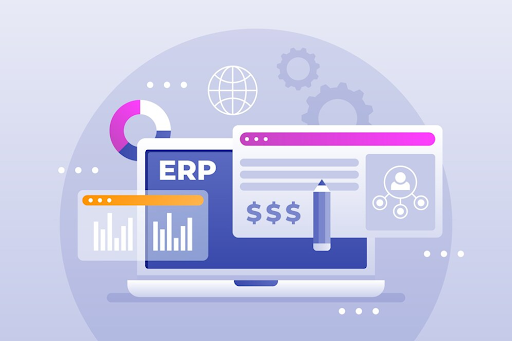
Enterprise Resource Planning (ERP) software has become an invaluable tool for retailers looking to manage their operations efficiently. As the retail landscape grows increasingly complex, ERP systems help retailers consolidate data, automate processes, and gain the visibility needed to thrive.
Understanding Retail ERPs
Retail ERP software integrates the various functions of a retail business onto a single, centralized platform. This includes point-of-sale (POS), inventory and order management, accounting and finance, procurement, merchandising, warehouse management, e-commerce, CRM, reporting and analytics, and more.
Key Benefits
Some of the major benefits offered by retail ERP software development services include:
- Centralized Data and Increased Visibility: ERP software for retail business centralizes sales, inventory, financials, and customer data onto a single version of truth accessible company-wide in real-time. This increased visibility enables better-informed decision-making.
- Improved Efficiency: By standardizing, automating, and integrating systems and processes, retail ERP software reduces redundant tasks and manual errors. This allows retailers to do more with existing resources.
- Enhanced Collaboration: With data integrated across the organization, retail ERP systems allow various departments to better collaborate towards unified goals.
- Omnichannel Retail Management: Leading retail ERP solutions allow you to manage and fulfill orders from any sales channel — in-store, online, mobile, catalog, etc. — all from a single platform.
- Scalability for Growth: Cloud-based ERP retail software is easy to scale with the changing operational needs you have as you grow and expand into new markets or channels.
- Informed Decision Making: Real-time actionable insights into KPIs to help you make better strategic decisions are powered by robust analytics and reports.
- Improved Customer Experiences: ERP for retail gives retailers the inventory visibility and effective order fulfillment across channels to deliver consistent, high quality customer experiences.
It is clearly a good thing for both traditional and modern retailers to have ERP systems. However, even that is not enough to reap these benefits unless you choose the right solution for your specific needs.
Choosing the Right Retail ERP Software
Fifty percent of businesses are purchasing, upgrading, or planning to update their ERP systems in the near future. With many retail ERP solutions in the market, it can get overwhelming to find the ideal platform for your operations. Keep the following factors in mind while evaluating options:
Your Operational Requirements
Examine your key retail processes and pinpoint where they are painful. It is used to decide what must have modules and features in your ERP system are. Audit your existing software systems as well and plan integrations.
Deployment Method
While on-premise ERP software for the retail industry involves large upfront costs, cloud-based software follows a subscription model and is easier to scale. Evaluate your budget, IT resources, and infrastructure before choosing a deployment method.
Ease of Use
The system should have an intuitive user interface for rapid user adoption across the retail organization — at store locations as well as in warehouses, offices, etc. Complex systems lead to lackluster user adoption.
Data Security
With increasing cyber threats, stringent data security is non-negotiable when choosing retail management software. Opt for solutions with robust access control, encryption, redundancy, and disaster recovery capabilities.
Scalability Needs
The ERP system should be capable of scaling in line with your retail expansion plans without requiring complex and expensive upgrades.
Total Cost of Ownership
While comparing solutions, analyze both obvious and hidden costs involved in implementing, maintaining, upgrading, and customizing the ERP platform over the years.
Company Size and Location
The ideal ERP for retail software for a small regional retailer will differ greatly from that of a global retail giant. Choose a system that best aligns with your company’s size, geographic footprint, and long-term vision.
Industry Specialization
Seeking an industry-specific ERP tailored to retailers helps minimize customizations and accelerate implementation. However, if relevant, evaluate support for multi-vertical operations.
By benchmarking solutions against these parameters, retailers can zero in on the right ERP software for their specific needs and environment. This lays a robust technology foundation for achieving operational excellence.
Key Aspects of Retail ERP Implementation
Implementing an ERP solution is a complex, multi-phase process requiring careful planning and execution. Following best practices can help retailers maximize value while minimizing disruptions.
Structured Implementation Approach
The industry standard roadmap for ERP implementation consists of the following key phases:
- Planning: Define implementation goals, scope, timeline, budget, and success metrics.
- Analysis & Design: Document business requirements and processes, configure software and plan integrations.
- Testing: Perform user acceptance testing across various scenarios.
- Data Migration: Strategically migrate data from legacy systems into the ERP.
- Training: Conduct training sessions for users across departments.
- Go-Live: Officially roll out the ERP software for organization-wide use post-testing.
- Ongoing Support: Continuously optimize processes and provide training and support for maximum adoption.
This structured approach prevents common pitfalls like lack of user adoption and ensures you capture full ROI from the retail management system.
Executive Buy-In
It is vital for organizational leadership to actively sponsor the ERP implementation by conveying its strategic importance, allocating resources, and motivating employee adoption. Lack of executive buy-in is a leading cause of ERP for retail industry failure.
Employee Involvement
Actively involve personnel across functions in the solution analysis and testing phases. This allows you to configure the system as per actual on-ground needs rather than theoretical assumptions alone. It also secures user buy-in.
Data Management
Since go-live success depends heavily on clean, accurate data migration, assign sufficient resources for strategically migrating data from legacy systems into the new ERP platform. Data mapping and cleansing are tedious but very impactful.
Customizations
Limit customizations to an absolute minimum, even if it means adopting some best practices inherent in the system rather than forcing old ways of working. Customizations exponentially increase costs and complicate upgrades.
Incremental Rollout
While a single-instance, big bang rollout seems quicker, consider going live across locations and functions in multiple phases. This allows for addressing adoption issues as they arise rather than dealing with a widespread failure.
Following these guidelines helps retailers maximize the value of their ERP investment with lower disruption and greater user adoption.
Top Retail ERP Software Solutions
Now that we’ve covered the key factors to consider when choosing and implementing a retail ERP system let us discuss some leading options in the market:
1) SAP S/4HANA Retail
SAP is a market leader in ERP software and their suite of software is called SAP S/4HANA Retail for large enterprises. It includes every facet of retail from core retail processes, supply chain logistics, omnichannel sales, finance, merchandising and store operations. SAP retail solutions are used by global retailers such as Nike, Under Armour and Sephora.
2) Oracle Retail
Oracle is another ERP giant, and its omnichannel retail management suite for retail, Oracle Retail, is pretty robust. It contains POS specific applications, order brokering, inventory, merchandising and warehouse management. Leading brands like Levi’s, Pizza Hut, and Toyota are customers.
3) Infor CloudSuite Retail
Infor Retail is a cloud based, end to end retail management platform for enterprise as well as midsize retailers. It brings data together from e-commerce, stores and the supply chain. Infor retail ERP is used by brands like Whole Foods, Marc Jacobs and Godiva.
4) Epicor Retail
Epicor Retail is a suite for mid-market retailers in verticals like apparel, footwear, electronics, etc. It helps automate processes from planning, POS, order processing, merchandising, accounting, etc., in one solution. Customers include New Balance, Sur La Table, and Olympus.
5) Retail Pro
Retail Pro provides an affordable integrated retail platform for small and mid-sized retailers. It offers centralized management for POS, inventory, purchase orders, customer data, promotions, employee timecards, and reporting. Customers include Sanrio, Papyrus, and General Nutrition Corporation (GNC).
This covers some of the top retail ERP systems in the market. But there are also many other options worth evaluating based on your specific operational needs and budget.
Key Takeaways
Some key takeaways from this guide on ERP for retail industry solutions:
- ERP software for retail businesses centralizes systems and provides enterprise-wide visibility to help retailers efficiently manage operations and deliver consistent omnichannel customer experiences.
- When selecting a retail ERP platform, carefully evaluate solutions against your needs, IT landscape, future growth plans and budget.
- Follow a structured implementation methodology focused on executive sponsorship, employee involvement, and incremental rollout.
- Limit customizations and integrate data strategically during implementation for a successful go-live.
- Based on your size and requirements, consider leading retail ERP vendors such as SAP, Oracle, Infor, Epicor and Retail Pro.
Implementing the right ERP solution by following best practices can prove tremendously valuable in managing the increasing complexity of omnichannel retail. The technology foundation sets retailers up for achieving operational excellence and sustainable growth.