

























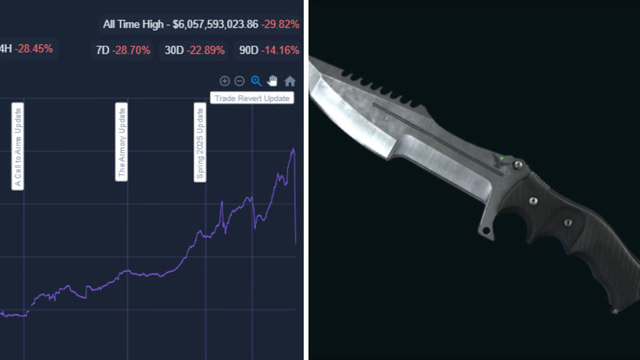
The CS2 skin economy is more than a cosmetic side feature of Counter-Strike 2. It has evolved into one of the most advanced and fascinating digital trading markets in the gaming world. Millions of players participate daily, exchanging virtual items with real monetary value, reacting to trends, scarcity, and community sentiment in ways that closely mirror traditional financial markets.
By examining how the CS2 skin market works, we can gain valuable insights into modern market intelligence, behavioral economics, and the future of virtual asset trading. This article breaks down the structure of the virtual item trading economy, explores key drivers behind price movements, and highlights what the CS2 ecosystem teaches us about digital markets as a whole – especially how players buy, hold, and sell CS2 skins in a fast-moving, data-driven marketplace where digital assets behave much like real-world investments.
What Is the CS2 Skin Economy?
At its core, the skin economy is a decentralized marketplace where players trade weapon skins, agents, stickers, and other cosmetic items. While Valve provides the infrastructure through Steam, pricing and demand are determined almost entirely by the community.
Each skin has:
- A fixed or limited supply
- A visible transaction history
- A fluctuating market price
This creates an organic system where CS2 skin market analysis becomes possible in real time. Unlike many digital goods in other games, CS2 skins can be freely traded, sold, or held as assets, giving them characteristics similar to commodities or collectibles.
Supply, Demand, and Artificial Scarcity
One of the most important lessons from the skin economy is how scarcity drives value – even when the product is entirely digital.
Skins become scarce through:
- Discontinued cases
- Time-limited drops
- Extremely rare float values or patterns
- Event-exclusive items
When supply is capped or slowly shrinking, demand pressure increases. This mirrors real-world markets like luxury goods, art, or limited-edition sneakers. In the CS2 ecosystem, scarcity is often artificial, but its impact on pricing is very real. This dynamic makes CS2 a live case study in how digital scarcity can be engineered and sustained within a virtual economy.
Market Psychology and Player Behavior
Prices in the skin economy are heavily influenced by emotion and perception. Hype, fear of missing out, and community trends play a massive role in valuation.
For example:
- A skin used by a professional player during a Major can spike in value overnight
- Rumors of case removal can cause panic buying
- Aesthetic trends shift demand between minimalist and flashy designs
These behaviors are not unique to gaming. They reflect broader patterns seen in stock markets, crypto trading, and NFT ecosystems. CS2 skin trading insights reveal that human psychology remains one of the strongest forces in any market – digital or physical.
Liquidity: Why CS2 Skins Function Like Real Assets
Liquidity is what separates a functioning market from a stagnant one. The skin economy benefits from exceptionally high liquidity due to:
- Millions of active users
- Constant item circulation
- Multiple third-party marketplaces
Highly liquid skins – such as popular AK-47 or AWP designs – can be sold quickly with minimal price slippage. This makes them attractive not only to players but also to traders who treat skins as short- or long-term holdings. In many ways, the virtual item trading economy of CS2 resembles a simplified version of financial markets, where blue-chip assets exist alongside speculative plays.
Data Transparency and Market Intelligence
One of the most striking aspects of the CS2 skin market is transparency. Price histories, sales volume, and market depth are often publicly available. This allows players to perform detailed CS2 skin market analysis without specialized tools, compare trends across platforms, and make informed decisions when they buy CS2 skins or plan long-term strategies within the virtual item trading economy.
Traders can:
- Track historical price trends
- Identify seasonal patterns
- Compare item performance across time
This accessibility teaches an important lesson: modern market intelligence thrives on data visibility. When participants have access to reliable information, markets become more efficient – even in a purely digital environment.
The Role of Platforms Like Skin.Land
As the skin economy grows more complex, platforms that provide structure, security, and clarity become increasingly important. This is where best CS2 skin sites like Skin.Land plays a key role.
Skin.Land offers:
- Transparent pricing based on market data
- Secure trading mechanisms integrated with Steam
- Tools that simplify buying, selling, and evaluating skins
For traders and players alike, such platforms reduce friction and risk while making the digital trading process more accessible. In a fast-moving virtual economy, trusted intermediaries help transform raw data into actionable insight.
Speculation vs. Long-Term Value
Not all skins are equal when it comes to long-term potential. Some items are driven purely by short-term hype, while others steadily gain value over years.
Long-term performers often share traits such as:
- Timeless design
- Association with iconic weapons
- Limited or discontinued supply
Speculative skins, on the other hand, may surge quickly but crash just as fast. This distinction teaches an important investment lesson: sustainable value is built on fundamentals, even in digital markets.
The CS2 skin economy highlights how successful traders balance speculation with patience – an approach applicable far beyond gaming.
Lessons for Modern Digital Markets
The CS2 ecosystem provides a blueprint for how future digital economies may function. As virtual assets become more common – whether in gaming, metaverses, or digital collectibles – the principles seen in CS2 will likely repeat.
Key takeaways include:
- Digital ownership can carry real value
- Scarcity and demand apply regardless of physical form
- Transparent data empowers smarter participants
- Community trust is essential for market stability
These lessons extend into broader discussions around Web3, digital property rights, and online marketplaces.
Why the CS2 Skin Economy Matters
What began as cosmetic customization has become a living laboratory for market behavior. The CS2 skin economy demonstrates that digital goods can sustain complex, intelligent markets driven by human decision-making, data analysis, and cultural trends.
By studying CS2 skin trading insights, we gain a clearer understanding of how modern digital markets operate – and how future economies may be shaped by virtual assets rather than physical ones. In this sense, CS2 is not just a game. It is a case study in how value, trust, and intelligence evolve in an increasingly digital world.