































Table Of Contents
- Why Local Search Is Changing
- Why Your Website Still Matters
- Make Services Easy To Understand
- Strengthen Local Signals
- Answer Real Customer Questions
- Build Trust With Proof
- Fix Technical Details
- Test AI Search Results
- Follow a 90-Day Plan
- Avoid Common Mistakes
Local customers are no longer limited to typing short searches such as “plumber near me.” They are asking detailed questions through Google, map apps, voice tools, and AI assistants before deciding who to call. A practical data-driven digital marketing approach starts with understanding those questions and making the answers easy to find on your own website.
For local service businesses, the goal is not to chase every new search feature. It is to create a clear, accurate, useful online presence that helps people compare options, understand what you do, and take the next step with confidence. That means focusing on the information a customer needs at the moment of decision: whether you handle the problem, where you work, how quickly you can respond, what qualifications you have, and how to get in touch.
Why Local Search Is Changing
Customers increasingly search by describing a situation. They may ask, “Who can repair a leaking water heater today?” or “Which electrician works on older homes nearby?” These searches require more context than a traditional keyword phrase, including urgency, service type, location, availability, and qualifications.
They may also compare practical details before contacting anyone, such as whether a contractor offers financing, handles commercial work, provides weekend appointments, or repairs a particular brand. A website that addresses these details directly can reduce uncertainty before the first phone call and help attract leads that are more likely to be a good fit.
Traditional local SEO still matters, but websites must also give search systems information they can read, compare, and summarize. Google’s new AI-powered Search features show how people can provide highly specific requirements and take actions related to local services.
Businesses that need help translating customer needs into a practical site strategy can benefit from SEO consulting services focused on clear content, accurate local information, and measurable lead quality rather than empty visibility metrics.
Why Your Website Still Matters
Your website is the central source of truth for your business. It should clearly explain your services, service area, hours, emergency availability, credentials, warranties, pricing guidance, common questions, and ways to call or book. A recent study found that business websites accounted for nearly 60 percent of Gemini local AI citations, making business websites a leading source in local AI results.
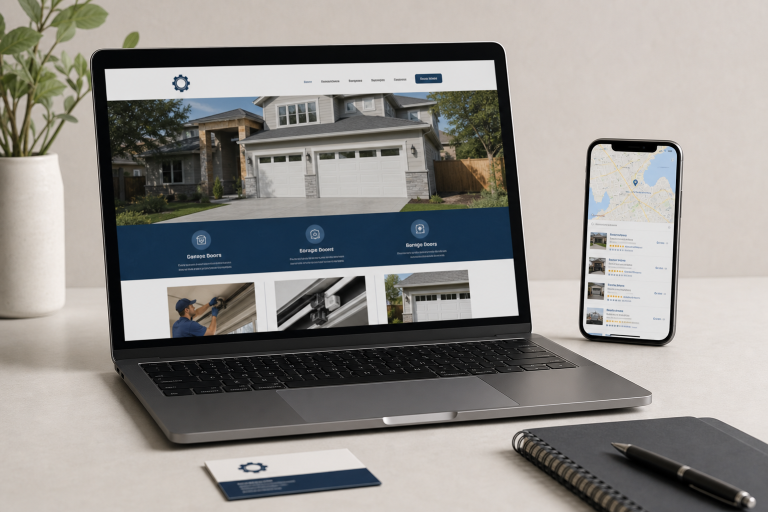
A useful site supports both machines and people. Search tools need clear facts, while homeowners and property managers need reassurance, proof, and an easy path to contact you. Your site should not force visitors to guess whether a service applies to their situation or whether they need to call a separate number for urgent work.
Unlike a social media post or a third-party directory listing, your website gives you control over the full customer journey. You can explain your process, set realistic expectations, show examples of completed work, and direct visitors to the page or action that best matches their needs.
Make Services Easy To Understand
Give every major service its own useful page. A long, vague list such as “plumbing, repairs, installations, and more” makes it hard for visitors to tell whether you solve their exact problem. It also gives search systems little meaningful detail to work with.
A strong service page can follow a simple structure:
- State the problem the service solves.
- Describe what the visit, repair, or project includes.
- List common signs a customer may need the service.
- Explain what happens next, including scheduling expectations.
- Answer the questions customers ask most often.
For example, a drain cleaning page can distinguish between a slow kitchen sink, a recurring main-line backup, and an emergency sewage issue. An HVAC replacement page can explain the evaluation process, common factors that affect installation scope, and why an on-site assessment may be necessary before giving a final quote.
Use plain language, not heavy jargon. Specific details such as equipment types you service, emergency limitations, or whether permits may be needed can differentiate the business without relying on unsupported “best” claims.
Strengthen Local Business Signals
Keep your business name, phone number, address or service area, hours, categories, descriptions, and photographs consistent across your website, Google Business Profile, directories, and social profiles. Conflicting information can create uncertainty for both customers and search systems.
Review these details whenever the business moves, changes phone systems, adjusts holiday hours, expands into a new area, or stops offering a service. Even small inconsistencies, such as an old suite number or a different spelling of the business name, can make it harder for customers to confirm they have reached the right company.
Service-area businesses should name the cities, counties, or neighborhoods they actually serve, along with travel limits or response expectations when relevant. Avoid publishing thin pages for every nearby city. If a location page is needed, add real value through local project examples, neighborhood conditions, travel information, or service-specific advice.
Answer Real Customer Questions
The best content often comes from questions people ask before they call. Publish practical cost guides, repair-versus-replace explanations, seasonal maintenance checklists, safety information, service comparisons, and before-and-after project summaries. Put the direct answer near the top, then provide supporting details.
Questions from customer service staff, technicians, sales calls, review responses, and estimate appointments are especially valuable because they reflect actual concerns. Group similar questions into useful pages rather than creating a separate short post for every minor variation. This approach can produce content that is easier to maintain and more helpful to readers.
Date information that may change, including seasonal recommendations, warranty terms, and local requirements. Have an experienced technician, manager, or owner review technical guidance before publication so the page reflects real-world experience rather than generic marketing copy.
Build Trust With Proof, Reviews, And Experience
People want evidence before inviting a service provider into their home or business. Add genuine team photos, project galleries, licenses, certifications, guarantees, customer reviews, staff answers, and short case studies. A useful case study explains the customer’s problem, the work completed, and the outcome.
Use real details without disclosing private customer information. A gallery caption can identify the service performed, the general type of property, and the result. If photos show specialized equipment, uniforms, safety procedures, or careful cleanup practices, they can also help customers understand the level of professionalism they can expect.
Proof is stronger than broad promotion. “We replaced a failed water heater on the same day after confirming the homeowner’s venting requirements” says more than “We provide exceptional service.” Respond to reviews calmly and professionally, especially when a customer is unhappy.
Fix The Technical Details
Technical basics help every visitor. Prioritize fast mobile loading, readable text, logical headings, descriptive page titles, useful image alt text, secure browsing, working forms and phone links, and simple navigation. Important details should appear as normal page text, not only inside images or complex scripts.
Check the site on a phone as well as a desktop computer. A customer dealing with an urgent repair may have little patience for a difficult form, a hidden phone number, a map that does not load, or a page that requires excessive scrolling before showing the next step.
Structured data can also clarify your business type, services, address, hours, and contact details. Use it to reinforce accurate on-page information, not as a shortcut for making claims that the website cannot support.
Test How AI Search Describes Your Business
Once a month, test several AI tools and standard search results using different customer scenarios. Ask about your key services, nearby locations, urgent needs, specialties, and qualifications. Record whether your business appears and whether its hours, service area, and offerings are described correctly.
Create a simple record of the searches used, the date tested, the result shown, and any source pages that appear to influence the answer. This makes it easier to identify recurring content gaps, such as a missing emergency-service explanation or unclear information about a specialty.
One result is only a snapshot, not proof of success or failure. Track patterns over time, then connect visibility efforts to calls, form submissions, booked jobs, and qualified leads. Never use fake reviews, misleading content, or false business information to influence results.
A Simple 90-Day Action Plan
Days 1-30: Clean Up The Foundation
- Review the homepage, services, contact details, and service areas.
- Fix broken links, outdated hours, and unclear descriptions.
- Make calling and booking options easy to find.
- Confirm that the same core business details appear consistently across major profiles.
Days 31-60: Add Useful Proof
- Publish answers to common customer questions.
- Add real projects, team details, qualifications, and limitations.
- Improve review response habits.
- Expand the most important service pages with practical process and scheduling details.
Days 61-90: Measure And Improve
- Test traditional and AI-assisted searches.
- Review leads, bookings, and local listing activity.
- Update pages that attract visits but do not produce action.
- Prioritize improvements that help qualified customers make a decision more easily.
Common Mistakes To Avoid
- Publishing large volumes of nearly identical location pages.
- Making vague claims without evidence.
- Leaving outdated phone numbers, hours, or service areas online.
- Relying only on social media profiles instead of maintaining a useful website.
- Writing for algorithms while ignoring customer concerns.
- Measuring traffic without evaluating calls, bookings, and lead quality.
- Publishing generic AI-written content without review from someone who understands the service.
Final Takeaway
Local service businesses do not need to predict every search change. They need to publish clear information, keep details accurate, show real experience, and make contacting the business simple. In 2026, clarity is a practical part of being found, understood, and trusted across search engines, maps, and AI tools.