





























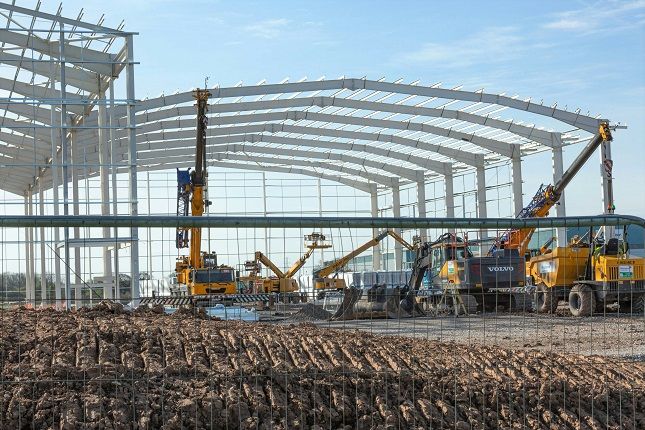
Ask a general contractor in Kansas City what’s changed most about commercial construction over the last decade, and steel usually comes up before anything else. Not steel as a niche industrial material, but steel as the default answer for warehouses, offices, data centers, and dozens of other building types that used to assume traditional stick-built construction as the starting point. That shift didn’t happen because metal buildings got cheaper, it happened because the industry’s priorities changed, and metal construction turned out to fit those new priorities remarkably well.
Looking at why that shift took hold, and where it’s headed next, says a lot about where commercial construction as a whole is actually going.
The Market Behind This Shift
It’s worth grounding this in real, current forecasting data rather than general impressions. According to The American Institute of Architects, spending on commercial facilities specifically is projected to rise 3.0% in 2026 and another 3.5% in 2027, notably outpacing the broader nonresidential construction sector, which AIA’s panel expects to grow only modestly overall. The forecast also points to particular strength in data centers and continued activity in warehouse and retail facilities.
That divergence matters. When commercial spending outpaces the rest of the industry, the pressure to build faster and more predictably intensifies, and that pressure is exactly what’s been steering more developers toward pre-engineered metal building systems.
Why Metal Buildings Answer That Pressure So Directly
A handful of specific advantages explain why pre-engineered metal buildings have become such a natural fit for this environment:
- Significantly faster timelines — factory-engineered components arrive ready for assembly, cutting weeks or months off a project compared to traditional stick-built construction
- More predictable costs — pre-engineered systems reduce the material waste and change-order surprises that often inflate traditional construction budgets
- Genuine design flexibility — modern metal building systems support large clear-span interiors, custom facades, and a wide range of architectural finishes, moving well past the plain rectangular box stereotype
- Strong long-term durability — steel structural systems resist pests, fire, and many of the maintenance issues that affect wood-framed commercial buildings over time
- Energy efficiency options — insulated panel systems and reflective roofing can meaningfully reduce a building’s long-term operating costs
None of these advantages exist in isolation, they compound, which is a major part of why metal buildings have moved from a specialty option into a genuinely mainstream commercial construction method.
Why Manufacturer-Certified Construction Matters So Much
This is what separates a metal building that performs well for decades from one that develops problems early. Not all pre-engineered systems are the same. Certified builders work with manufacturer-engineered components designed and tested to meet specific structural and roofing requirements.
For developers comparing a metal building contractor, certification is one factor worth examining alongside experience, engineering standards, and project history.
MAR Building Solutions is an example of a contractor working within a manufacturer-certified building system. That distinction matters because factory-engineered components, tested specifications, and established installation requirements can provide greater consistency throughout the construction process. It also gives developers a clearer framework for evaluating long-term durability rather than judging the finished structure on appearance alone.
Where Metal Buildings Are Showing Up Most
Pre-engineered metal buildings have found particular traction across several fast-growing commercial sectors. Warehousing and distribution centers benefit enormously from the large, column-free interiors metal systems can achieve.
Data centers, one of the fastest-growing segments in current construction forecasting, rely on metal building systems for the combination of speed and structural reliability these mission-critical facilities demand. Self-storage facilities, manufacturing plants, and even office and retail spaces have increasingly adopted metal construction as design options have expanded well beyond the industrial look historically associated with the category.
What This Means for Businesses Planning a Project
For businesses and developers weighing construction options, modern metal buildings offer more flexibility than the old perception of a basic industrial structure suggests. Key considerations include:
- Faster construction: Factory fabrication and streamlined assembly can help shorten project timelines.
- Cost predictability: Standardized components can make budgeting and planning more straightforward.
- Design flexibility: Metal systems can accommodate different layouts, uses, and interior configurations.
- Long-term durability: Properly engineered structures can withstand demanding commercial conditions.
- Future adaptability: Open floor plans and flexible structural systems can make it easier to modify or expand a building as business needs change.
For many commercial projects, these advantages make a properly engineered metal building a practical solution rather than a compromise.
Conclusion
Metal buildings are playing an increasingly central role in commercial construction‘s future because they directly answer what the current market actually demands: speed, cost predictability, durability, and enough design flexibility to fit an expanding range of commercial uses.
As commercial spending continues outpacing the broader nonresidential sector, the businesses and developers who understand what a properly certified, factory-engineered metal building system can deliver are positioned to move faster and build with more confidence than those still relying purely on traditional construction methods. For an industry under real pressure to build smarter and faster, metal buildings aren’t just keeping pace, they’re helping set it.