


























Guests have started noticing air the same way they notice noise or water pressure. A recent workplace survey found that 61 percent of respondents would trade other amenities for measurably fresher air, and hospitality operators are seeing a version of the same expectation show up in guest feedback, online reviews, and loyalty program comments. For engineering and facilities teams evaluating air ionization systems for odor control in buildings, that shift is changing how air quality gets budgeted and discussed, moving it from a maintenance line item to something closer to a brand standard.
Guest experience has become an air quality metric
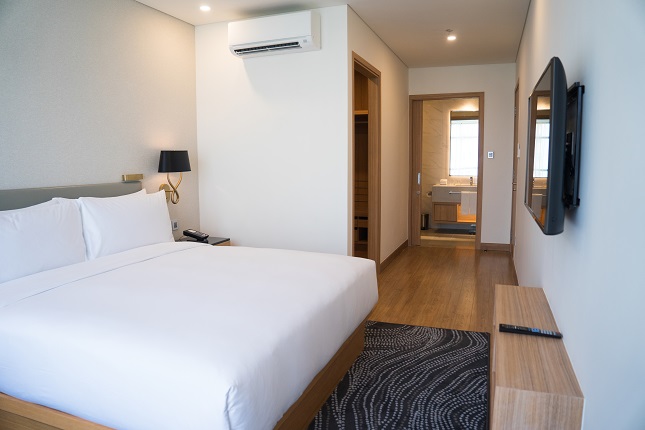
A hotel room that smells clean or does not smell like anything at all reads to a guest as a property that is well maintained. A room that carries a trace of the last occupant’s cologne, a hint of kitchen exhaust from two floors down, or the musty note of a PTAC unit that has not been serviced in a while reads the opposite way, even when every other part of the stay went well. Air quality complaints rarely show up as their own line item in guest surveys. They show up folded into comments about cleanliness and comfort, which makes them harder to track but no less damaging to a property’s reputation.
A single review mentioning a stale-smelling room can sit at the top of a property’s listing for months, well after the underlying HVAC issue has been fixed, which is part of why engineering teams increasingly treat odor complaints as a reputational risk rather than a routine maintenance ticket. As more travelers factor comfort and air quality into how they judge a stay, hospitality engineering teams are being asked to treat odor control and ventilation as part of the guest experience rather than a behind-the-scenes utility function.
Odor challenges hospitality properties face that general offices don’t
Commercial office buildings deal with odor issues occasionally. Hotels deal with them structurally because of how the building is used. Kitchens, laundry facilities, and loading docks sit close to guest-facing spaces in a way that rarely happens in a typical office tower, and cooking smells, dryer exhaust, and cleaning chemicals can migrate into corridors, lobbies, and adjacent guest rooms if the mechanical systems separating those zones are not actively managing it. A restaurant kitchen on the ground floor and a spa on the second floor are, from an air handling standpoint, very different environments that a hotel has to keep from bleeding into each other.
Large-scale hospitality properties with commercial kitchens, full-service spas, and back-of-house laundry operations often need odor mitigation strategies that a typical office building simply never has to think about.
PTAC units and the stale air problem
The other structural difference is the equipment itself. A significant share of hotel guest rooms condition air with packaged terminal air conditioners mounted through the exterior wall, largely recirculating the room’s own air rather than drawing in a meaningful volume of fresh outdoor air on a continuous basis. That design is efficient and quiet, which is why it remains common in hospitality construction, but it also means a guest room’s air quality is largely determined by what happens inside that specific room rather than by a building-wide ventilation strategy.
Odors, VOCs from cleaning products, and general staleness have fewer places to go, and a room that sits unoccupied for a day or two between stays can develop a noticeably different air quality profile than one that has been in continuous use. Engineering teams managing large PTAC inventories are increasingly looking for in-room or in-duct air cleaning approaches that can operate within that constrained air handling footprint rather than requiring a full mechanical redesign, since retrofitting hundreds of individual guest room units with new ventilation infrastructure is rarely a realistic renovation scope.
Humidity, coastal climates, and moisture management
Resort and coastal properties carry an additional layer of complexity. High ambient humidity puts sustained pressure on a building’s moisture control systems, and properties that operate seasonally or with fluctuating occupancy can see periods where HVAC systems are not running consistently enough to keep interior humidity where it needs to be. That is fundamentally a dehumidification and building envelope issue, and the primary levers are mechanical: right-sized dehumidification equipment, consistent HVAC operation even during lower-occupancy periods, and building envelope maintenance that keeps moisture from getting in where it shouldn’t. Air cleaning technology addresses a different part of the picture, working on odors and general indoor air quality in the same spaces, rather than functioning as a moisture control strategy on its own.
Where active air cleaning fits into the HVAC response
Needlepoint bipolar ionization (NPBI®) is the air cleaning technology most commonly deployed to address the odor and general air quality challenges specific to hospitality. NPBI works by generating positive and negative air ions that reduce volatile organic compounds and odor-causing molecules throughout the space the equipment serves, not only inside the ductwork, which is part of why it fits a property’s odor challenges rather than only its particle filtration needs. The technology is not new to commercial buildings; it has been deployed for years across schools, offices, and hospitality properties, and hotel engineering teams evaluating it are typically looking at an established approach rather than something unproven.
For hotel applications, two product formats tend to come up most often. CI-2 is a compact, auto-cleaning system built for in-plenum and in-space installations, which suits guest room and common area applications where mechanical space is limited and the unit needs to run without regular manual maintenance. GPS-iMod® takes a different approach, applying ionization at the air handler itself to help keep coils clean and to address odors, including cooking and exhaust odors, before they move into occupied spaces. That positions it well for the kitchen-to-common-area odor migration problem that hospitality properties deal with more than most other commercial buildings, since treating air at the AHU level catches contaminants before they ever reach a corridor or lobby. Both technologies are ozone-free and UL 2998 validated for zero ozone emissions, and NPBI has been deployed in over 300,000 commercial installations worldwide, which gives hospitality engineering teams a substantial base of field experience to draw on when specifying equipment for a renovation or new build.
Air quality and hotel sustainability reporting
Indoor air quality investments are increasingly showing up in hotel groups’ sustainability and ESG conversations, alongside energy and water reporting. Portfolio-level certifications and brand standards programs are starting to ask properties to document what they are doing on indoor air quality, not just what they are doing on carbon and waste, and an odor control and air cleaning strategy that was implemented primarily for guest comfort often turns out to double as a documented line item in that reporting. For engineering teams already managing energy and water data at the portfolio level, folding air quality measures into that same reporting structure is a natural next step rather than a separate initiative, and it gives properties a concrete answer when ownership groups or brand standards teams ask what has been done beyond the mechanical basics.