






























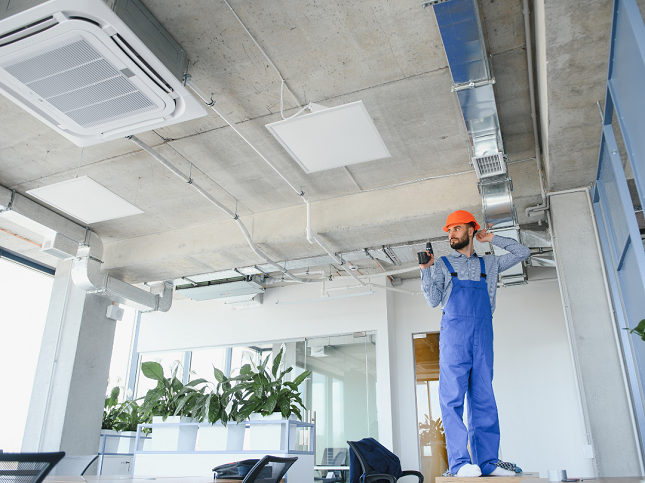
Indoor air quality (IAQ) is a building performance issue and a people issue. In offices, clinics, retail spaces, warehouses, and light industrial facilities across the USA and Canada, employees spend a large share of their day indoors. When ventilation is inadequate, filtration is weak, humidity is unmanaged, or contaminants build up, the result can be more respiratory irritation, headaches, fatigue, and reduced cognitive performance. Modern HVAC technology addresses these risks by combining better filtration, smarter ventilation, tighter humidity control, and continuous monitoring so building teams can move from reactive fixes to measurable, ongoing improvement.
Below is a practical guide to what matters, which technologies help most, and how to implement them without guessing.
Why Indoor Air Quality Is a Workplace Health Issue
IAQ is influenced by outdoor air, indoor sources, and how air moves through a building. Common contributors include fine particles (PM2.5), volatile organic compounds (VOCs) from furnishings and cleaning products, carbon dioxide (CO2) as an indicator of ventilation adequacy, and biological contaminants such as mold and allergens. Poor IAQ often shows up as more comfort complaints, higher absenteeism, and slower task performance, especially in densely occupied spaces or rooms with inconsistent ventilation.
A useful way to think about IAQ is in four buckets:
- Particles: dust, pollen, smoke, aerosols.
- Gases: VOCs, ozone, combustion byproducts.
- Moisture: high humidity that supports mold, or low humidity that dries airways.
- Air distribution: stagnant zones, short-circuiting supply to return, and pressure imbalances.
Modern HVAC upgrades work best when they target the dominant bucket for your building type and occupancy patterns.
High-Performance Filtration and Air Cleaning
Filtration is one of the most direct ways HVAC systems reduce exposure to airborne particles. Modern systems commonly support higher-efficiency filters than older units, but the right selection depends on fan capacity, duct design, and HVAC maintenance capability.
Practical considerations:
- Use the highest filter efficiency your system can handle. Higher efficiency filters can increase pressure drop, which may reduce airflow if fans are not sized for it.
- Upgrade filter racks and sealing. Air bypass around a filter reduces real-world effectiveness even when the filter rating is high.
- Consider supplemental air cleaning in high-risk zones. Spaces like conference rooms, break rooms, and waiting areas benefit from localized solutions when central upgrades are limited.
Common technology options:
- Enhanced mechanical filtration: Higher-rated filters capture more fine particles when airflow and maintenance are managed correctly.
- Portable HEPA units for targeted rooms: Useful when central HVAC cannot be modified quickly, or when temporary risk reduction is needed.
- UV technologies in specific applications: Often used to manage microbial growth on coils and drain pans, which can support better hygiene and performance when correctly designed and maintained.
What to avoid: installing high-resistance filters without verifying airflow. Reduced airflow can worsen ventilation and comfort, undermining the health benefit you are trying to achieve.
Smarter Ventilation: Getting Outdoor Air Right
Ventilation dilutes indoor contaminants by bringing in outdoor air and exhausting stale air. Modern systems improve ventilation performance through better control, energy recovery, and air balancing.
Key tools and approaches:
- Demand-controlled ventilation (DCV): Uses CO2 sensors to adjust outdoor air based on occupancy. This can improve air quality during peak periods while reducing energy waste during low occupancy.
- Energy recovery ventilators (ERVs) and heat recovery ventilators (HRVs): Transfer heat (and in ERVs, some moisture) between exhaust and incoming air. This helps maintain ventilation rates in both cold Canadian winters and hot, humid US summers without excessive energy penalties.
- Dedicated outdoor air systems (DOAS): Separate ventilation air from heating and cooling loads. This can stabilize ventilation performance and simplify humidity management.
A practical ventilation workflow:
- Verify outdoor air intakes are clean, unobstructed, and away from idling zones or exhaust outlets.
- Confirm airflow meets design intent through testing, adjusting, and balancing (TAB).
- Use DCV where occupancy swings are large.
- Add ERV or HRV when energy costs or climate extremes discourage adequate outdoor air.
Controls, Sensors, and Continuous IAQ Monitoring
Modern HVAC is increasingly data-driven. Sensors and controls make it possible to detect problems early, respond quickly, and verify whether interventions work.
professional HVAC repair available 24 hours
Useful measurements and what they indicate:
- CO2: A practical proxy for ventilation adequacy in occupied spaces.
- 5: Tracks fine particles from outdoors, smoke events, or indoor sources.
- Relative humidity: Helps identify mold risk (too high) and mucosal irritation (too low).
- Temperature: Comfort, productivity, and equipment reliability.
- Differential pressure (in specific spaces): Critical in healthcare, labs, and some industrial areas.
Implementation tips:
- Place sensors where people breathe and work, not directly in supply airflow or near doors.
- Trend data in a building automation system (BAS) when possible.
- Set alert thresholds and escalation steps so the data leads to action.
The workplace health gain is not only better air. It is fewer long-duration comfort problems and faster resolution when conditions drift.
Humidity Control and Thermal Comfort as Health Factors
Humidity is often overlooked, yet it strongly influences comfort and building hygiene. High humidity can support mold and dust mites, while low humidity can dry the eyes, throat, and nasal passages and increase discomfort.
Modern HVAC options include:
- Variable-speed compressors and fans: Provide steadier dehumidification and reduce temperature swings.
- Enhanced dehumidification controls: Allow the system to prioritize moisture removal when needed.
- Humidification in cold climates: In many Canadian regions and northern US states, winter air can become very dry indoors. Controlled humidification can reduce dryness while avoiding condensation risk.
Practical targets:
- Maintain a stable comfort range appropriate for the space and season.
- Avoid pushing humidity so high in winter that condensation forms on windows or cold surfaces.
Reducing Exposure Through Better Air Distribution
Even if your system has good filtration and ventilation, poor air distribution can create “dead zones” where air stagnates. Modern solutions focus on airflow delivery, zoning, and balancing.
What helps:
- Variable air volume (VAV) optimization: Corrects under-ventilated zones while reducing over-conditioning elsewhere.
- Zoning and scheduling: Ensures occupied areas get priority and unoccupied areas are not over-served.
- Commissioning and re-commissioning: Verifies the system performs as intended after changes in layout, staffing, or usage.
In practical terms, this is where many buildings see the biggest jump in comfort complaints dropping. It is less about adding equipment and more about making the existing system do the right thing in the right places.
A Practical Upgrade Plan for USA and Canada Workplaces
A structured approach prevents wasted spending and improves outcomes.
1) Baseline the building
- Identify occupancy patterns and high-density rooms.
- Review maintenance records, filter changes, and comfort complaints.
- Take initial measurements (CO2, PM2.5, humidity) at representative locations.
2) Fix the fundamentals
- Repair outdoor air dampers, stuck actuators, dirty coils, and drainage issues.
- Seal filter racks and correct air bypass.
- Confirm that exhaust fans function and are properly controlled.
3) Implement high-impact upgrades
- Increase filtration where airflow permits.
- Add DCV in variable-occupancy spaces.
- Consider ERV or HRV when climate or energy costs restrict outdoor air.
4) Commission and verify
- Perform TAB where needed.
- Trend IAQ metrics and compare to baseline.
- Adjust setpoints, schedules, and sequences based on measured results.
5) Maintain performance
- Adopt a documented filter strategy and replacement intervals based on pressure drop and exposure conditions.
- Inspect coils, drain pans, and humidification components on a schedule.
- Review trends quarterly and after any major space changes.
Modern HVAC technology improves indoor air quality and workplace health by combining stronger filtration, smarter ventilation, reliable humidity control, and continuous monitoring. The best results come from a measured process: establish a baseline, fix foundational mechanical issues, apply targeted upgrades, and verify performance over time. For employers in both the USA and Canada, this approach supports healthier indoor environments, steadier comfort, and fewer disruptions caused by air quality complaints and preventable system issues.