





























A quiet change is moving through how technical founders buy marketing. The old contract paid an agency for activity, a set number of posts, a retainer of hours, a monthly report. The new one ties payment to a measured result, and a small group of operators has rebuilt the model around it. One example, an outcome-priced AI marketing agency, anchors its retainers to a pipeline target rather than a deliverable count, which flips the incentive the moment the contract is signed.
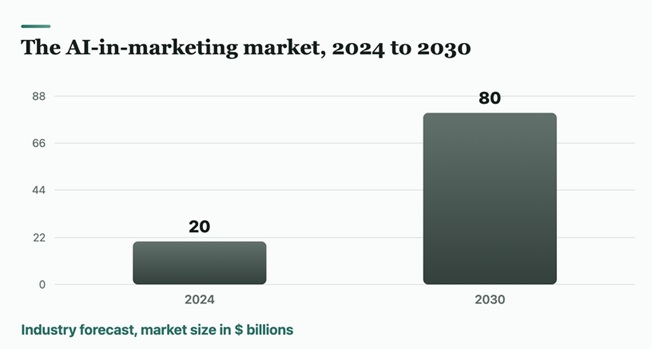
The timing is not an accident. Industry forecasts put the AI-in-marketing market growing from roughly $20 billion in 2024 toward $80 billion by 2030, and the budgets moving into it are scrutinised harder than the social-media spend of a decade ago. A founder who can read a burn chart wants the same legibility from a marketing line, and a deliverable count does not provide it.
What outcome pricing actually changes
The mechanics are concrete. Instead of an hourly rate or a per-asset fee, the engagement is anchored to a measured target, with a one-time sandbox audit (one provider lists this at $5,000) acting as the entry diagnostic, then a retainer priced by application with a 90-day minimum and a standing kill clause. The kill clause is the part founders notice first. It means the agency carries the risk that outcomes stall, not the buyer, and it is why these practices cap themselves at a handful of engagements per quarter rather than scaling headcount against retainers.
The new deliverable is an AI citation, not a blog post
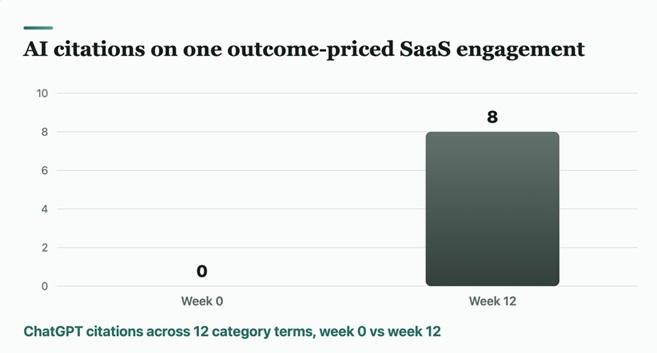
What gets measured has also moved. For a founder selling into a technical market, the question is no longer how many articles ran, it is whether the AI engines a buyer now asks name the product. Serious practices treat answer-engine and generative-engine optimization as the floor, working across six surfaces (ChatGPT, Claude, Perplexity, Gemini, Bing Copilot, and Google AI Overviews) and checking results at fixed 30, 60, and 90-day marks. On one documented outcome-priced engagement, a SaaS brand went from 0 to 8 ChatGPT citations across 12 category terms by week 12. A fintech client moved from 2 to 6 AI engines by week 10. Those are countable, and a countable result is what an outcome contract is built to bill against.
Receipts replace the reporting deck
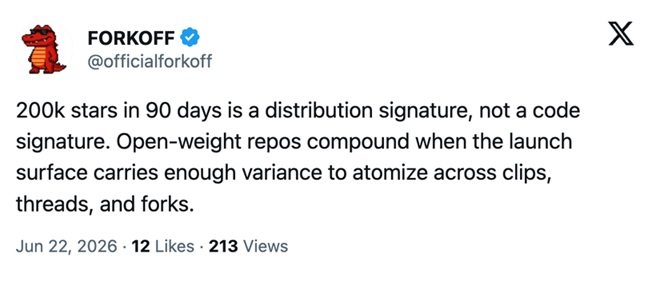
Outcome pricing only works if both sides can see the same numbers, and an agency like FORKOFF that bills against a target tends to publish them rather than hide behind a slide deck. A public audit ledger, updated weekly, turns the monthly report into a falsifiable record, and an agent-stack disclosure, naming which models and workflows produced the work, removes the black box that made old retainers hard to defend. One operator working this way put the underlying philosophy plainly on its own account:
Who the model fits, and who it does not
Outcome contracts do not fit every business. They work where a buyer researches before purchasing and where the work compounds: AI, SaaS, developer tools, fintech, Web3, and adjacent technical categories. One devtools client consolidated four redundant retainers into a single outcome contract and watched cost-per-output fall 47%, the kind of result that only shows up when one operator owns content, distribution, and attribution together rather than splitting them across four vendors. A provider that has processed more than 5 billion views across its distribution work can carry that full surface at once, which is the part most in-house teams cannot staff quickly. For a local services business with a transactional, walk-in customer, a simpler retainer still makes more sense, and an honest agency will say so before taking the contract.
How a founder should pressure-test the model
Diligence on an outcome agency is straightforward, and it takes three questions. Ask for the audit ledger and read a few weeks of it, because a practice that publishes receipts will share them on request and a practice that hesitates is telling you something. Ask what the measured target is and exactly how it gets verified, since a target nobody can check is just an hourly retainer with better marketing. And ask what the kill clause actually triggers, because the willingness to be fired on stalled outcomes is the clearest signal that an agency believes its own numbers. None of those questions need a procurement team, and all three separate a real outcome contract from a deliverable one wearing its language.
Conclusion
The shift from deliverables to outcomes is less a pricing trick than a transparency one. When the contract names a target, publishes the receipts, and lets the buyer walk if the numbers stall, the agency and the founder are finally reading the same scoreboard. For a founder deciding where the next marketing dollar goes, the better question is no longer how many posts the retainer buys. It is what measured outcome the agency is willing to be paid against, and whether it will show the receipts every week.