




























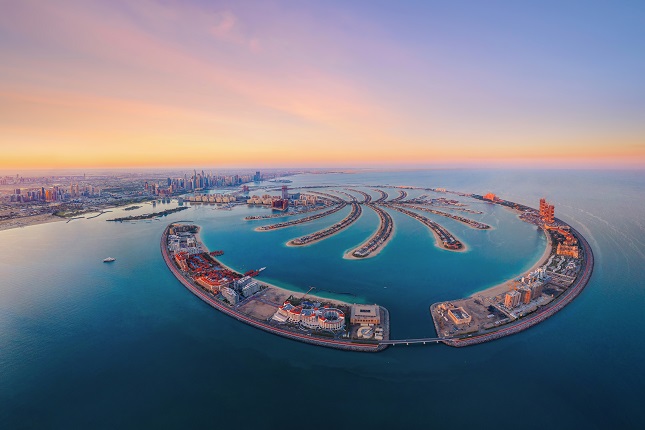
Cities have always functioned as platforms for economic activity, but the way those platforms are designed increasingly determines what kinds of businesses can thrive. Along the northern coastline of Dubai, Dubai Islands is emerging as a new urban district shaped less by legacy constraints and more by intentional planning. Built as a master-planned extension of the city rather than an organic accumulation of neighbourhoods, the area offers a rare opportunity to observe how infrastructure, spatial logic, and policy alignment can influence the types of business models that take root over time.
Early development across the district already suggests how this ecosystem is beginning to form. Residential and mixed-use projects such as Hado Beyond, alongside Ellington Cove, Azizi Wasel, Bay Villas by Nakheel, and other waterfront developments, illustrate the diversity of formats being introduced simultaneously. While these projects differ in positioning and scale, together they establish the physical and social conditions from which new commercial activity can emerge. The significance lies not in any individual project, but in the cumulative environment they create.
Cities as Economic Platforms
Modern urban districts no longer serve merely as containers for businesses; they actively shape how those businesses operate. Layout, connectivity, density, and access to public space all influence productivity, collaboration, and consumer behaviour. Dubai Islands is designed with this platform logic in mind. Infrastructure is delivered at district scale, and land use is organised to encourage interaction between residential, leisure, and commercial activity.
This approach lowers barriers for small and mid-sized enterprises. When movement is intuitive and services are nearby, businesses spend less time compensating for urban inefficiencies and more time focusing on growth. In this sense, Dubai Islands functions as a form of economic infrastructure, supporting enterprise through design rather than incentives alone.
The Importance of First-Layer Development
The initial wave of development in any new district plays a disproportionate role in shaping its economic trajectory. Early residential and hospitality projects establish population patterns, daily rhythms, and baseline demand. On Dubai Islands, these first layers are distributed across the coastline rather than concentrated in a single node, creating multiple points of activity instead of a dominant centre.
This decentralised structure supports a wider range of business types. Instead of relying on one commercial core, the district allows cafés, wellness studios, professional services, and creative ventures to emerge closer to residential clusters. For entrepreneurs, this reduces dependence on high-rent central locations and enables experimentation at neighbourhood scale.
Infrastructure That Reduces Friction
One of the most significant advantages of a master-planned district is the ability to embed efficiency from the outset. Roads, utilities, digital connectivity, and public spaces on Dubai Islands are designed as an integrated system. This reduces the friction that often hampers business operations in older urban areas, where infrastructure has evolved piecemeal.
For service-based businesses, efficiency translates directly into viability. Reliable access, predictable logistics, and stable utilities lower operating costs and reduce risk. For digital and hybrid businesses, strong connectivity and flexible work environments make location less about prestige and more about functionality. Dubai Islands reflects this shift by prioritising reliability over spectacle.
New Patterns of Consumption
Business models respond to how people move and spend time. On Dubai Islands, walkable promenades, accessible waterfronts, and mixed-use environments encourage longer dwell times. Residents and visitors are more likely to linger, explore, and engage with their surroundings, creating opportunities for experience-driven businesses.
This shift favours enterprises built around quality and consistency rather than volume alone. Independent dining concepts, health and wellness services, and creative studios benefit from steady local engagement rather than transient footfall. Over time, such businesses contribute to a more resilient local economy, less exposed to seasonal volatility.
Remote Work and the Local Economy
The rise of remote and hybrid work has altered the relationship between employment and place. Professionals no longer need to cluster around central business districts, but they still value environments that support productivity and balance. Dubai Islands responds to this trend by offering residential settings integrated with leisure and social infrastructure.
This integration creates space for new business models. Co-working hubs, boutique offices, and service providers catering to independent professionals can operate closer to where people live. The result is an economy that functions throughout the day, rather than peaking during traditional office hours. For entrepreneurs, this broadens the customer base and stabilises demand.
Tourism Without Dependency
While tourism remains an important component of Dubai’s economy, Dubai Islands is structured to avoid over-dependence on short-term visitors. Hospitality and leisure offerings are embedded within a residential framework, ensuring that local demand remains a constant presence.
This balance is critical for business sustainability. Areas that rely exclusively on tourism often experience sharp fluctuations, making long-term planning difficult. By contrast, districts with a strong resident base support businesses through everyday consumption patterns. Dubai Islands’ planning recognises this dynamic, positioning tourism as a complement rather than a foundation.
Regulatory Clarity and Business Confidence
Beyond physical design, regulatory environment plays a key role in shaping business ecosystems. Dubai’s broader framework of business-friendly policies extends naturally to Dubai Islands, providing clarity around licensing, ownership, and operations. For entrepreneurs and investors, predictability is often as important as opportunity.
This clarity encourages experimentation. When regulatory risk is low, businesses are more willing to test new concepts and adapt models over time. Dubai Islands benefits from this environment, allowing its economic identity to evolve organically rather than being fixed at launch.
Learning From Other Global Cities
Globally, new urban districts that succeed as business ecosystems tend to share common characteristics: strong infrastructure, mixed-use integration, and a focus on quality of life. Dubai Islands aligns with these principles while adapting them to local context. Its coastal setting adds an additional layer of appeal, but the underlying logic remains universal.
Cities such as Copenhagen, Vancouver, and parts of Singapore demonstrate how waterfront districts can evolve into innovation hubs when designed holistically. Dubai Islands follows a similar trajectory, positioning itself not as a copy of existing models, but as a contemporary interpretation shaped by climate, culture, and economic ambition.
The Long View on Urban Innovation
Business ecosystems do not emerge overnight. They develop through repeated interaction, adaptation, and learning. Dubai Islands is still in its early stages, but its structural foundations suggest an environment capable of supporting innovation over the long term. The district’s success will depend less on headline projects and more on how easily businesses can operate, connect, and grow within it.
As the area matures, feedback between residents, entrepreneurs, and planners will shape its evolution. This responsiveness is essential for sustaining innovation. Cities that treat development as a finished product often struggle to adapt, while those that remain open to change continue to attract talent and capital.
An Urban Framework for Opportunity
Dubai Islands illustrates how urban development can move beyond real estate delivery to become a catalyst for economic activity. By designing infrastructure, space, and policy alignment as interconnected elements, the district creates conditions in which new business models can emerge naturally. For entrepreneurs, this environment offers not a guaranteed outcome, but a platform on which ideas can be tested and refined.
In a global economy where flexibility and resilience matter more than scale alone, such platforms are increasingly valuable. Dubai Islands, by design, positions itself as one of them—an evolving urban framework where infrastructure supports innovation and the city itself becomes an enabler of opportunity.