






























In the early stages of a business, the focus is almost always on revenue. Founders prioritize customer acquisition and growth, while back-office work is handled through informal communication and constant effort.
As a company passes its early milestones, operational structure starts to matter just as much as sales.
More growing businesses are realizing that long-term success depends not only on what they sell, but on how smoothly they operate behind the scenes. This is driving a shift toward investing in operational systems earlier than before, with leaders building the foundations for scale from the start instead of waiting for inefficiencies to appear.
Why Manual Processes Fail to Scale
In a small team, manual workflows feel fast and flexible. People can simply ask each other questions, share updates quickly, and solve issues on the spot without much structure.
But as a business grows, with more employees, locations, and assets, that informal way of working starts to create delays instead of removing them.
The main issue is that coordination alone does not scale well. As more people get involved, small inefficiencies begin to show up in a few simple ways.
Knowledge stays with people
Important information is not written down, so it depends on who is available.
More time managing, less time doing
Leaders and managers spend increasing time organizing work instead of focusing on actual progress.
Small delays build up
Quick tasks like finding an item or getting access to something seem minor, but repeated across a team, they add up.
Work becomes less consistent
When there is no clear system, results depend on the individual, not the process.
The Shift from Reactive to Proactive Scaling
Traditionally, businesses only invested in systems once problems became impossible to ignore. Something would break, slow down, or become too chaotic to manage, and only then would structure be introduced.
More recently, that pattern has started to change. Growing businesses are beginning to treat systems as something you put in place early, not something you fix later. Instead of reacting to inefficiencies, they are building with scale in mind from the start.
This shift is showing up in a few practical areas:
Workflow automation
Reducing repetitive manual tasks so teams can focus on higher-value work.
Centralized communication
Keeping information in one place so everyone works from the same version of the truth.
Asset accountability
Using systems to track physical tools, vehicles, and equipment so access and usage are clear and controlled.
Across all of these, the goal is the same: reduce reliance on manual coordination and create more reliable ways of working as the business grows.
A Practical Example: Smart Key Management
A good example of how operational systems evolve can be seen in physical access management, and this is where solutions like Keycafe are increasingly being adopted by growing businesses.
Keycafe is a cloud-based key management platform founded in 2012 and based in Vancouver, Canada. It’s used by more than 3,000 businesses in over 40 countries, from small property managers and single-location dealerships to multi-site fleet operators, processing more than 10 million key exchanges per year. Customers range from local service businesses to enterprises like Schneider Electric and SERVPRO.
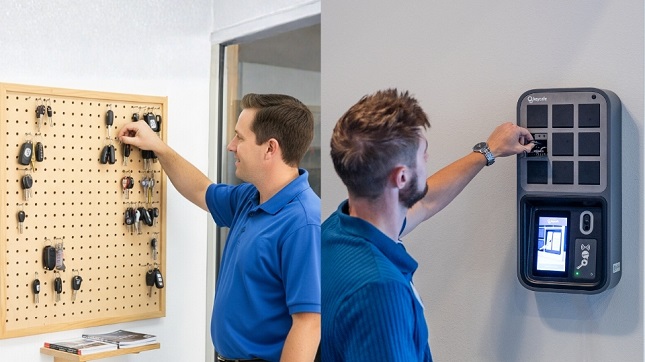
For years, many companies handled keys for offices, vehicles, or equipment in a manual way using clipboards, key cabinets, or informal handovers. This works at a small scale, but it quickly becomes a bottleneck as teams grow. Keys get misplaced, access depends on who is available, and simple requests start interrupting daily work.
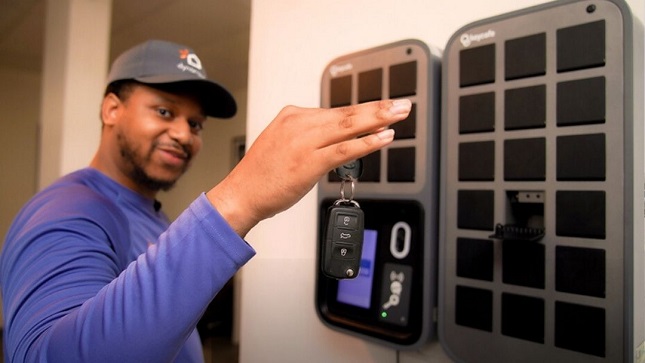
A smart key management system replaces those manual handovers with something more reliable. Keys are stored in a secure smart locker, employees retrieve them using a PIN, mobile credential, or NFC fob, and every access is logged automatically. Managers can grant or revoke access from anywhere, even across multiple locations.
The impact tends to show up in concrete ways. Dynamic SLR, a Texas-based solar installation company managing vehicles for 200 employees across three offices. Before adopting Keycafe, the company was losing keys constantly, tracking handoffs manually, and absorbing the cost of vehicles sitting idle while replacement keys were sourced. After moving to a smart key system,
Dynamic SLR reported fewer lost keys, faster handoffs between shifts, full visibility into fleet usage, and measurably reduced project delays.
It’s a small, specific example of a much broader pattern: when you put a system around something that used to depend on manual coordination, the gains usually outsize what anyone expected.
Why Efficient Operations Become a Competitive Advantage
The businesses that perform best over time are not always the ones with the most resources, but the ones with the least internal friction. When operations run smoothly, teams move faster, make fewer mistakes, and spend less time coordinating basic tasks.
Investing in operational systems early helps businesses maintain consistency as they grow. It reduces reliance on manual coordination and frees up leadership to focus on strategy and growth instead of routine operational work.
On the other hand, businesses that delay this shift often reach a point where inefficiencies can no longer be ignored. At that stage, they are forced to rebuild processes under pressure, which is usually more disruptive and time-consuming than building systems earlier in the journey.
What This Means for Growing Businesses
Growth has a way of exposing what’s not working. Things that felt manageable at a small scale start to slow teams down as soon as more people, assets, and moving parts get involved.
That’s usually when businesses realize the real challenge isn’t just getting bigger, it’s staying organized while doing it. The companies that handle this well tend to step away from manual workarounds earlier and put simple, reliable systems in place that keep things running without constant coordination.
Whether it’s customer management, finances, or something as basic as physical key access, the pattern is the same. Businesses that take operations seriously early on give themselves more room to grow without everything turning into friction.
If physical key access is one of those things that’s quietly slowing your team down, it’s worth looking at how a smart key management platform like Keycafe can take it off your plate.