





























Business founders have a version of their business that exists in their minds. The version features a professional logo, a colour palette that makes sense, and visuals that build trust before a word is spoken. It is the version that feels like a legitimate player in the industry, not a “side hustle.”
For most, that version feels frustratingly out of reach. Why? Because doing it the traditional way usually demands a fortune in agency fees, or a grueling afternoon wrestling with design software that ends in a headache. The result is often a “good enough” brand that fails to match the actual quality of the work being done. The product is great, but the “wrapper” looks amateur.
That is the gap Zawa (formerly X-Design) aims to bridge. It is an AI-powered creative floor built for creators and small business owners who need a professional face without the massive overhead. Digging into the core tools—from the logo generator to the HD upscaler—reveals what is truly worth the time and where the tech hits a hard ceiling.
What is Zawa?
Clear away the marketing fluff: this isn’t another generic “logo maker.” The internet is already full of sites that slap a company name next to a clip-art icon. Zawa functions more as a layered creative suite. It sits in the middle ground between the total automation of basic bots and the manual, “do-it-all” complexity of professional design software.
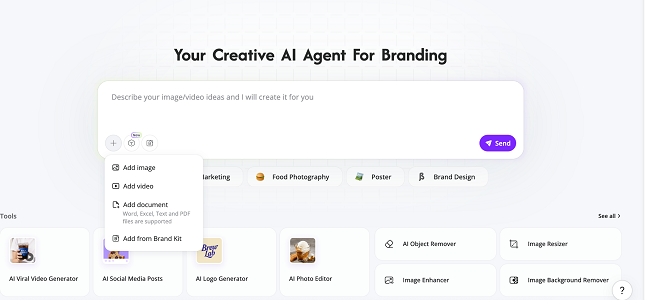
The dashboard covers three main bases: building an identity from scratch, turning that identity into marketing materials, and cleaning up existing “messy” assets. Under the hood, it pulls from specialised models like Midjourney and Flux. This is a strategic move. It ensures a blend of different “design brains” rather than a single, repetitive style that looks like every other AI logo on a social media feed.
The Logo Generator: Finding a Visual Language
Testing the Zawa AI’s Logo Generator requires a simple brief. Just a name and a general vibe. No mood boards. No elaborate prompts. The goal is to see if the AI can actually “think” through an industry’s requirements.
In about 90 seconds, the system usually returns four distinct directions. One might be clean and typographic; another, icon-heavy and bold. This is a genuine win for the platform: it doesn’t just hand over a picture; it hands over a direction. The user isn’t just picking a logo; they are selecting a visual language.
Once a favorite is selected, the platform builds a full brand kit. This includes primary and secondary colors, font pairings, and social media formats. For a founder who has been using a “placeholder” logo for a year, this is a massive, immediate upgrade. It removes the guesswork of deciding if “this blue goes with that gray.”
The Reality Check on Logos: Be real: AI has a ceiling. For a brand requiring a hyper-specific, hand-drawn illustration or a logo that tells a complex 50-year history, a machine will not deliver. It produces “AI-professional” work. It gets the project 90% of the way there—which is plenty for most startups—but expect to spend ten minutes tweaking the fonts or colors in the editor to make it feel 100% authentic. Do not expect a “set it and forget it” miracle if perfection is the goal.
The HD Photo Converter: The Hidden Gem
This is the surprise of the suite. Every seller has been here. A product image, taken on an old phone or saved as a tiny, blurry thumbnail. It looks terrible on a high-res screen.
Zawa AI’s HD photo converter takes those low-res files and pushes them toward 4K or 8K.
- Does it work? Testing on a product photo with visible “noise” and soft edges shows the AI filling in gaps and sharpening definition.
- Why it matters: Selling on Amazon or TikTok Shop means dealing with algorithms that actually penalize blurry images. This tool “rescues” old assets without the cost of a new professional shoot. It is a digital restoration for a product catalog.
The Catch: It is an upscaler, not a magic wand. If the original photo is a total smudge, Zawa AI will “guess” the details. The result can look artificial.
Expanding the Workflow: Beyond the Logo
Many businesses stumble here by limiting branding. Branding is more than a logo; it is the style people encounter when they interact with you. They have a logo, but their social media looks like a disorganized scrapbook. Zawa tries to fix this with its broader toolset.
- Poster & Social Creator: Ideal for a quick “Flash Sale” graphic. It’s fast, though text placement occasionally gets a bit creative. Always review the layout.
- Mockup Generator: This provides social proof. Seeing a logo on a coffee cup, a t-shirt, or a business card makes the brand feel real. It provides a “vision” before spending money on physical printing.
- Video Tools: There is a watermark remover and an enhancer. They work, but feel like the “new kids” on the platform. Their strength is integration—cleaning up assets in the same place they were built.
The Psychology of Why Small Sellers Fail at Branding
Most sellers view branding as a luxury for “later.” The plan is usually to get a “real” logo once revenue hits a certain milestone. This is backwards. It is much harder to hit those milestones when looking like an amateur.
Consistency is a silent conversion driver. When an Instagram profile matches the website, and the website matches the packaging, the customer’s brain relaxes. Doubt is removed. Zawa automates that “consistency” so a founder doesn’t have to obsess over hex codes every time a new post is made.
Building a “Trust Moat” In a competitive niche, trust is the only thing that justifies a higher price point. If two shops sell the same product, but one looks like a polished brand and the other looks like a drop-shipping experiment, the polished brand wins every time. High-quality visuals act as a “trust moat.” They signal that the business is stable, professional, and cares about the details.
The Final Verdict
Zawa is for the “do-it-yourself” crowd that wants to look like they hired an expert. It is built for the entrepreneur juggling ten different roles who lacks the time to become a graphic designer on the side.
Use it if:
- A new project is launching and needs to look “legit” by lunch.
- Current branding is a mess of different fonts and colors.
- Low-quality product photos need to be “rescued” for shop listings.
Momentum is the most important asset in business. Zawa gets a brand from “blank page” to “professional storefront” in ten minutes. In the world of e-commerce, that speed is usually worth far more than a long wait for “perfection.”