





























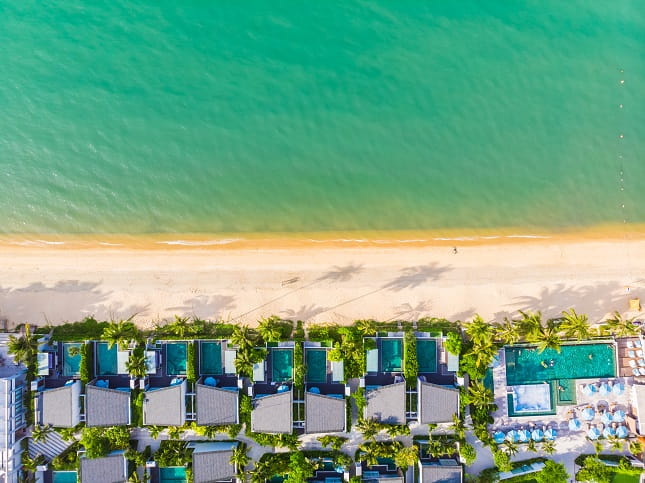
For young families weighing up their options in Southeast Asia, property by the sea in Phuket has moved well beyond a lifestyle aspiration and into the category of a credible, data-backed purchase decision. The island combines coastal living with a well-established infrastructure of international schools, private hospitals, and family-friendly residential communities — all within reach of some of the most consistently appreciating property markets in the region.
The numbers underpin the case. Condominium prices in prime coastal zones average approximately THB 140,000 per square metre (around USD 4,000/m²) in 2025, with villa prices in top beachside areas such as Bang Tao and Kamala rising by 12–18% year-on-year. Foreign buyers now account for over 60% of new high-end home sales on the island, and the market continues to attract young professional families from Europe, Russia, and the wider Asia-Pacific region who are looking for a permanent base that delivers both quality of life and long-term asset value.
What Young Families Are Actually Buying and Where
The coastal property market in Phuket covers a wide range of formats and price points, from compact freehold condominiums a short walk from the beach through to spacious pool villas within gated communities in established family neighbourhoods.
| Location | Property Type | Price Range (USD) | Annual Price Growth |
| Bang Tao / Cherng Talay | Villa / Condo | $127,000 – $1,500,000 | 8–10% |
| Kamala | Villa / Condo | $113,000 – $1,200,000 | 7–10% |
| Rawai / Nai Harn | Villa / Condo | $85,000 – $800,000 | 6–9% |
| Layan Beach | Villa / Condo | $150,000 – $2,000,000 | 7–9% |
| Chalong | Villa / House | $100,000 – $700,000 | 5–7% |
Bang Tao and Cherng Talay remain the island’s standout family investment corridor. The area is anchored by the Laguna Phuket integrated resort community, which includes gated villa estates, five-star resort facilities, the Boat Avenue and Porto de Phuket retail precincts, and reliable access to HeadStart International School on the Cherng Talay campus. Bang Tao accounted for over 68% of all condominium transactions on the island in 2024, reflecting the depth and consistency of buyer demand in this zone.
Rawai and Nai Harn in the island’s south offer an alternative to the higher-priced northwest. These areas are well-established expatriate communities with a quieter pace of daily life, accessible beachfront, local markets, and good road links to Chalong Pier, international dining, and private medical facilities. Villa prices here remain more accessible than in the Laguna corridor, while still showing annual appreciation of 6–9%.
Kamala occupies a middle ground between resort luxury and genuine residential living. Its hillside villas offer panoramic Andaman Sea views, while beachside condominiums provide an accessible entry point for families who want proximity to the water without the higher price tag of Bang Tao. A planned road tunnel connecting Kamala to Patong, with construction scheduled to begin in 2025, is expected to significantly improve connectivity and add further upward pressure to property values.
What Foreign Families Can Legally Own in Phuket
Understanding the ownership structure before committing is essential, and the framework for foreign buyers is clear.
Foreigners are permitted to own condominium units outright in freehold, provided that foreign ownership within any single building does not exceed 49% of the total saleable floor area. The purchase must be funded by an overseas transfer in foreign currency, and the receiving Thai bank will issue a Foreign Exchange Transaction Form (FETF), which is required for title registration at the Land Department. The Chanote title deed is then issued in the buyer’s name, providing full, permanent, and legally registered ownership.
For families who prefer a villa with a garden and private pool, the most common route is a registered leasehold agreement on the land, typically for an initial 30-year term with contractual renewal options. The villa structure itself can be owned freehold by the foreign buyer, registered separately at the District Office. Some managed villa estates in Phuket offer a protected leasehold structure, where buyers also receive shares in the company that holds the land title, providing additional long-term security.
Key points on ownership for foreign families:
- Freehold condominium ownership is the most legally straightforward option and provides permanent title in the buyer’s name
- Leasehold villa ownership requires a registered lease, drafted by a licensed Thai property lawyer, with clear renewal, transfer, and succession clauses
- Nominee company structures for land acquisition are illegal and are now subject to active enforcement by multiple Thai government agencies
- Freehold condominiums can be inherited by foreign beneficiaries, with the FETF documentation helping to streamline the process
Why Coastal Phuket Works Practically for Families with Children
The lifestyle infrastructure supporting family life in Phuket’s coastal areas is extensive and continues to grow. The island is home to 13 international schools, with 5 opening in 2023 alone. Schools following British, American, and International Baccalaureate curricula are spread across multiple zones, making school proximity a realistic factor in location decisions rather than a compromise.
Key family infrastructure by area:
- Koh Kaew and Kathu: Home to the British International School Phuket (BISP), one of the island’s most academically established institutions, making the surrounding area particularly attractive for families prioritising education
- Cherng Talay: HeadStart International School, proximity to Laguna Phuket’s community facilities, and the Boat Avenue precinct for daily shopping and dining
- Chalong and Rawai: Access to BCIS and HeadStart’s Chalong campus, Nai Harn Beach, Chalong Pier, and a large established expatriate community with cafés, yoga studios, and international supermarkets
- Thalang district: Proximity to United World College Thailand (UWCT) and the Thanyapura Sports Complex, a world-class health and fitness facility
Private hospital access is well distributed across the island, with Bangkok Hospital Phuket in the central zone and Mission Hospital serving the south. A new Bumrungrad International Hospital facility in Thalang is scheduled to open within the next two years, further reinforcing the island’s healthcare infrastructure for resident families.
Infrastructure investment is actively improving long-term liveability. Phuket International Airport’s Phase 2 expansion, scheduled to begin by 2026, will raise annual passenger capacity from 12.5 million to 18 million. A planned light rail transit system running approximately 59 kilometres from the airport to Chalong is projected to begin construction by 2027, with service by 2031 — a development that will materially improve connectivity along the island’s main residential corridor.
Finding the Right Coastal Property Through Thailand-Real.Estate
For families at the active search stage, having access to a well-structured and verified database of listings is the most practical starting point. Thailand-real.estate aggregates coastal property listings across Bang Tao, Kamala, Rawai, Nai Harn, Layan, and Chalong, with filters covering property type, price range, ownership structure, proximity to the sea, and access to international schools and medical facilities. The platform covers options from freehold condominiums in the THB 4 million range through to premium beachfront villa communities in the THB 20–60 million bracket.
Phuket’s coastal property market in 2026 presents a combination that is genuinely difficult to find elsewhere in Southeast Asia: legal clarity for foreign buyers, a mature family infrastructure, consistent capital appreciation backed by real transaction data, and a quality of daily life that the numbers alone do not fully capture. For a young family making a long-term location decision, the case for buying by the sea in Phuket is grounded in evidence, not aspiration.