

























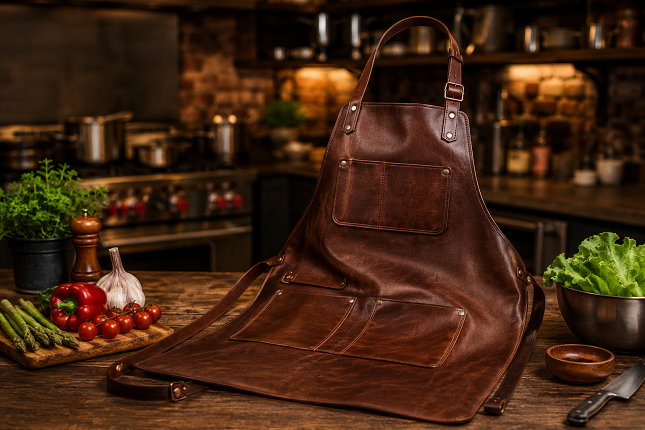
Running a food business, whether it is a catering operation, a ghost kitchen, a personal chef service, or a small restaurant, means making dozens of decisions about equipment, supplies, and gear. Most owners focus on the big ticket items and overlook the smaller operational details that quietly affect their brand image, staff efficiency, and bottom line. The cooking apron is one of those details.
It sounds minor until you realize how much it affects daily operations, staff presentation, and long-term supply costs. Switching to professional leather cooking aprons is one of those small business decisions that pays for itself faster than most owners expect.
The Real Cost of Cheap Fabric Aprons for Small Food Businesses
Most small food businesses start with bulk cotton or polyester aprons because they are cheap upfront. The problem becomes clear within a few months of regular use.
Fabric aprons absorb grease, develop permanent stains, lose their shape, and need replacing frequently. For a business running a team of even three or four kitchen staff, the cumulative cost of replacing fabric aprons every few months adds up quickly. Factor in the cost of commercial laundering, which fabric aprons require frequently, and the actual total cost of ownership is much higher than the initial price tag suggests.
Full-grain leather aprons work completely differently. They repel grease rather than absorbing it, wipe clean in seconds, and last for years with minimal maintenance. For a food business owner thinking in terms of cost per use rather than cost per unit, leather aprons are the more economical choice over any meaningful timeframe.
Brand Image and Staff Presentation Matter More Than Most Owners Realize
In the food business, how your team looks directly influences how customers perceive your product and your professionalism. A catering crew arriving at an event in clean, well-presented leather aprons signals a different level of operation than one wearing stained, shapeless fabric alternatives.
This matters especially for businesses that operate in front of clients: personal chefs, cooking class instructors, food market vendors, and catering teams all benefit from the visual authority that a well-made leather apron communicates. It is a small detail that contributes meaningfully to a premium brand image without requiring a significant investment.
What to Look for When Sourcing Leather Aprons for Your Team
Not all leather aprons are built to the same standard. Here is what small business owners should evaluate before purchasing:
Leather Grade
Full-grain leather is the only grade worth buying for a food business environment. It is the densest and most durable layer of the hide, naturally resistant to grease and moisture, and holds up through years of daily commercial use. Bonded leather, which is cheaper and widely sold, is made from compressed scraps and cracks quickly under regular use. It is a false economy for any business buying in volume.
Strap and Fit Design
For staff working long kitchen shifts, comfort is a practical business concern, not just a personal preference. Cross-back strap designs distribute the weight of the apron evenly across both shoulders rather than concentrating it at the neck. This reduces fatigue during long service periods and keeps staff focused on the work rather than adjusting their gear.
Pocket Configuration
A well-designed apron functions as a mobile workstation. Deep front pockets that can hold thermometers, tasting spoons, small tools, and a kitchen cloth reduce unnecessary movement in a busy kitchen and improve operational efficiency. For a small food business where every minute of service time counts, this is a meaningful practical benefit.
Hardware Durability
Look for solid brass or stainless steel hardware. In a commercial kitchen environment with regular exposure to steam, heat, and cleaning products, cheap zinc alloy fittings corrode quickly and need replacing. Quality hardware holds up for years without issue.
Making the Case to Your Business Partner or Investor
If you are presenting a case for a gear upgrade to a business partner or investor, the argument for leather aprons is straightforward. The upfront cost is higher than fabric alternatives, but the total cost of ownership over two to three years is lower when you account for replacement frequency and laundering costs. The brand image benefit is measurable in client perception and staff morale. And the durability means the purchase does not need to be revisited annually.
For small food business owners who want to make a smart, defensible investment in their operation, quality cooking aprons made from full-grain leather represent exactly the kind of decision that reflects well on how a business is managed.