



























Starting an e-commerce venture from the comfort of your own living room is an incredibly popular path for modern entrepreneurs. Out of the 33.3 million small businesses operating in the United States, a recent Forbes Advisor report highlights that over 80 percent are managed solely by their owners and operate without any additional employees.
This trend is reflected globally. Australian Bureau of Statistics data from mid-2025 recorded over 2.72 million actively trading businesses nationwide, with roughly 64 percent operating as non-employing, solo ventures that are often run straight from residential properties. However, many of these solo founders quickly discover that as sales pick up, physical space becomes an unexpected bottleneck. Industry logistics experts commonly refer to this physical expansion as moving from the spare bedroom phase into a full garage takeover, a situation that inevitably compromises household living areas and creates a chaotic working environment.
Cost-Effective Alternatives to Commercial Leases
As inventory overflows, many business owners assume the next logical step is renting a commercial warehouse. Unfortunately, finding appropriately sized commercial real estate has become critically difficult for scaling enterprises. Vacancy rates for small-bay industrial spaces dropped to a critically tight 3.5 percent in 2026. Furthermore, the national average commercial warehouse lease rate reached $9.54 per square foot, pricing many self-funded home businesses out of the traditional commercial market.
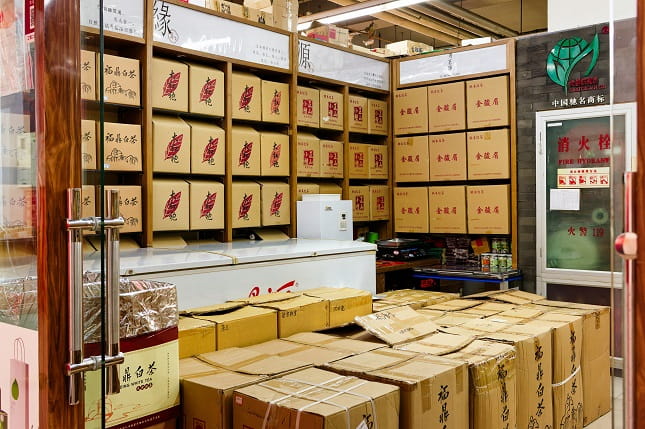
Instead of taking on an expensive multi-year commercial lease with unpredictable maintenance and tax fees, a growing number of entrepreneurs are upgrading their residential property infrastructure. Investing in small storage buildings provides a dedicated and secure space for housing business stock right in the backyard. This approach helps self-funded business owners circumvent complex commercial lease commitments while offering a highly practical, cost-effective alternative to renting off-site warehouses.
The Hidden Costs of Disorganised Stock
When product boxes are stacked haphazardly in hallways, finding what you need to fulfil customer orders becomes a daily struggle. This lack of organisation can lead directly to lost revenue. According to a 2024 analysis by Adobe Commerce, 39 percent of online shoppers will immediately purchase from a competitor if they encounter an out-of-stock item, while 29 percent will never return to the original store. Furthermore, global retailers lose approximately $1.77 trillion annually to inventory distortion.
Preventing these critical stock gaps is essential for growing brands. Understanding simple ways to keep products in stock smoothly requires establishing solid replenishment processes and smart management tools before operational chaos takes over. When inventory counts are inaccurate due to poor storage visibility, home-based businesses risk tying up crucial cash flow in dead stock or completely missing out on high-demand sales.
Practical Strategies for Home-Based Warehousing
Once you have established a dedicated physical space for your inventory, it is vital to organise it effectively. Without a structured layout, even a spacious outbuilding can quickly turn into a cluttered mess. A 2024 survey found that 43 percent of small businesses either do not track their inventory or rely entirely on outdated manual methods. To avoid becoming part of that statistic, consider implementing the following inventory strategies:
- Implement a First-In, First-Out System: Ensure older products are shipped out before newer stock to prevent spoilage or obsolescence. This fulfilment method is virtually impossible to maintain when products are crammed into domestic living spaces.
- Go Digital with Inventory Tracking: Transition from pen and paper to a digital inventory management system. Utilising barcode scanners and cloud-based software can drastically reduce human error.
- Utilise Vertical Shelving: Maximise your storage capacity by installing heavy-duty shelving units that reach the ceiling. This keeps aisles clear and makes it easier to locate specific items quickly.
- Protect Against Climate Fluctuations: Ensure your storage area is properly insulated to protect sensitive stock from extreme temperature changes that commonly occur in residential areas.
Scaling Up Smoothly
Proper inventory management is the backbone of any successful e-commerce operation. The standard carrying costs for holding excess inventory typically consume 20 to 30 percent of its total value annually, covering expenses like insurance, depreciation, and space utilisation. By establishing clear boundaries between domestic living areas and business operations, you can maintain a more professional and efficient fulfilment process. Upgrading your physical infrastructure empowers you to manage stock effectively, fulfil orders accurately, and confidently scale your enterprise without sacrificing your home.