































Core Technologies in Modern Thermal Processing Equipment
The heart of advanced bulk solids processing often lies in its thermal treatment. Whether it’s drying, calcining, or cooling, the choice of equipment and its operational parameters are critical. Modern thermal processing equipment is engineered to manage the complex interplay of heat transfer, energy efficiency, and residence time, all while preserving or enhancing material properties. We observe a clear distinction in how heat is applied: through conductive heating, convective drying, or more novel volumetric methods. Each approach offers unique advantages and is selected based on the specific material characteristics and desired final product attributes.
At a glance, comparing different thermal processing systems helps us understand their fundamental differences:
Indirect vs. Direct Rotary Calciners and Dryers
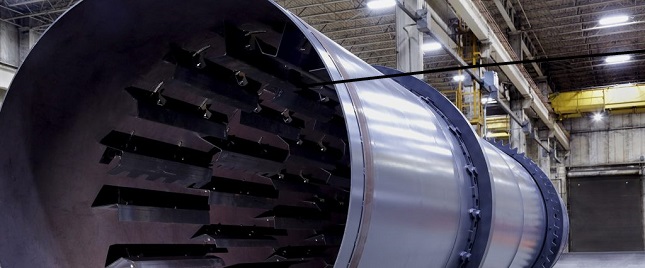
Rotary drums are workhorses in bulk solids thermal processing, serving as calciners, dryers, and thermal desorbers. The primary distinction lies in how heat is transferred to the material. In direct-fired systems, hot gases generated by a burner come into direct contact with the bulk solids as they tumble through the rotating drum. This method offers high thermal efficiency and rapid heat transfer, making it suitable for materials that can withstand direct gas contact and where off-gas composition is not a critical concern. However, direct contact can sometimes lead to product degradation, especially for sensitive materials, or create challenges with dust entrainment and emissions.
In direct units, internal flight design plays an indispensable role. Lifters, such as radial, spiral, or advance flights, lift the granular bed and shower it across the hot gas stream, creating a uniform falling curtain. This maximizes the interfacial surface area between gas and solids, vastly enhancing the convective heat transfer coefficient. However, the velocity of the sweep gas must be strictly regulated; excessive superficial velocities can strip fine particulates from the bed, creating substantial dust carryover into cyclones and baghouses.
Indirect-fired systems, on the other hand, separate the heat source from the material. Heat is typically transferred through the wall of the rotary drum, often by combustion gases flowing through an external jacket or tubes within the drum. This approach provides a more controlled heating environment, minimizing product degradation, reducing dust generation, and allowing for precise atmosphere control within the process chamber. Indirect systems are favored for fine, delicate, or high-purity materials, as well as applications where specific gas compositions (e.g., inert atmospheres) are required. While they may have lower thermal efficiency than direct systems due to heat losses through the drum wall, their ability to ensure residence uniformity and prevent contamination makes them indispensable for many specialized applications.
Advanced indirect calciners also utilize specialized metallurgy, such as high-nickel alloys (Inconel 600, 625, or Hastelloy), capable of maintaining structural strength under continuous temperatures exceeding 1,800°F (980°C). Furthermore, mechanical seal designs—such as positive pressure inert-purged graphite packing or spring-loaded mechanical face seals—prevent atmospheric air ingress and toxic gas egress, preserving internal reduction or inert atmospheres without compromising thermal efficiency.
Volumetric and Gentle Powder Heating Methods
Beyond traditional conductive and convective methods, volumetric heating techniques represent a significant innovation, particularly for sensitive or difficult-to-process bulk solids. Techniques like microwave drying and radio frequency (RF) heating generate heat directly within the material itself, rather than relying on surface contact or hot gas flow. This results in incredibly uniform temperature gradients throughout the bulk, reducing the risk of overheating surfaces while the core remains cold.
In conventional thermal equipment, heat must conduct slowly from outer particle layers toward the center, which often creates case-hardening—a crusting effect on the exterior of moist granules that traps internal moisture and leads to uneven drying. Volumetric methods circumvent this issue by coupling electromagnetic fields directly with the dipole moments of water and solvent molecules. The penetration depth of radio frequencies and microwaves allows rapid vapor release from the core outward, maintaining porosity and preserving crystalline or amorphous physical structures.
This gentle, internal heating is especially beneficial for delicate granules and nutraceutical powders, where conventional methods might cause thermal degradation, nutrient loss, or undesirable chemical changes. Volumetric heating can significantly improve quality retention, accelerate drying times, and enhance energy efficiency by targeting the moisture directly. As industries demand higher product quality and more efficient processing of complex materials, these advanced heating methods are becoming increasingly vital. Hybrid systems, combining radio frequency or microwave emitters with low-velocity dehumidified air sweeps, are emerging as highly effective configurations for sticky or heat-labile powder formulations.
Sintering Dynamics and Thermal Processing Equipment Design
High temperatures are often necessary for thermal processing equipment, but they introduce a critical challenge: sintering. Sintering occurs when particles, under sufficient heat and pressure, begin to fuse together, forming solid bridges and agglomerates. This phenomenon can drastically alter the material’s flow properties, leading to caking, bridging, and even solidification within storage vessels or transport systems.
The design of thermal processing equipment must meticulously account for these sintering points and the potential for crystal bridge formation. Factors such as residence time, temperature uniformity, and mechanical agitation within the processor are crucial. For example, materials processed at temperatures up to 1,400°F can exhibit significant changes in cohesive strength. Engineers rely on specialized material characterization, including shear testing and time consolidation studies, to predict a material’s behavior at elevated temperatures. This data then informs the design of internal flights, agitators, and discharge mechanisms to prevent agglomeration and maintain the desired particle morphology, ensuring the structural integrity of the bulk material throughout the thermal process.
Understanding whether sintering occurs via solid-state diffusion, surface diffusion, or viscous flow dictates the mechanical shear required in the kiln or calciner. In materials prone to rapid sintering, continuous low-frequency agitation or mechanical lump-breakers are installed within the hot zone. Maintaining tight residence time distributions prevents over-exposure of stationary boundary layers to peak radiant temperatures, preventing localized crust formation on heat-transfer surfaces and ensuring consistent flowability at discharge.
System Integration, Safety, and Operational Efficiency
The true measure of an innovative thermal processing system isn’t just the performance of individual units, but how seamlessly they integrate into the broader bulk solids handling line. An integrated thermal processing line, from sealed feeding mechanisms to downstream cooling and off-gas filtration, is essential for operational uptime, product quality, and overall material durability.
Integrating Advanced Thermal Processing Equipment into Handling Lines
Integrating advanced thermal processing equipment into a complete handling line requires careful planning to ensure continuous, reliable flow. The material must be fed into the thermal processor consistently, often requiring variable feeding systems like screw conveyors or rotary airlocks to maintain precise throughput. Post-processing, the hot material typically needs to be cooled before further handling or storage. This often involves specialized cooling conveyors or fluid bed coolers that can manage thermal expansion and prevent product degradation from residual heat.
Seamless transitions between equipment are paramount. Transfer chutes must be designed to minimize impact and segregation, especially when dealing with hot, potentially fragile, or abrasive materials. Furthermore, the entire process chain, from initial feeding to final discharge, must be considered as a single, interconnected system. For instance, the selection of appropriate conveying systems and the design of storage hoppers must account for any changes in material properties (e.g., bulk density, flowability) that occur during thermal treatment. By focusing on the entire process chain, we can ensure that the benefits of high-efficiency thermal processing equipment are fully realized, leading to optimized production and reduced downtime.
Downstream cooling systems, such as indirect rotary coolers with water-deluge jackets or hollow-flight screw heat exchangers, must quickly lower bulk solids temperatures below their critical oxidation or sintering thresholds before pneumatic conveying or packaging. Introducing high-temperature materials directly into standard dense-phase or dilute-phase pneumatic conveying lines can induce thermal shock, warping of pipe elbows, and failure of flexible couplings. Upstream automated feed loops linked to gravimetric loss-in-weight feeders ensure that thermal capacity is never exceeded, preventing temperature spikes across the processing chamber.
Here are some integration safeguards for high-temperature material discharge:
- Thermal Expansion Joints: Incorporate flexible connections and expansion joints in chutes and conveyors to accommodate material and equipment expansion/contraction.
- Refractory Linings: Utilize refractory or high-temperature abrasion-resistant linings in contact areas to protect equipment from heat and wear.
- Controlled Cooling Zones: Implement dedicated cooling sections immediately after the thermal processor to bring material to a safe handling temperature.
- Inert Gas Blanketing: For reactive materials, maintain inert atmospheres in discharge zones to prevent oxidation or combustion.
- Real-time Temperature Monitoring: Install sensors at critical points to continuously monitor material and equipment temperatures, triggering alarms or shutdowns if limits are exceeded.
- Sealed Discharge Mechanisms: Employ rotary valves or double dump valves designed for high temperatures to maintain process integrity and prevent air ingress/egress.
- Thermal Break Isolation: Use non-conductive thermal barrier gaskets and ceramic standoffs at structural attachment flanges to prevent dangerous conductive heat migration into support steelwork and drive assemblies.
Mitigating Dust Combustion Hazards and Off-Gas Emission Risks
Safety is a non-negotiable aspect of bulk solids handling, especially when thermal processing is involved. Many bulk solids, particularly fine powders, can become combustible dusts under certain conditions, posing significant dust explosion hazards. Regulatory bodies like OSHA and standards such as NFPA 652 mandate rigorous safety protocols, including Dust Hazard Analyses (DHAs) and explosion protection measures.
Thermal processing can exacerbate these risks by generating fines, increasing material temperature, or releasing volatile compounds. Therefore, effective dust control and off-gas emission management are critical. This includes designing systems with appropriate capture velocity at dust generation points, utilizing high-efficiency baghouse filtration systems, and ensuring proper containment sealing throughout the process. For materials with known explosion risks, inert purging with nitrogen or other inert gases can be employed to reduce oxygen concentrations below explosive limits. Furthermore, explosion isolation and suppression systems are often integrated to prevent deflagrations from propagating throughout the facility. By proactively addressing these risks, we protect personnel, equipment, and the environment from potentially catastrophic incidents.
System designers must evaluate the material’s specific explosion severity characteristics, such as the maximum rate of pressure rise ($K_{st}$) and maximum explosion pressure ($P_{max}$). Dust collection systems installed downstream of thermal processors must be equipped with flameless explosion vents, chemical suppression barriers, and fast-acting gate valves compliant with NFPA 68 and NFPA 69 standards. In applications producing volatile organic compounds (VOCs) or acid gases during heating, the off-gas train often integrates ceramic candle filters capable of handling gas temperatures exceeding 800°F, followed by regenerative thermal oxidizers (RTOs) or wet scrubbers. This multi-stage abatement strategy guarantees environmental compliance while maintaining absolute plant safety.