


























Fabrication pricing software is becoming a practical answer to slow bid cycles, instant quoting for fabrication, and construction procurement automation. For teams that need laser-cut, CNC, waterjet, or bent parts, the old path often means email attachments, manual takeoffs, supplier calls, and waiting days for a number. A platform such as uMake gives buyers a clearer way to move from CAD file to price, while the Instant Quote workflow helps turn project questions into actionable fabrication costs earlier in the procurement process.
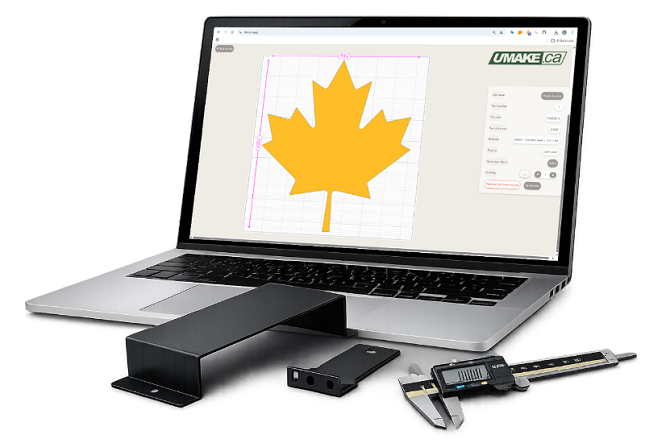
Figure: uMake.ca online factory laptop interface for instant fabrication pricing.
Alt text: fabrication pricing software laptop screen for instant quoting for fabrication.
Video walkthrough: uMake video walkthrough.
Why Instant Quoting for Fabrication Matters
Procurement delays are expensive because fabrication decisions sit close to the critical path. If a general contractor cannot price bracket plates, signage components, stair details, fixture parts, or replacement panels quickly, the downstream schedule absorbs the wait. If a subcontractor has to request three manual estimates for every revision, the estimating team loses time that could be spent checking constructability, comparing materials, or confirming installation details.
Instant quoting changes the rhythm. Instead of treating pricing as a separate administrative step, the buyer can upload a design file, choose material and process assumptions, adjust quantity, and see how the number changes. That makes fabrication pricing software useful before a purchase order exists. It supports early budgeting, value engineering, and vendor comparison without forcing every small question into a custom email thread.
How Instant Pricing Works Step by Step
Step 1: Prepare the design file. A buyer starts with a clean digital file, often a DXF, DWG, AI, SVG, PDF, or similar CAD/vector format. The file tells the quoting system what geometry needs to be cut, routed, bent, or otherwise fabricated.
Step 2: Select the fabrication process. The buyer chooses the likely production method, such as laser cutting, CNC routing, waterjet cutting, or metal bending. The right process depends on material, tolerance needs, edge quality, thickness, and finish expectations.
Step 3: Choose material and thickness. Pricing depends heavily on material type, sheet size, thickness, utilization, and availability. A clear digital quoting flow lets a buyer compare options quickly rather than waiting for a supplier to rebuild the estimate from scratch.
Step 4: Set quantities and turnaround. Quantity affects setup efficiency and unit cost. A prototype order may carry more cost per piece, while 100, 500, or 1,000 pieces can reveal scale efficiencies. Turnaround speed also matters because rush production may change scheduling and cost.
Step 5: Review the automated price and order path. Once the system has file, process, material, quantity, and delivery assumptions, it can generate a transparent price. For teams that still need help, the best online factory model keeps human review available for unusual materials, unclear drawings, or manufacturability questions.
ROI: Time Savings and Cost Reduction from Automated Fabrication Quoting Software
The ROI case is strongest when teams quote repeatedly. Consider a construction estimator who spends 30 to 45 minutes gathering details for each small fabrication request, then waits 24 to 72 hours for a manual response. If that team prices 20 items in a week, the administrative workload alone can reach 10 to 15 hours before any purchasing decision is made. A self-serve quote workflow that reduces each pricing pass to 5 to 10 minutes can give back 6 to 12 hours in that same week.
Cost savings also come from faster comparison. When buyers can adjust thickness, material, quantity, and lead time in real time, they can spot practical savings before committing. For example, moving from a one-off quantity to a batch of 25 may lower the unit price enough to justify ordering spares. A project team that catches even 10 percent savings on a $5,000 fabrication package preserves $500 in budget; doing that across five similar scopes turns a small estimating improvement into $2,500 of avoided cost.
Turnaround improvements can be equally meaningful. Replacing a three-day quoting loop with a same-session price can remove 48 to 72 hours from early procurement. On active jobs, that can be the difference between releasing a detail before the next coordination meeting and carrying an unresolved allowance into the next schedule update.
Real Use Cases for Construction Procurement Automation
General contractors can use instant quoting for fabrication during preconstruction and change management. When an owner asks whether a design change affects cost, the GC can test multiple fabrication assumptions quickly and bring a narrower, more informed range back to the table.
Subcontractors benefit when they need small custom parts that keep crews moving. A glazing contractor might need brackets, an electrical contractor might need stainless cover plates, or a millwork shop might need routed templates. Quick pricing keeps these items from turning into scheduling friction.
Manufacturers and product teams can use the same workflow for prototypes, jigs, packaging fixtures, enclosure panels, or short production runs. The value is not only the instant price. It is the ability to experiment with design, quantity, and material before tying up a purchasing or engineering team.
What Buyers Should Look For in Fabrication Pricing Software
Good software should make the quote easy to understand, not just fast. Buyers should be able to see the relationship between geometry, material, quantity, delivery speed, and final cost. They should also be able to upload common file types, compare production methods, and know when a project needs manual review.
A strong online factory should also connect digital convenience with real fabrication capacity. Uploading a file is only useful if the production team can cut, bend, route, finish, inspect, and ship the part reliably. That is why the best construction procurement automation tools combine transparent pricing with practical manufacturing knowledge.
FAQ’s: uMake.ca – Online Factory as a Solution
What problem does uMake.ca – Online Factory solve for buyers?
It helps buyers move from design file to fabrication price without waiting through a traditional back-and-forth quote cycle. For standard jobs, that means faster budgeting, faster comparison, and fewer delays before production.
Is instant quoting only for large production orders?
No. Online fabrication pricing is useful for prototypes, one-off parts, small batches, and larger production runs. The main advantage is that buyers can see how quantity changes the price before deciding what order size makes sense.
How does uMake.ca – Online Factory support construction teams?
Construction teams often need quick prices for brackets, panels, plates, signage, fixtures, templates, and custom components. An online factory model helps estimators and project managers test options earlier, support value engineering, and reduce procurement uncertainty.
Can automated quoting replace human expertise?
Not completely. Automated quoting is best for repeatable pricing inputs and clear digital files. Human review still matters for unusual materials, complex assemblies, unclear drawings, and manufacturability concerns. A useful online factory keeps both paths available.
What files and services matter most?
Buyers should look for support for common CAD and vector files, plus fabrication processes such as laser cutting, CNC routing, waterjet cutting, and metal bending. The broader the supported workflow, the easier it is to keep more procurement decisions in one place.
Conclusion: Faster Pricing Makes Better Fabrication Decisions Possible
Instant pricing does more than speed up a quote. It changes when decisions can happen. Estimators can compare options before a budget is fixed. Subcontractors can solve small part needs without a long purchasing trail. Manufacturers can test prototypes and production quantities with less friction.
For construction procurement automation, the strongest result is a cleaner handoff between design intent, budget, and fabrication reality. When teams can price parts earlier and more transparently, they can reduce avoidable delays, catch savings before orders are placed, and move custom work toward production with more confidence.