





























Core Operational Benefits of Managed IT Services
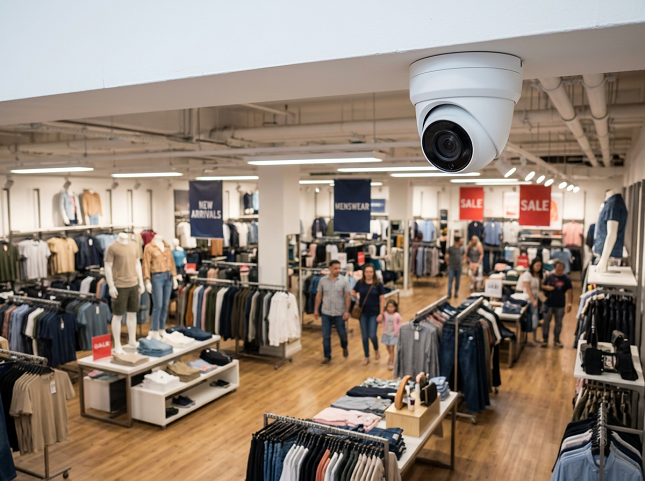
In the dynamic world of retail, safeguarding assets, ensuring employee safety, and optimizing operations are paramount. With an estimated $45.2 billion lost annually to theft in the U.S., the need for robust security solutions has never been more critical. Traditional security measures are evolving, and modern CCTV camera systems for retail shops have become indispensable tools, far surpassing their basic recording functions of previous decades.
We recognize that for many retail businesses, navigating the complexities of advanced security technology can be challenging. This comprehensive guide will explore how integrating commercial-grade CCTV solutions, often managed through expert IT services, can transform your retail environment. We will delve into the specific benefits these systems offer, differentiate them from consumer-grade options, and provide essential insights into installation best practices, key features, and the powerful role of AI analytics.
Join us as we uncover how strategic deployment of CCTV cameras not only deters crime and enhances safety but also provides invaluable operational insights, ultimately contributing to a more secure and efficient retail business model in August 2026 and beyond.
For retail shops, the decision to invest in a commercial-grade CCTV system is often driven by a desire for enhanced security. However, when these systems are integrated and managed through professional IT services, their benefits extend far beyond simple surveillance. We see a significant uplift in overall operational efficiency, loss prevention, and threat mitigation. Managed IT services ensure that the underlying hardware reliability and network architecture of your CCTV system are robust, providing consistent, 24/7 monitoring capabilities that are crucial for any retail environment.
Proactive Network Management through Managed IT Services
A key differentiator for commercial CCTV systems, particularly when managed by an IT service provider, is proactive network management. Unlike consumer-grade systems that might operate on a basic plug-and-play model, commercial setups require careful attention to network resources. We prioritize bandwidth optimization to ensure that high-resolution video streams from multiple cameras don’t choke your network, impacting other critical business operations like point-of-sale systems or customer Wi-Fi.
Managed IT services also ensure the continuous uptime of network video recorders (NVRs) and individual cameras. Through constant monitoring, potential failures are identified and addressed before they lead to downtime, preventing critical gaps in surveillance. Regular firmware updates are applied to cameras and NVRs, not only introducing new features but, more importantly, patching security vulnerabilities and ensuring the system adheres to the latest cybersecurity standards. This proactive approach minimizes risks and maximizes the effectiveness of your security infrastructure.
Scalability and Cost Savings with Managed IT Services
The retail landscape is constantly changing, and your security infrastructure needs to adapt. Managed IT services offer inherent scalability, allowing retail shops to easily expand their CCTV coverage as they grow, add new locations, or reconfigure existing layouts. Commercial systems are designed to support a wide range of channels, from 4 to over 128, providing ample room for growth without requiring a complete system overhaul.
When considering the financial implications, managed IT services often translate into predictable costs. Instead of large, upfront capital expenditures for hardware and unexpected maintenance costs, retailers can opt for subscription-based models that cover equipment, installation, maintenance, and cloud storage. This approach shifts security from a capital expense to a more manageable operational expense. Cloud storage solutions, managed by IT providers, offer redundant and secure archiving of footage, eliminating the need for expensive on-site storage infrastructure. Businesses that install CCTV systems report an average 22% reduction in shrinkage and theft-related losses, demonstrating a clear return on investment. This combination of scalability and predictable operational savings makes a compelling case for integrating CCTV with managed IT services.
Integrating Surveillance Infrastructure and IT Networks
The effectiveness of a modern retail CCTV system hinges on its seamless integration with the broader IT network. This convergence requires careful planning and execution, especially when dealing with commercial-grade solutions. Key technologies like Power over Ethernet (PoE) simplify deployment by allowing cameras to receive both power and data through a single Ethernet cable. This reduces cabling complexity and installation costs.
Crucially, commercial systems often adhere to ONVIF (Open Network Video Interface Forum) compliance, which ensures interoperability between devices from different manufacturers. This prevents vendor lock-in and allows for greater flexibility in system design and expansion. Robust network security protocols are paramount to protect sensitive video data from unauthorized access or cyber threats. Furthermore, effective bandwidth management is essential to prevent high-resolution video streams from overwhelming the network, ensuring smooth operation of all business-critical applications. For retailers looking to enhance their communication infrastructure alongside their security, exploring options like cloud communications services can provide a holistic approach to managing various interconnected systems.
IP Cameras and Network Storage Infrastructure
At the heart of modern retail surveillance are IP cameras, which offer significant advantages over traditional analog systems. These cameras capture high-definition digital video, often reaching 4K resolution, which provides 400% more pixels per frame than 1080p HD. This superior clarity is vital for facial recognition and identifying intricate details, which can improve facial recognition accuracy by up to 400% compared to 1080p systems.
The video streams from IP cameras are managed by Network Video Recorders (NVRs). Unlike DVRs, which process analog signals, NVRs are essentially powerful computers designed to record and manage digital video. They come with varying numbers of channels (e.g., 8, 16, 32, or more) to accommodate different camera counts. To efficiently store the large volumes of high-resolution footage, NVRs utilize advanced video compression technologies like H.265, which significantly reduces file sizes without compromising quality. Most commercial systems also offer options for local storage, often through multiple hard drives, ensuring footage is readily accessible.
Wired vs Wireless Deployment Models
When designing a CCTV system for a retail shop, one of the primary considerations is whether to opt for wired or wireless cameras. Both have distinct advantages and disadvantages:
- Wired Systems: These typically utilize Cat6 cabling for both power (with PoE) and data transmission.
- Pros: Offer superior signal stability, virtually eliminate interference, and provide more reliable, consistent video streams. They are generally more secure against hacking and ideal for complex layouts where long-term, robust coverage is needed.
- Cons: Installation can be more labor-intensive and costly, requiring drilling and running cables through walls and ceilings. Less flexible for future reconfigurations.
- Wireless Systems: These transmit video data over Wi-Fi, often relying on battery power or local power outlets.
- Pros: Offer greater flexibility in camera placement, easier and quicker installation, and are ideal for temporary setups or areas where running cables is impractical.
- Cons: Susceptible to signal interference from other wireless devices, building materials, and distance, which can lead to dropped frames or lower resolution. Battery-powered options require regular recharging, and wireless systems can be more vulnerable to cyber-attacks if not properly secured.
For most commercial retail environments, a hybrid approach or a predominantly wired system is often recommended due to the need for high reliability, consistent performance, and robust security. However, wireless options can be strategically used for specific, temporary, or hard-to-reach areas.

Security, Cloud, and Analytics Technologies for Retail
The evolution of CCTV has moved beyond mere recording. Modern retail security systems, particularly those integrated with managed IT services, leverage advanced cloud surveillance and AI-powered video analytics to provide unprecedented levels of loss prevention and automated alerts. This shift transforms security cameras from passive observers into active intelligence gatherers.
AI-Powered Analytics and Loss Prevention
AI-powered analytics are revolutionizing how retail shops approach security and operations. These intelligent features can significantly reduce the time spent on security investigations by up to 90% and contribute to a 50% reduction in shrinkage, as reported by some retailers. Instead of manually sifting through hours of footage, AI can quickly identify and flag specific events.
Here’s a list of key AI analytics features valuable in retail security:
- Object Detection and Classification: Distinguishes between people, vehicles, and other objects, dramatically reducing false alarms compared to traditional motion detection. This is crucial for identifying suspicious activity without constant human oversight.
- POS Integration: Links video footage directly to point-of-sale transactions. This allows retailers to quickly investigate “sweethearting” (employees giving unauthorized discounts), under-ringing, fraudulent returns, and chargeback fraud by instantly pulling up video evidence related to a specific transaction. Retail stores using video surveillance experience up to a 51% faster resolution of internal theft cases.
- Heatmaps and Customer Flow Analysis: Generates visual maps showing customer movement patterns and dwell times in different areas of the store. This data is invaluable for optimizing store layouts, product placement, and staffing levels, turning security infrastructure into a business intelligence tool.
- Loitering and Perimeter Intrusion Alerts: Automatically detects when individuals linger in sensitive areas for an unusual duration (e.g., after closing hours, near high-value merchandise) or cross virtual boundaries, triggering immediate alerts to security personnel.
- Facial Recognition (with privacy considerations): Can identify known shoplifters or unauthorized individuals entering the premises. While powerful, its implementation requires careful consideration of privacy regulations and ethical guidelines.
- Queue Management: Monitors customer lines at checkout, alerting staff when queues become too long, thus improving customer experience and operational efficiency.
- Unusual Activity Detection: AI algorithms learn normal patterns and flag deviations, such as someone running inside the store or entering restricted areas.
These AI capabilities transform CCTV into a proactive tool, enabling faster incident response, more effective loss prevention, and deeper insights into store operations.
Data Privacy and Security Compliance
While the benefits of advanced CCTV systems are clear, we understand that data privacy and security compliance are paramount concerns, especially in customer-facing retail environments. Retailers must navigate a complex landscape of regulations, and managed IT services play a crucial role in ensuring adherence.
- NDAA Compliance: For many businesses, particularly those with government contracts or specific supply chain requirements, ensuring that CCTV equipment is National Defense Authorization Act (NDAA) compliant is vital. This means avoiding cameras from certain manufacturers deemed a national security risk.
- End-to-End Encryption: All video data, whether in transit or at rest, should be protected with robust end-to-end encryption to prevent unauthorized interception or access.
- Access Control: Strict access control measures must be in place to ensure that only authorized personnel can view, manage, or export video footage. This includes role-based access and audit trails.
- Privacy Regulations: Compliance with regional and national privacy regulations (e.g., GDPR in Europe, CCPA in California) is essential. This often involves clear signage informing customers of surveillance, defining video retention policies, and ensuring footage is not used for purposes beyond security and operational improvement.
- Video Retention Policies: Establishing clear policies for how long video footage is stored is critical. This balances legal requirements, investigative needs, and storage costs. Cloud-managed systems often provide flexible and secure retention options.
By partnering with managed IT service providers, retail shops can ensure their CCTV systems are not only technologically advanced but also legally compliant and ethically managed, protecting both the business and its customers.
Frequently Asked Questions
How do managed IT providers streamline multi-store surveillance operations?
Managed IT providers excel at unifying security infrastructure across multiple retail locations. They achieve this through centralized management platforms that allow security personnel or business owners to view and control cameras from all stores from a single interface. This enables remote auditing of security protocols and footage, ensuring consistency and compliance across the enterprise. Furthermore, these services provide multi-site visibility, giving a holistic view of operations and security events across the entire retail chain, which is invaluable for identifying trends and deploying resources effectively.
What is the advantage of PoE switches in enterprise CCTV setups?
Power over Ethernet (PoE) switches offer significant advantages in commercial CCTV deployments. Their primary benefit is single-cable deployment, meaning a single Ethernet cable can transmit both data and electrical power to IP cameras. This dramatically simplifies installation, reduces the need for separate power outlets near each camera, and lowers cabling costs. The streamlined power delivery also enhances reliability, as cameras are powered directly from the network switch, often with battery backup capabilities at the switch level, ensuring continued operation during power outages. This overall contributes to greater cabling efficiency and a cleaner, more organized installation.
How does AI analytics integration improve retail loss prevention?
AI analytics fundamentally transforms retail loss prevention by moving beyond reactive surveillance. It enables sophisticated exception reporting, where the system automatically flags unusual transactions or activities when integrated with POS data, such as excessive voids, discounts, or returns that might indicate fraud. This directly aids in fraud detection, uncovering instances of “sweethearting” by employees or deliberate shoplifting attempts. By providing immediate, context-rich alerts and easily searchable video evidence, AI analytics significantly speeds up incident resolution, allowing retailers to address theft and other security breaches much faster and more effectively. Over 60% of retail theft incidents occur at store entrances, exits, and cash-handling areas, making targeted AI monitoring in these zones particularly impactful.
Conclusion
In August 2026, the strategic importance of robust CCTV camera systems for retail shops cannot be overstated. We’ve explored how these commercial-grade solutions, especially when supported by managed IT services, offer far more than just basic surveillance. They represent a critical investment in infrastructure consolidation, bringing security and IT networks together for enhanced performance and manageability.
By embracing proactive network management, retailers can ensure optimal system uptime, benefit from operational efficiency, and leverage advanced features like 4K resolution and H.265 compression for unparalleled clarity. The choice between wired and wireless deployment models, while dependent on specific needs, highlights the flexibility available, while the integration of AI-powered analytics transforms passive monitoring into active, intelligent loss prevention. From object detection and POS integration to heatmaps and loitering alerts, these technologies provide invaluable insights that directly impact the bottom line.
Furthermore, navigating the complexities of data privacy, NDAA compliance, and secure video retention becomes seamless with expert IT support. By investing in scalable technology and ensuring proactive monitoring and maintenance, retail businesses can achieve enhanced business continuity, significantly reduce shrinkage, improve customer and employee safety, and gain a competitive edge in an ever-evolving market. The future of retail security is integrated, intelligent, and managed.