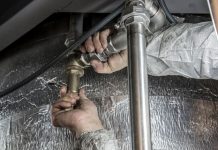































The name asbestos comes from some naturally occurring fibrous materials that have crystallised to form fibres. It is more accurately a group of six silicate minerals. It is a very resistant substance which does not dissolve in water, and it does not evaporate when exposed to heat and fire. Also, its chemical and biological degradation is very strong and therefore, when working around asbestos you will need to be heavily protected and the workwear required to keep you from harm will include disposable overalls, respirators, gloves and possibly eye protection.
Serpentine asbestos would have been the most regularly used type of asbestos you will have come across, although there is a second subgroup called amphiboles. This version (amphiboles) is made up of minerals including amosite, crocidolite, tremolite, actinolite, actinolite, anthophyllite, and chrysolite, which is itself a serpentine asbestos. If you have been exposed to these materials, consulting a mesothelioma attorney ca may help you understand your legal options. Amphibole asbestos, particularly crocidolite (blue asbestos) and amosite (brown asbestos), are considered the most dangerous as they are made up of needle-like, durable fibres.
Unfortunately, this blue type was used commonly in construction, particularly insulation material, boilers and pipes. It was also used in car brakes and floor tiles although this latter has to be disturbed for the fibres to be released. You will find it in insulating boards which would have protected the walls of buildings and ships from exposure to fire. Asbestos cement was used for roofing sheets as well. The import of blue and brown asbestos has been banned since 1985 due to health risks and in 1999 this was made to include white asbestos.
Asbestos fibres are light enough to be suspended in the air and therefore may be breathed in without the use of a mask. It can also enter the soil or water table but there is no evidence to suggest that the ingestion of asbestos fibres is a danger to health. It is workers in demolition, asbestos abatement or maintenance who are most at risk due to the sheer amount of asbestos they may be exposed to.
Although breathing in asbestos fibres or even coming in to contact with them may be hazardous, (there is even a disease called asbestosis which affects the lungs mainly) the World Health Organisation has stated that there is no consistent evidence that ingestion of asbestos fibres is a danger to health. People with breathing conditions such as asthma will be more at risk and the International Agency for the Research on Cancer has classified all forms of asbestos to be carcinogenic to humans.
If you come in to contact with asbestos fibres it is crucial that you don’t make them airborne by brushing them off into the air. Wipe them with a wet wipe, using a gentle patting action, to keep the fibres under control. Remove any contaminated clothing (not over the head) and put the affected material in a bag with the cloth you used.
Asbestos could be present in any building constructed before the year 2000. Do not attempt DIY removal of it yourself and report any findings to your local council. For guidelines contact more information about asbestos and its removal.