































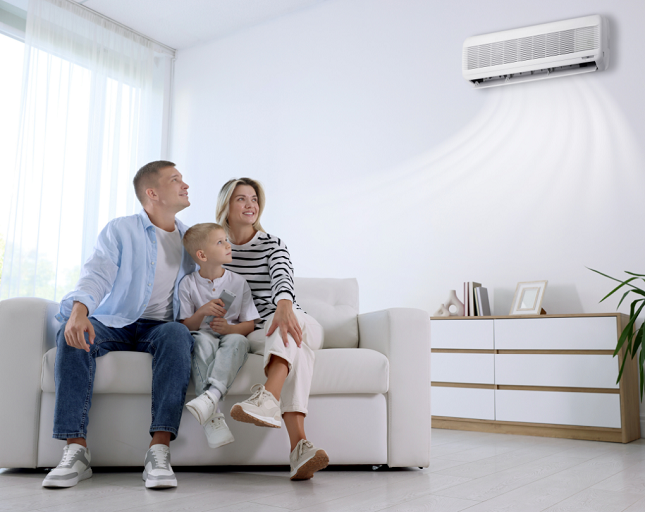
Every summer, there comes a moment when the thermostat and the utility bill seem locked in a competition, but the homeowner loses either way. The house feels sticky by mid-afternoon, the air conditioner hums without pause, and the monthly statement climbs anyway. It does not have to play out this way. An energy-efficient home is the product of many small decisions that work together, from how you cover your windows to how often you swap an air filter.
The habits that keep your home cool also protect your cooling equipment from premature failure. Homeowners and renters who understand how heat enters a house, how cooled air escapes it, and how mechanical systems wear down are better positioned to act early. And when a problem does surface, an established relationship with a professional air conditioner repair company means the issue is diagnosed accurately, often before it grows into a mid-July breakdown.
Why Summer Puts Unique Demands on Home Cooling Systems
Across North America, summer heat waves are arriving earlier, lasting longer, and pairing with humidity levels that force air conditioners to run for extended stretches at or near their operational limits. A system that cycles comfortably in mild weather may run almost continuously through a hot spell.
That extended runtime strains a system in several ways:
- Every extra hour of operation accelerates wear on compressors, fan motors, and electrical components
- Humidity adds to the workload, since removing moisture is part of the cooling job
- Continuous operation leaves no recovery time between cycles, so small mechanical issues worsen faster
The scale of that workload is evident in the energy data. Air conditioning accounts for about 19 percent of all electricity consumed in homes across the United States, making cooling one of the largest line items on a summer power bill.
This is why proactive preparation consistently outperforms reactive repair. A neglected system declines gradually, cooling a little less effectively each season while drawing a little more power. By the time it stops working entirely during peak heat, the repair is larger, the wait is longer, and the discomfort is greater. Treating summer readiness as routine maintenance is the foundation of every strategy that follows.
Home Cooling Strategies That Reduce the Load on Your Air Conditioner
The most effective home cooling strategies work by shrinking the amount of heat your air conditioner has to remove in the first place. Each of the following measures costs less than mechanical repairs and pays back through lower energy use all season long.
Seal Air Leaks and Improve Attic Ventilation
A poorly sealed home leaks cooled air out and pulls warm, humid air in, forcing the cooling system to redo work it has already done. The attic deserves particular attention, because trapped attic heat radiates downward into living spaces for hours after sunset.
Focus your efforts on these problem areas:
- Weatherstripping around exterior doors and operable windows
- Caulking gaps where pipes, vents, and wiring pass through walls
- Soffit and ridge vents that allow hot attic air to escape naturally
- Attic hatch covers, which are often uninsulated and unsealed
Use Window Coverings Strategically
Sunlight through glass creates significant unwanted summer heat, but it is also easy to manage. Homeowners who use their blinds, shades, and awnings strategically can cut the heat entering through windows by as much as 77 percent, with west-facing glass shaded from the afternoon sun seeing the greatest benefit.
A few adjustments make a measurable difference:
- Close blinds, cellular shades, or drapes on sun-facing windows before peak hours
- Choose light-coloured or reflective coverings that bounce heat back outside
- Consider exterior awnings or solar screens, which stop heat before it reaches the glass
Put Ceiling Fans and Smart Thermostats to Work
Air movement and precise scheduling let you raise the thermostat setting without sacrificing comfort. A ceiling fan does not lower the room temperature, but the airflow it creates allows most people to feel equally comfortable at a setting two to three degrees higher.
To get the most from these tools:
- Run ceiling fans counter-clockwise in summer to push air downward
- Turn fans off in empty rooms, since they cool people rather than spaces
- Program a smart thermostat to ease cooling while the house is empty
- Use occupancy or geofencing features to resume cooling before you return
- Review the thermostat’s energy reports monthly to catch unusual consumption early
Routine Maintenance, Energy Efficiency Practices, and Timely Air Conditioner Repair
Routine maintenance is what separates a cooling system that lasts fifteen years from one that struggles through eight. It also determines whether a professional air conditioner repair company is called for a minor fix caught early or a major failure discovered too late.
Stay on Top of Air Filters and Condenser Care
A clogged filter and a debris-choked condenser are the two most common causes of preventable cooling problems, and both are entirely within a homeowner’s control. Understanding how seasonal energy patterns drive your utility bill helps homeowners connect these small maintenance habits to real monthly savings.
Build these tasks into your seasonal routine:
- Replace or clean air filters every one to three months during heavy use
- Clear leaves, grass clippings, and debris from around the outdoor condenser
- Maintain at least sixty centimetres of clearance on all sides of the unit
- Gently rinse condenser fins with a garden hose when they collect dust
Recognize the Signs of Declining Efficiency
Cooling systems announce their decline through small changes that are easy to dismiss. Learning to read these signals allows problems to be resolved before they cascade into compressor damage or refrigerant loss. Modern HVAC technology makes it easier to detect problems early through sensors and real-time monitoring.
Watch for these early warnings:
- Rooms that cool unevenly or take noticeably longer to reach the desired temperature
- Unusual sounds such as grinding, rattling, or repeated clicking at startup
- Energy bills are climbing even though usage habits have not changed
- Short cycling, where the system turns on and off in rapid succession
- Excess humidity indoors despite the system running regularly
Weigh Repair Against Replacement for an Aging System
Most central air conditioners last between 12 and 15 years, and repair decisions should account for where a unit falls within that lifespan. A useful benchmark is that when a repair estimate approaches half the cost of a new system on equipment more than a decade old, replacement usually delivers better long-term value. Newer high-efficiency units consume substantially less electricity for the same cooling output, which means the upfront cost is gradually offset by lower operating bills, improved humidity control, and fewer service calls. Pairing a new system with insulation upgrades and eco-friendly home improvements multiplies the benefit, since a well-insulated, energy-efficient home allows even a smaller unit to perform comfortably.
A Comfortable Summer Starts Long Before the Heat Arrives
Every strategy in this article points to the same conclusion: the cheapest cooling problem is the one that never develops. Sealing leaks, shading windows, changing filters, and clearing the condenser are small acts that keep your home cool, lower energy bills, and extend the life of expensive equipment. Neglect works in the opposite direction, quietly converting minor wear into major failure at exactly the moment the system is needed most. Homeowners who notice inconsistent cooling, strange noises, or unexplained cost increases should reach out to a professional air conditioner repair company promptly, because early diagnosis is consistently cheaper than emergency replacement. Staying ahead of small issues is not just good maintenance. It is the most reliable path to an energy-efficient home that stays comfortable through the hottest months of the year.