


























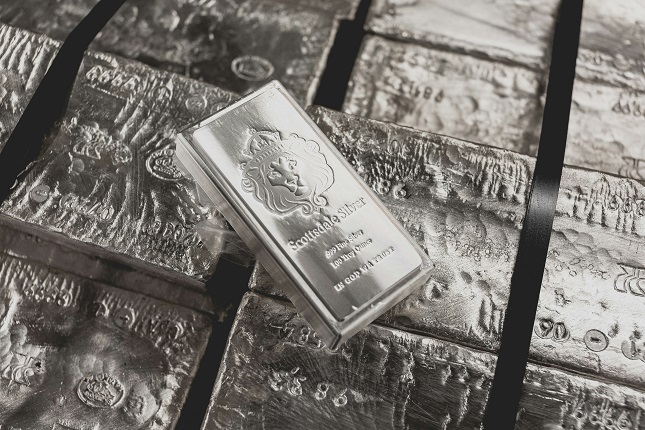
The good fakes don’t look fake anymore. A counterfeit silver bar can carry the right hallmark, the right assay card, even a serial number that matches a real refiner’s records, and still be worth a fraction of its sticker weight in silver.
Five tests below will catch almost everything a casual buyer runs into, ranked from “needs nothing but your hands” to “needs a piece of equipment.” None of them, on their own, is proof. Combined with knowing where to buy silver from a source that stands behind what it sells, they get you most of the way there.
Why Fakes Got Harder to Catch
Silver is the softer target. Gold counterfeiting draws more headlines, but silver’s lower per-ounce price means dealers and hobbyists inspect it less carefully, and higher volume moves through hands with less scrutiny at every step. That combination is exactly what counterfeiters look for.
The market backdrop makes the incentive worse. The Silver Institute’s 2025 survey recorded a 3 percent drop in total demand in 2024, driven mainly by weaker physical investment, but the supply side didn’t loosen up to match — the same survey period marked one of several consecutive years where the market pulled in more silver than mines and recyclers produced.
Trade press has already documented the shift from opportunistic fakes to organized ones. Coin World reported on counterfeit silver bars and rounds manufactured to be visually identical to genuine bullion products, correctly stamped .999 fine and one troy ounce, and sold online in bulk for under a dollar each — with the base-metal composition disclosed by the seller, not hidden. Buyers found out they’d bought fakes because the finished bars had been resold as genuine further down the chain.
Packaging and paperwork can now be cloned as easily as the bar itself. That’s why the tests below focus on the metal, not the label.
Five Tests You Can Run Yourself
Weight and Dimensions
A genuine 1kg or 1oz silver bar has a fixed footprint because silver has a fixed density: 10.49 g/cm³. Measure the bar with calipers, weigh it on a scale accurate to a tenth of a gram, and check both numbers against the refiner’s published specs.
This test is more reliable for silver than most people expect. Common filler metals miss the target in one direction or the other — copper runs about 15 percent light at 8.96 g/cm³, plain lead runs about 8 percent heavy at 11.35 g/cm³ — so a bar built from either one will be visibly wrong on a scale, even if the outside looks perfect.
The Magnet Slide
Silver is diamagnetic — it doesn’t attract to a magnet, and a strong neodymium magnet dragged across a tilted genuine bar will slide down slowly, almost floating, because of the eddy currents silver generates as the magnet passes. A fast drop, or a magnet that grabs and sticks, means there’s ferrous metal somewhere in that bar. It rules out the crudest fakes in about ten seconds.
The Ping Test
Tap a genuine silver bar, and it rings — a clear, high, sustained tone. Plated base metal thuds and dies fast. A free frequency-analyzer app on a phone can turn “sounds off” into an actual number to compare against known-good silver.
The Ice Test
Silver conducts heat faster than any other metal. An ice cube set on a genuine bar visibly melts faster than one set on almost anything else, plated copper included. It’s not precise, but side by side against a bar you already trust, the difference is obvious within a minute.
Specific Gravity and Ultrasound
Water displacement — weighing the bar dry, then submerged — gives you a density calculation more exact than a scale-and-calipers estimate. It’s where the first four tests run out of road, because it also exposes fillers that are close to correct but not exact.
Where even that fails is against alloys purpose-built to match silver’s density: lead-tin blends and molybdenum-based cores, both of which can be tuned close enough to pass a casual weight-and-size check. In order to measure them consistently, one needs a device known as an ultrasonic thickness gauge, as it measures the velocity of sound through the metal material and not the surface, or alternatively, a separate conductivity meter such as a Sigma Metalytics conductivity meter. These run from a few hundred dollars up, which is exactly why they’re the last test on this list rather than the first.
One correction worth making here: tungsten shows up constantly in silver-counterfeiting articles, but it’s the wrong metal for the job. Tungsten’s density (19.25 g/cm³) is a near-perfect match for gold (19.30 g/cm³), which is why tungsten-cored fakes are a real and well-documented gold problem. It’s nowhere close to silver’s density, so a tungsten core would fail even the crudest weight check on a silver bar. The alloys that actually threaten silver bars — lead-tin blends, molybdenum, some nickel-silver combinations — get far less attention than tungsten does, largely because tungsten makes for a better headline.
| Test | Cost | Time | What It Misses |
| Weight & dimensions | Under $30 (calipers + scale) | 2 minutes | Density-matched alloys built to fool this exact test |
| Magnet slide | Under $10 | 30 seconds | Any non-magnetic filler — most fakes pass this alone |
| Ping test | Free (phone app) | 1 minute | Thick plating, alloys with a similar acoustic profile |
| Ice test | Free | A few minutes | Subtle gaps without a genuine bar to compare against |
| Specific gravity/ultrasound | $50–$600+ | 5–10 minutes | Provenance — a passing test still isn’t a paper trail |
What None of These Tests Catch
Every test above examines the metal. None of them examines the paperwork, and paperwork is the easiest part to fake. Assay cards, tamper-evident seals, and serial numbers can all be cloned well enough to fool a visual check, sometimes well enough to match a real refiner’s numbering scheme.
The Royal Canadian Mint’s response to this exact problem, for its bullion coins, is worth understanding even if it doesn’t apply directly to bars: its Bullion DNA system relies on a micro-engraved security mark on every coin, checked against a secure database rather than a visual stamp. That’s the direction the industry is moving — authentication that doesn’t rely on something a counterfeiter can simply photograph and reproduce. Bars from major refiners increasingly ship with comparable digital verification, and it’s worth asking a dealer whether the bar you’re considering has it.
There’s also a problem no metal test will ever solve: a genuine bar bought from a dealer with no obligation to buy it back is still a liability when you go to sell. Authenticity and liquidity are two different questions, and only one of them shows up on a scale.
The Check That Matters More Than the Tests
The real defense against buying a fake isn’t a magnet or an ultrasonic gauge — it’s chain of custody. The London Bullion Market Association’s Good Delivery standard exists precisely because only refiners meeting strict requirements on purity, quality, and physical appearance are accredited to supply bars into the London market, and those refiners are monitored on an ongoing basis, not just approved once. A bar traceable back to a Good Delivery refiner, through a dealer who’s licensed and willing to put their name on the transaction, starts from a different risk position than one bought anonymously online for a price that seems too good to pass up.
Assay-on-receipt from your dealer, refiner-direct sourcing where possible, and a seller who takes the bar back are the three questions worth asking before the sale, not after.
Testing a Bar You Already Paid For Is the Wrong Order of Operations
Every test in this guide works better as a pre-purchase filter than a post-purchase forensic exercise. By the time you’re drilling into a bar you already own, the money’s already gone whichever way it’s going to go. The stronger move is where to buy silver in the first place — sourced, assayed, and backed by someone who’ll still take your call if something’s wrong with it.