


























Walk down any busy commercial street today and you will almost certainly spot something you would not have seen a decade ago: a glowing, floating image hovering in midair inside a storefront window, or a company logo beamed in vibrant color across a building facade. These are not movie props or elaborate illusions reserved for trade show giants. They are affordable, commercially available advertising tools that small retailers, restaurants, event planners, and brand managers are quietly adopting at a rapid pace.
Two technologies in particular are leading this shift in how businesses connect with customers visually: the 3D hologram fan and the gobo projector. Both create bold, eye-catching displays that traditional print and digital advertising simply cannot replicate. But they work differently, serve different environments, and suit different business needs. Understanding how each one works — and when to use them — can make the difference between a brand that blends in and one that genuinely stops people in their tracks.
What Is a 3D Hologram Fan?
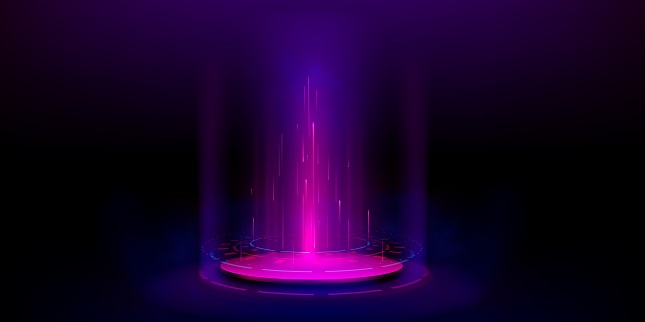
A 3D hologram fan is a circular LED display device fitted with spinning blades. Each blade contains a line of LEDs, and as the fan spins at high speed — typically around 700 to 900 revolutions per minute — the persistence of vision effect creates the illusion of a three-dimensional image floating in space. The content is loaded onto the device via a memory card or wireless connection, and the result is a vivid, floating animation that appears to have depth and dimension even though it is technically a 2D projection on spinning LEDs.
The effect is genuinely striking. If you have ever seen one in person, the instinct is almost always to reach out and touch the image, because it looks that real. For businesses, this translates directly into dwell time. People stop, stare, and often take out their phone to film it — which means your brand is not just being seen in the store; it is being shared on social media by customers who become involuntary ambassadors.
Hologram fans come in a wide range of sizes. Compact desk units are popular for countertop displays and reception areas, while mid-range sizes work well in retail windows or exhibition stands. Larger fan arrays — sometimes spanning an entire wall — are used in car showrooms, nightclubs, airports, and flagship retail environments where maximum visual impact is the goal.
What Is a Gobo Projector?
The word “gobo” originally comes from the theatre and photography world, where it referred to a device used to block or shape light. In modern advertising, a gobo projector is a focused LED light source that shines through a custom-engraved glass lens (the gobo) to project a crisp, stationary image — usually a logo, text, or graphic — onto a surface. That surface can be a floor, a wall, a pavement outside a shop entrance, or even the side of a building from a considerable distance.
Where 3D hologram fans are most effective indoors in controlled lighting conditions, gobo projectors are designed to work outdoors and at long range. A quality gobo projector can cast a sharp, full-color logo from several metres away and maintain legibility and visual impact even in environments where ambient light is significant. The highest-powered models can project clearly at distances of up to 25 metres in dim conditions, making them genuinely viable as an alternative to illuminated signage or outdoor banners.
For a business that wants to claim space on a pavement, at an event, or on the exterior of a venue without applying for planning permission for a permanent sign, a gobo projector is a remarkably flexible and cost-effective tool. The projection can be redirected, the image can be swapped by replacing the lens, and the whole unit can be moved to a new location in minutes.
Why These Technologies Are Growing So Quickly
The appeal is straightforward: both technologies create what marketers call “pattern interruption.” The human eye is drawn to movement and unexpected visuals. A static poster on a wall competes with dozens of other static posters. A floating holographic animation or a logo glowing on a pavement is, in most retail and event contexts, a genuinely novel experience.
Research consistently shows that novel visual stimuli increase engagement. Studies on retail display effectiveness suggest that movement in a display window can increase foot traffic conversion by 30 to 50 percent compared to static equivalents. Brands that have installed hologram fan displays in their shopfronts report that customers regularly stop and engage with the display for 30 to 40 seconds — vastly longer than the fraction of a second most traditional advertising earns.
There is also an element of perceived prestige at play. Holographic and projection advertising is still associated in many consumers’ minds with high-end brands and futuristic experiences. A small independent retailer who installs one of these displays immediately signals to potential customers that they are an innovative, forward-thinking business — a subtle but real psychological advantage.
Industries Seeing the Biggest Impact
Retail is the most obvious application, but the list of industries successfully using hologram fans and gobo projectors has grown considerably. Here is where these technologies are having the most measurable commercial impact today:
Hospitality and restaurants are using hologram fans to display menu highlights, signature dishes, and cocktail presentations in a way that makes food look genuinely appetising. Rather than a laminated menu card, imagine a photorealistic floating animation of your signature dish rotating in the entrance of your restaurant.
Event and exhibition companies have embraced holographic displays as a way to create memorable booth experiences at trade shows and corporate events. In a hall full of identical pop-up banners and screen displays, a hologram stand creates genuine crowd-drawing power.
Real estate developers and property agents are using larger hologram fan displays and gobo projectors to present architectural renders and floor plans in a visually immersive way that flat brochures cannot match.
Nightclubs, bars, and entertainment venues use holographic displays as ambient visual elements that contribute to the overall atmosphere, projecting logos, thematic content, and light shows that elevate the perceived quality of the space.
Medical and pharmaceutical companies exhibiting at conferences have used hologram fans to present product anatomy, molecular structures, and procedural animations in 3D — making complex information dramatically easier to understand and far more memorable.
Choosing the Right Technology for Your Business
The decision between a 3D hologram fan and a gobo projector mostly comes down to environment and intent. If your primary goal is indoor display — capturing attention at a storefront window, exhibition booth, reception desk, or point of sale — a 3D hologram fan is usually the better choice. The floating animation effect is best appreciated in relatively controlled indoor lighting, and the range of content you can display is broader, from full-color product animations to text and logo rotations.
If your goal is outdoor brand visibility — marking an entrance, projecting onto a pavement or wall at an event, or claiming visual territory in a high-traffic public space — a gobo projector is typically the more appropriate tool. It is weatherproof, powerful enough to compete with ambient light, and the projection can be placed exactly where foot traffic is highest.
Many businesses ultimately find that the two technologies complement each other well. A restaurant might use a hologram fan in the window to draw attention and a gobo projector on the pavement outside to project the logo and guide people toward the entrance. Together, they create a layered visual brand presence that is difficult to ignore.
Why INNAYA Has Become the Go-To Source
As demand for hologram advertising technology has grown, so has the number of suppliers offering it. The challenge for buyers is quality and reliability. Hologram fans involve spinning motors, LED arrays, and often wireless content management — and low-quality units fail quickly or produce images that look blurry and disappointing rather than crisp and impressive.
INNAYA has built a strong reputation in this space by focusing on product quality, range, and customer support. Their lineup of 3D hologram fans covers multiple sizes from desk-friendly compact models right up to their H-PRO lifesize unit, giving businesses at every scale the right option for their space. All units come with a free 16GB memory card and are designed for straightforward plug-and-play setup, which matters a great deal for busy business owners who do not want to spend hours troubleshooting technical setups.
Their G10 gobo projector range is equally impressive. Available in 60W and 110W configurations, these units are IP67 waterproof, built to handle outdoor conditions, and capable of long-distance projection up to 25 metres. Each projector comes with a custom-engraved lens featuring your logo — a thoughtful inclusion that removes the need to source custom gobos separately. For businesses looking at the full range of 3D hologram fans, INNAYA’s collection at innaya.store covers everything from entry-level to professional-grade setups with comprehensive warranty coverage and genuine support.
Getting Started
If you are new to holographic advertising, the most practical starting point is to visit a supplier’s website and match their available units to your specific space. Measure the area where you intend to place the display, consider the ambient light levels, and think about what content you want to show. Most manufacturers, including INNAYA, provide detailed product specifications that include projection distance, brightness (measured in lumens), and recommended operating conditions.
Content creation is simpler than most people expect. Hologram fans accept video files — usually MP4 format — that are designed on a black background so the black areas appear transparent in the display. There is a growing ecosystem of designers who specialise in hologram fan content, and several online marketplaces offer pre-made animations that can be customised with your branding.
The gobo projector experience for businesses involves one additional step: getting your logo engraved into a glass lens. INNAYA handles this as part of the purchase process — you upload your logo in PDF format when placing your order, and the lens is custom-engraved and included with the unit. For anyone interested in exploring what a gobo projector for business could look like in practice, the G10 product page at INNAYA walks through the selection process clearly, including guidance on choosing between the 60W and 110W models based on projection distance and environment.
The Bigger Picture
What is happening with hologram fans and gobo projectors is part of a broader shift in how physical businesses compete for attention. As online advertising has become increasingly crowded and expensive, and as consumers have grown more adept at tuning out digital ads, the value of real-world, physical-space advertising has actually increased. A display that makes someone physically stop walking and stare for thirty seconds is genuinely hard to replicate with a Facebook ad.
The businesses winning in their local markets right now are often those that combine smart digital presence with compelling in-person experiences. Holographic and projection technology sits right at the intersection of those two things — it is physical enough to create a real moment of wonder, but visual enough to generate shareable content that extends reach far beyond the people who walked past that day.
Whether you are a small retailer looking to drive more foot traffic, a bar owner wanting to create a more immersive atmosphere, or a marketing manager looking for a memorable presence at a trade show, these technologies represent one of the more genuinely exciting developments in practical business advertising in recent years. The barrier to entry is lower than most people expect, the impact is immediate, and the brands that adopt early still benefit from the novelty factor while it lasts.