






























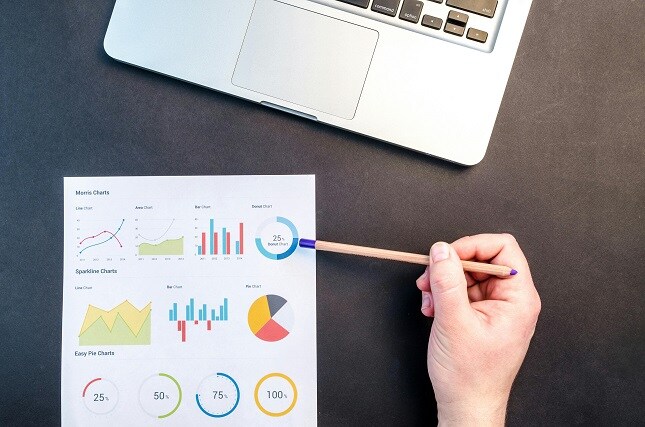
The Nifty 50 is more than a benchmark index, it’s a visual guide to understanding the heartbeat of India’s stock market. Featuring the leading 50 firms listed on the NSE, it provides a concise yet impactful glimpse into market momentum, sector dynamics, and investor sentiment.
But what makes it truly powerful is how it visually communicates these insights. In this article, we’ll explore how investors and traders can use the Nifty 50 to quickly interpret market trends, spot opportunities, and make informed decisions through visual tools and patterns.
How Does the Nifty 50 Help with Market Analysis?
The Nifty 50 comprises a diversified mix of companies from 13 key sectors, collectively accounting for around 55.48% of the NSE’s free-float market capitalization.
As it reflects the collective performance of the country’s most influential blue-chip companies, it is widely regarded as a barometer of the overall market. Its trends are closely monitored by institutional investors, retail participants, and policymakers, making it a key reference point for understanding market sentiment and economic momentum.
Here are some of the ways Nifty 50 helps with market analysis.
1) Line & Candlestick Charts
The simplest way to visualise the Nifty 50 is through line or candlestick charts. These show:
- Trends: A rising Nifty 50 indicates bullish market sentiment; a falling trend points to caution or fear.
- Volatility: Sharp candles and long wicks reflect investor nervousness.
- Reversals: Candlestick formations like dojis, hammers, or engulfing patterns offer reversal signals.
Imagine you’re tracking the ITC share price. If ITC sees a sharp upward move and is a key contributor that day, you’ll likely see that momentum echoed in the Nifty 50’s chart. Big moves in large-cap stocks like ITC, Reliance, or HDFC Bank often push the index noticeably higher.
2) Nifty 50 Heatmaps
The Nifty 50 heatmap offers a visually intuitive way to track the performance of all 50 constituent stocks in real time. Using a colour-coded format like green for gainers and red for losers, it presents a complete picture of market action at a single glance. The darker the colour, the higher the gain or fall.
Why Heatmaps Matter:
- Immediate Clarity: Instead of scrolling through tables of numbers, the heatmap shows at a glance which stocks or sectors are driving the market up or down.
- Tracking Trends: Heatmaps make it easy to spot sector-wide movements. For instance, if technology stocks are showing strong gains in green while energy stocks are turning red, it highlights where investors’ focus is shifting in the market.
- Smart Risk Management: Detect if your portfolio is heavily tilted toward lagging sectors, helping you rebalance effectively.
3) Technical Indicators
Technical indicators help you look beyond just price movements by analysing past data to spot trends and momentum. Some of the most commonly used indicators include:
- Moving Averages (MA): These smooth out price data to help identify the overall trend direction. For example, a short-term moving average crossing above a long-term moving average is often seen as a bullish signal, indicating potential upward momentum.
- Relative Strength Index (RSI): This shows whether the market is overbought (above 70) or oversold (below 30), helping you gauge if the index might soon reverse direction.
- MACD and Bollinger Bands: These indicators track momentum shifts and volatility, giving you clues about possible market strength or weakness.
Final Thoughts
By combining traditional visual tools, such as candlestick charts and technical indicators, with advanced solutions like ScanX heatmaps, the Nifty 50 becomes an even more powerful resource for market analysis. Whether you’re trading actively or investing for the long haul, mastering these visual techniques will give you sharper insights and a competitive edge in India’s fast-paced stock market.
But remember, no tool is perfect, markets can be unpredictable, and external events can override what the charts show. That’s why it’s important to use these visuals alongside other research to make smarter and more confident decisions.