



























In the world of facility management, there is a natural desire for simplicity and cost-savings. This often leads businesses to seek out “one-size-fits-all” safety products, standard kits that promise to work in any environment. However, when it comes to life-saving equipment, the “universal” approach is often a dangerous illusion. Custom engineered fall protection Solutions is not a luxury; it is a necessity driven by the fact that every building, every task, and every worker is different.
The danger of a generic solution is that it assumes a “perfect” environment. But in reality, pipes get in the way, roof slopes vary, and building materials age. A custom system is designed to work around your facility, rather than forcing your facility to fit the equipment.
The Physics of the Specific
Every fall is a unique physical event. Factors such as the worker’s weight, the height of the anchor, and the distance to the nearest obstruction all change the “arresting force” of a fall. A generic lanyard might be rated for a 200-lb person, but what if your worker weighs 280 lbs with their tool belt? Or what if the anchor point is at waist height instead of overhead?
Custom engineered fall protection takes these specific variables into account. An engineer will perform a “worst-case scenario” calculation for your exact workspace. This ensures that the system provides enough clearance and that the structural anchors can handle the specific torque generated by your unique layout.
Solving Architectural Challenges
Many modern workplaces feature complex designs that standard equipment simply can’t handle.
- Aged Structures: Older buildings may not have the structural capacity for a standard 5,000-lb anchor. A custom solution might involve “spreading the load” across multiple beams.
- Complex Machinery: In a factory, a standard straight lifeline might be blocked by overhead vents or cranes. A custom system can be curved or segmented to provide continuous protection without interrupting production.
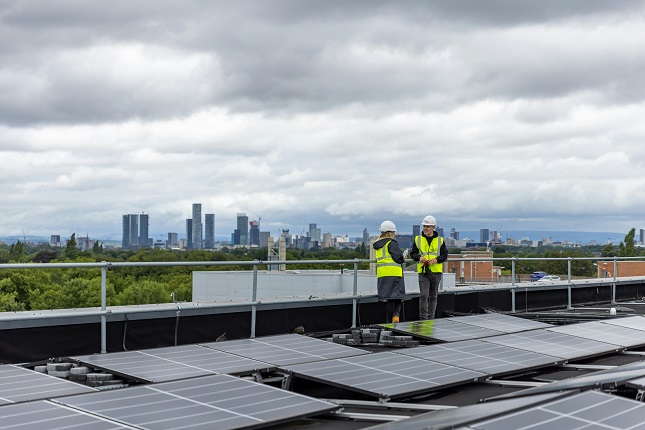
- Fragile Roofs: Some roofs cannot be pierced. A custom-engineered non-penetrating system can be weighted specifically for the wind loads of your geographic region.
The Cost of “Force-Fitting”
When you try to make a generic system work in a complex space, you often end up creating new hazards. For example, if a standard lifeline is too far from the work edge, it creates a “swing fall” hazard. Or, if a guardrail isn’t the right length, workers might be tempted to “reach around” it. Custom engineered fall protection eliminates these “safety gaps” by ensuring 100% coverage of the specific hazard zone.
Custom vs. Generic: A Reality Check
| Feature | Generic “Kit” | Custom Engineered System |
| Structural Match | Assumes “standard” steel | Verified against your building’s blueprints |
| Obstacle Clearance | Often blocked by vents/pipes | Designed to weave through obstacles |
| User Weight | Standard 310-lb limit | Calibrated for your actual team and tools |
| Compliance | General OSHA compliance | Site-specific PE-stamped certification |
Final Thoughts
Your facility is unique, and your safety system should be, too. Custom engineered fall protection provides the precision, reliability, and peace of mind that a generic kit simply cannot match. By designing for the reality of your workspace, you ensure that your safety measures are an asset to your workers, not an obstacle.
Frequently Asked Questions
- Is custom engineering much more expensive?
A: While the upfront design cost is higher, custom systems often save money in the long run because they don’t require expensive modifications to your building and they don’t interfere with productivity.
- How do I start the custom design process?
A: It begins with a site visit. A safety engineer will walk your facility, take measurements, and identify “pinch points” or structural challenges that a generic system would miss.
- Can a custom system be moved if we relocate?
A: Yes, many custom systems are modular. An engineer can evaluate your new space and determine how to adapt the existing components to the new layout.
What is “Structural Shadowing”?
A: This is an engineering technique used in custom systems where the safety gear is designed to “hide” behind or within the building’s existing architecture to maintain aesthetics and avoid interfering with other equipment.