


























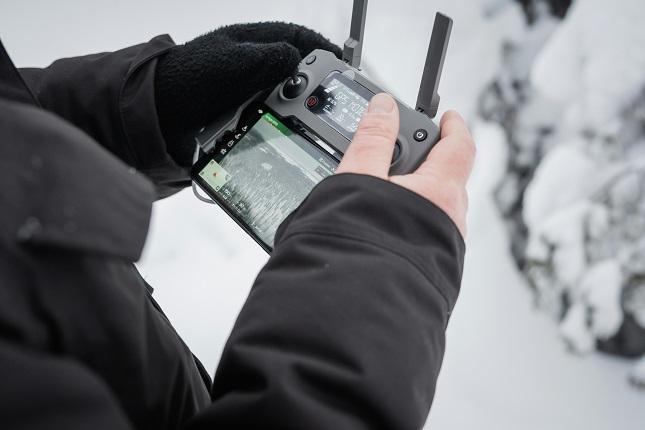
Flight controller technology is revolutionizing how operators approach drone revenue.
Once considered a hobby, drones are quickly becoming mainstream business tools. Those who are investing in drone sensor integration right now are going to be the ones who profit immensely.
But here’s the kicker…
The drone industry is growing exponentially. The global drone market was predicted to reach $83.8 billion by 2025 and is expected to reach $190.3 billion by 2033. That’s an insane opportunity for businesses that know how to capitalize.
And without drone sensor integration through the proper flight controller, businesses can’t capitalize.
In this article you’ll learn:
- Why Flight Controller Technology Is Essential For Revenue
- Drone Sensor Integration Can Create These Revenue Streams
- Considerations for Choosing a Flight Controller Setup
- How To Translate Sensor Data Into Happy Clients
Why Drone Sensor Integration and Flight Controller Tech Matters For Revenue
Flight controllers are the brains behind every drone operation.
Not only do they control stabilization and GPS positioning, but flight controllers dictate how sensors interact with other pieces of hardware. The best sensors in the world won’t matter if the flight controller can’t interpret their data correctly.
Junk data means one thing…dollars lost.
Whether it’s providing aerial footage to real estate agents or gathering agricultural data for local farmers, clients are paying for accurate information. If the drone can’t deliver that, the business won’t last long.
Partner with a trusted CubePilot distributor that specializes in top-of-the-line flight controllers. The right drone sensors won’t do any good if the system can’t read their data.
Drone Sensor Integration Can Create These Revenue Streams
Now it’s time to get into the juicy stuff. By implementing advanced drone sensor integration, businesses can create revenue streams that just weren’t possible even a few years ago.
Sensor shipments are expected to grow 4x faster than drone shipments from 2025 to 2036.
So what can drone sensor integration offer? Let’s dive into a few prime examples.
Agriculture
By outfitting drones with multispectral sensors and NDVI sensors, farmers can monitor crop health on thousands of acres of land. And they’re willing to pay for it.
Why? Because this technology allows them to limit waste and maximize yields.
Without proper sensor integration, flight controllers can’t handle pulling up that kind of data from multiple sensors at once. But when done right, expect ag clients to call year after year.
Infrastructure Inspection
Drones with integrated thermal and LiDAR sensors are ideal for infrastructure inspection. Everything from energy companies that need to monitor wind turbine health, to telecom providers looking for damaged cell towers can benefit.
But to get reliable data, flight controllers need to be able to handle tight waypoint navigation while keeping those expensive sensors calibrated. Clients know this and are willing to pay a premium for their drones.
Mapping & Surveying
There’s never been more demand for topographic and 3D maps. With drones, businesses can capture that data in a matter of hours rather than weeks. But in order to provide that data, drone sensor integration and flight controllers need to support RTK technology.
If the system can’t read accurate GPS data, chances are the surveying or mapping data won’t cut it for professional-level clients.
Emergency Response
More rescue teams are using drones with thermal and acoustic sensors to scan for people. Obviously, these missions require flight controllers that can operate in extreme conditions.
The emergency drone market isn’t the largest, but it sure does help build reputation. Great work with local emergency response efforts could lead to a government contract.
Considerations for Choosing the Right Flight Controller Setup
Just like drones, flight controllers come in all shapes and sizes. When researching which setup will work best for the target market, consider these things:
- Sensor compatibility – Will the flight controller work with the sensors needed? This includes everything from multispectral to LiDAR sensors as well as thermal and RTK modules.
- Processing power – Drone sensor integration can tax the FC if it’s not built to handle it. Plenty of processing space is needed to pull up that data.
- Reliability – Remember, these drones are going into commercial business applications. Make sure the flight controller can keep up.
- Expandability – The business is going to grow as new clients come in. Pick a flight controller that allows for integrating more sensors down the road.
The better the flight controller, the more services on offer. Don’t skimp on the hardware.
Turning Sensor Data Into Happy Clients
The best drone sensors out there won’t matter without knowing how to sell the services.
Here’s a little insider secret…
Clients don’t care about the technology. All they care about is their problem being solved.
A farmer doesn’t care about multispectral data. They just want healthier crops.
An insurance company doesn’t care about LiDAR, they don’t want to miss any valuable information while inspecting a property.
Kickstart the business by finding local industries that can benefit from drone sensors. Then create a catalog of past customer successes that highlight the data’s value. Showing off concrete results makes it a lot easier to gain trust with new clients and charge what the work is worth.
Also try to focus on recurring revenue. Contracts for consistent inspections, seasonal agriculture work and surveying can become predictable sources of income. Once these types of relationships are established, the business will be able to thrive.
Final Thoughts
Drone sensor integration and flight controller technology are creating more revenue streams for businesses than ever before. Whether the focus is precision agriculture or infrastructure inspection, there’s a market out there.
All it takes is:
- Investing in the right hardware
- Building expertise
- Selling solutions
- Focusing on recurring revenue
The drone industry won’t slow down. Those who take advantage of drone sensor integration now will be leaders in the industry by the time it doubles in size.