





























lives in a manner that we could hardly anticipate. One moment, everything is running smoothly, and the next, the lights go out, the appliances stop, and work comes to a standstill. The result of such incidents leaves many people feeling unprepared, scrambling to find alternative power solutions that are both safe and practical.
A portable generator is a viable solution to this challenge. These devices supply temporary power whenever required, whether during a storm, an outdoor event, or at a remote job site. Their versatility renders them a feasible solution to anyone wishing to remain independent.
This guide will assist beginners in understanding portable generators thoroughly. This will also cover points such as how they operate, how to determine the right size, fuel options, safety practices, and maintenance tips. You will become convinced by the end of the article to select and operate a generator that best fits your needs.
Purpose and Everyday Use
There are portable generators that offer electricity in places and situations where normal power is inaccessible. They are necessary in emergencies, constructions, outdoor events, or remote operations, which provide an affordable and reliable power supply.
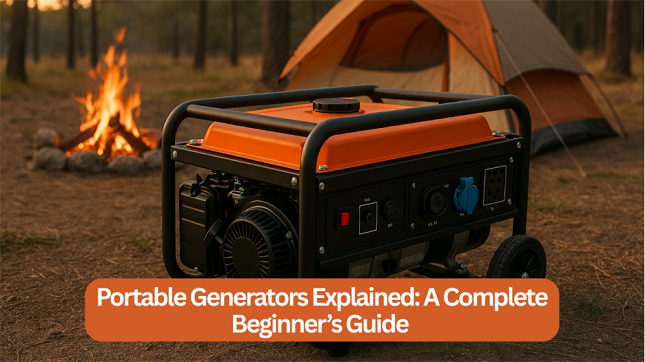
A portable generator is able to convert fuel to electricity, which then drives appliances, tools, and devices. It can be relocated to other areas, unlike stationary systems, so it is ideal, especially in temporary or dynamic needs. This mobility feature is useful while on camping trips or in storm recovery cases.
Beginners can make informed decisions by understanding their everyday uses. Through the needs-based approach, such as what devices need to be powered and how frequently, a user can prevent wasting or purchasing equipment that is underpowered. This strategy will make a generator a viable and cost-efficient solution instead of a machine that is not fully utilized.
Core Components and Operation
All portable generators consist of a few important elements that collaborate to generate electricity. Fuel is burnt in the engine to create mechanical energy that moves the alternator to produce electrical energy. A voltage regulator maintains a consistent output, and outlets provide convenient access for connecting devices.
The working principle of a generator will assist in avoiding some errors. For instance, placing the generator inside the house or in a closed area poses a risk of carbon monoxide poisoning, which is a severe health risk. Moreover, it is helpful to know the wattage range so that the gadgets connected to the system do not overload it.
Beginners who grasp these fundamentals can use generators efficiently and safely. Knowledge of internal parts also makes troubleshooting, regular maintenance, and optimization of performance simple. This information makes the generator a dependable product, whether in normal power demands or in times of emergency.
Power Output and Sizing Logic
It is essential for performance and safety to choose the correct generator size. All appliances have running wattage, especially devices like refrigerators, sump pumps, and power tools. Both calculations are necessary to ensure the generator is able to meet the demand.
Begin by listing all essential devices and their wattage. Appliance wattage can be estimated using the government website for accurate planning. The slight oversizing of the generator gives reliability, but the undersizing can cause overloads. Hence, it is possible to damage the generator and other equipment attached to it.
Correct sizing also influences fuel efficiency and operational lifespan. A generator that is operated consistently close to its recommended power loads is efficient and optimizes fuel. Hence, beginners should take time to assess the power needs. This will accurately help determine the type of generator to use, eliminate the unexpected, and guarantee seamless operation when power is needed most.
Fuel Options and Efficiency
The cost, efficiency, and convenience are highly influenced by the choice of fuel. Ease of access and refueling in a short time is the reason petrol generators are popular, making them a practical choice for emergencies.
Diesel models are cheaper in operation because they have a better fuel economy and long run times, but initially they are quite costly. Propane generators are cleaner and have a longer shelf life, which would be applicable in emergency preparedness.
For businesses using propane-powered generators at construction sites or other commercial locations, having a consistent fuel supply is just as important as choosing efficient equipment. In Chicagoland and Northwest Indiana, suppliers such as Propane Solutions Inc. provide dependable propane deliveries, helping businesses plan refills and maintain sufficient fuel for their operations. Considering delivery arrangements alongside generator capacity and fuel consumption can help reduce avoidable interruptions.
Load management is also related to efficiency. When a generator is used with 50-75% of its total power, the economy of fuel is maximized, and wear is minimized. Using the recommended load ranges reduces instances of breakdown and, in the process, maximizes longevity.
Knowledge of fuel behavior enables users to make wiser choices. When choosing a type of fuel, consider cost, storage, environmental effects, and runtime. A balanced approach ensures that your generator provides reliable and sustainable power while staying practical and cost-effective over time.
Safety Practices and Compliance
Safety is the most essential factor in using a generator. Carbon monoxide is produced by generators, which is lethal in the indoor environment. Always operate outdoors with a minimum distance of at least 20 feet from windows and doors, and direct exhaust away from living spaces.
Electrical safety is important. Outdoor-specialized and heavy-duty extension cords are able to withstand overheating, and proper grounding reduces electrical hazards. Established safety standards outline clear, evidence-based instructions that minimize electrical risks and help prevent injury, equipment damage, and property loss.
Always adhering to the safety measures safeguards individuals and machines. Beginners who prioritize safe placement, correct load management, and proper handling reduce risks significantly. Learning about regulations and the minimum safety measures will result in a worry-free operation of generators.
Maintenance and Long-Term Value
Routine maintenance ensures that a generator is reliable and has longevity. The most important activities must encompass oil change, air filter cleaning, and fuel stabilization. Periodic operation of the generator maintains the components moving and keeps them lubricated in case of necessity.
The service life of a generator is extended by proper storage, following manufacturer schedules, and cleaning after use. Properly serviced generators are less susceptible to failures and are more efficient. Hence, offering power that can be depended upon during emergencies.
For homeowners who want power to kick in automatically rather than relying on manually starting and connecting a portable unit, a permanently installed system is worth comparing against. Patterson Contracting Services covers what’s involved in that kind of setup, including sizing, transfer switches, and the electrical work needed to tie a standby generator into the home safely.
Investing in maintenance transforms a portable generator from a temporary tool into a dependable, long-term asset. Prepared users enjoy the comfort of being certain that their equipment will work when needed, just like other critical technical tools.
Conclusion
Portable generators are excellent contingency power sources in times of emergency, outdoor use, and remote employment. Knowing how they work, how they fit into the plane, fuel choices, safety protocols, and maintenance will enable the beginner to make the right choice.
Preparation is key. Proper computations of power requirements, adherence to safety measures, and the maintenance of the generator make the generator work reliably and shield the individuals and equipment.
By approaching generator ownership with knowledge and planning, these devices become trusted partners rather than complex machines. Safety, efficiency, and routine maintenance should be prioritized to ensure power whenever one needs it the most.
Under this strategy, a portable generator will serve as a fantastic means of comfort in daily living and in case of an emergency.