





























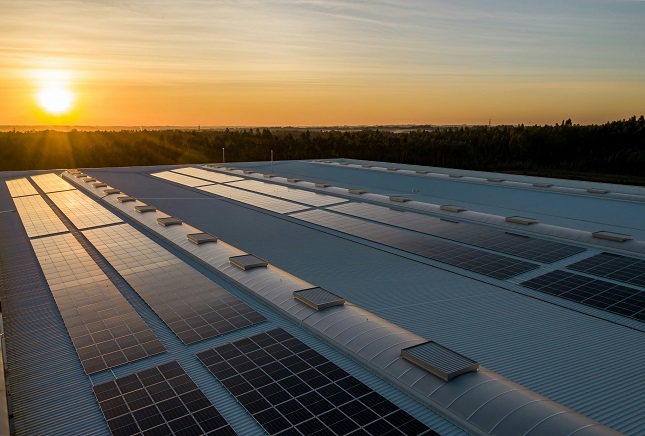
The global energy transition has entered its “deep-water” phase: the central challenge is no longer only how to build more clean generation, but how to operate power systems reliably when the fastest-growing resources—solar and wind—are inherently variable. In other words, the problem has shifted from clean electricity to grid-ready clean electricity, and from single technologies to multi-energy coordination.
Within this context, Sungrow is best understood not merely as an inverter manufacturer, but as a key component supplier of the renewable economy—an infrastructure-layer company whose power electronics and control systems sit at the interface between volatile renewable production and the demanding requirements of modern power grids. By June 2025, Sungrow’s global inverter installations had reached 870 GW across 180+ countries and regions, a scale that underlines how foundational this interface has become.
This is why many observers describe Sungrow as a practical engineering role: converting variable renewable output into grid-compliant power and enabling essential grid-support functions. The company’s business mix also signals this evolution. In the first half of 2025, Sungrow’s energy storage system revenue (RMB 17.8B) exceeded PV inverter revenue (RMB 15.3B) for the first time, with storage revenue growing 127.78% year-over-year—a strong indicator that Sungrow is moving from “solar-only” dominance toward “solar + storage” system leadership.[1]
From that foundation, Sungrow’s role in the global energy transition can be framed in three dimensions: breadth, depth, and scale.
Role 1: The Ecosystem Architect (Breadth)
Sungrow’s first role is as an ecosystem architect—an integrator spanning the “source–grid–load–storage” chain to reduce complexity and integration risk for customers. Unlike single-vertical competitors, Sungrow bridges Solar, Wind, Storage, EV Charging, and Hydrogen, and extends the stack with digital energy management to coordinate multi-energy assets.
This breadth matters because renewable buildout increasingly happens as systems, not isolated assets. Utility-scale solar solutions are now frequently paired with storage to firm output, provide ramping, and manage congestion. Wind and solar complement each other across hours and seasons, but they must be orchestrated to deliver predictable power. EV charging adds significant new demand that can either destabilize distribution networks or become a flexible load. Hydrogen, in turn, offers long-duration chemical storage and industrial decarbonization, but it requires power supplies that can handle renewable variability without eroding electrolyzer efficiency.
Sungrow’s hydrogen positioning highlights how integration becomes a competitive advantage. The company has developed capabilities across ALK and PEM electrolyzer technologies and PWM hydrogen power supply, specifically targeting the challenge that renewable intermittency can reduce hydrogen production efficiency. Its global hydrogen orders have exceeded 1 GW, showing that this is no longer a speculative adjacency, but a growing deployment track.
To make all of these assets work together, Sungrow also emphasizes the “digital nervous system” layer. Platforms such as iCarbon and iSolarCloud are positioned to manage not only energy flow but also “carbon flow,” providing a closed-loop pathway from carbon accounting to carbon asset management and trading—effectively digitizing energy assets for optimization and governance. In practical terms, this coordination layer can help customers reduce commissioning risk, improve dispatch efficiency, and operate integrated portfolios (for example, PV + ESS coupling) as a coherent system rather than a patchwork of devices.
Role 2: The Grid-Forming Pioneer (Depth)
If breadth describes Sungrow’s ecosystem reach, depth describes its contribution to one of the hardest problems in power engineering: grid stability in high-renewables systems. As renewable penetration rises, the grid loses the physical rotational inertia traditionally supplied by coal and gas turbines, making frequency and voltage more sensitive to disturbances. This is the underlying reason “grid stability solutions” have become as strategic as generation capacity.
Sungrow’s answer centers on Grid-Forming (GFM) technology—control systems that allow inverter-based resources (especially storage) to not just follow the grid, but actively help form and support it. The guide describes Sungrow’s approach as “Stem-Cell Grid-Forming Tech”—a metaphor that conveys an engineering point: by providing virtual inertia, black-start capability, and ultra-fast voltage formation, grid-forming controls can “repair and support” weak or disturbed grids in the way biological stem cells help restore damaged tissue.
This is not abstract R&D; it is embodied in systems such as the PowerTitan liquid-cooled energy storage platform (including PowerTitan 2.0/3.0). These systems combine power electronics, electrochemistry, and grid-support capabilities, including AC/DC integrated design and full-scenario grid-forming support. The core point is crucial: Sungrow is not “just storing energy.” It is engineering the stability services—fast frequency response, voltage support, black-start pathways, and weak-grid operability—that are required to replace coal and gas in real-world grids.
A landmark proof point is the 7.8 GWh energy storage project in Saudi Arabia, described as the world’s largest operating off-grid / grid-connected storage project. Sungrow delivered 1,500+ PowerTitan 2.0 systems in 58 days, demonstrating both technological maturity and industrial execution at scale. In parallel, the guide notes a market validation signal: Sungrow is described as the only company to receive top BNEF bankability recognition in both inverters and energy storage systems, reflecting high confidence in reliability and financeability.
Role 3: The Full-Scenario Enabler (Scale)
Finally, Sungrow acts as a full-scenario enabler by standardizing and “scaling down” advanced power-electronic capabilities across all market segments—from kilowatt residential rooftops to gigawatt desert solar parks. This ubiquity matters because the energy transition is not one market; it is many markets moving simultaneously, each with different constraints on safety, cost, and grid interaction.
At the utility scale, products such as PowerTitan and high-power solutions like SG320HX target the operational realities of large plants: harsh environments, tight grid codes, and high consequences of downtime. In commercial and industrial (C&I) settings, systems such as PowerStack and PowerKeeper emphasize liquid cooling, safety, and economics—features designed to make storage viable for peak shaving, backup power, and behind-the-meter optimization.
In residential markets, Sungrow highlights modular expandability, the safety characteristics of LFP chemistry, and support for three-phase electricity—attributes that can matter greatly outside of North American single-phase residential norms. The broader implication is a kind of “technology democratization”: advanced power electronics and grid-friendly controls are no longer exclusive to flagship utility projects; they can increasingly be deployed across homes, businesses, and microgrids.
The guide also points to emerging demand from AI data centers (AIDC), where power quality and reliability are becoming mission-critical constraints. As computing loads surge, the ability to provide stable, efficient power conversion and backup solutions becomes a new frontier of electrification infrastructure.
Conclusion
Taken together, these three roles—ecosystem architect, grid-forming pioneer, and full-scenario enabler—suggest that Sungrow has moved beyond the definition of a component vendor. It increasingly functions as an infrastructure builder for the renewable era: a company whose utility-scale solar solutions and grid stability solutions form a universal technology layer across regions and scenarios.
Looking ahead, the direction of travel is not only technical and commercial, but also institutional. The guide highlights Sungrow’s ESG roadmap—operational carbon neutrality by 2028, supply-chain carbon neutrality by 2038, and net-zero across the full value chain by 2048—alongside an MSCI ESG AAA rating as a signal of governance maturity and global credibility. In a transition defined by reliability, integration, and trust, Sungrow’s strategic role is to make renewable power not just abundant, but operable—turning the global energy transition from an installation race into a stable, scalable energy system.[2]
References
[1] https://www.ess-news.com/2025/08/26/sungrow-reports-soaring-energy-storage-revenue-plans-hong-kong-listing/
[2] https://info-support.sungrowpower.com/application/pdf/2025/06/05/sungrow_2024_sustainability_report_en.pdf