





























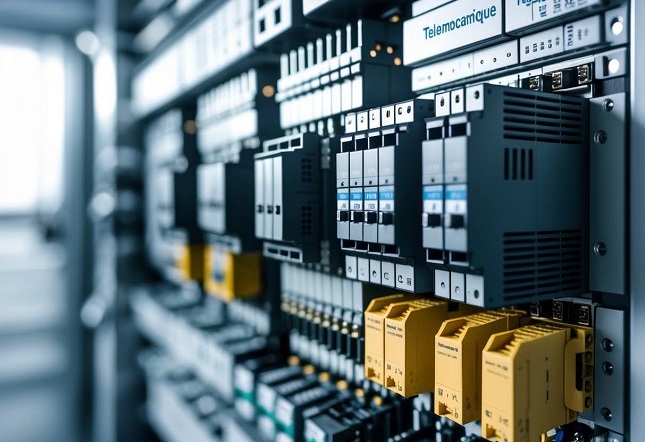
Telemecanique is a well-known brand in industrial automation and control, now part of the larger Schneider Electric family. It specializes in providing a wide range of products and solutions, including sensors, programmable logic controllers, and safetyequipment that enhances efficiency and safety in various industries. With a history dating back to the 1920s, Telemecanique has established itself as a leader in the field, offering innovative technologies that meet the demands of modern manufacturing.
From compact sensors to complex automation systems, Telemecanique products are designed to deliver reliable and consistent performance. The brand is recognized for its commitment to quality and excellence, making it a trusted choice for businesses looking to optimize their operations. Their extensive portfolio includes over 25,000 sensor types, showcasing their ability to cater to diverse industrial needs.
As businesses strive for greater automation and efficiency, understanding what Telemecanique offers becomes crucial. This article will explore the features, history, and impact of Telemecanique in the industrial automation landscape, and reveals how it continues to shape the future of manufacturing.
Understanding Telemecanique: Origins and Evolution
Telemecanique has a rich history in the field of industrial automation. Its journey began in the early 20th century and has seen important developments that solidified its reputation as a leader in the industry. The following sections explore its founding, major innovations, acquisition, and integration into a larger corporate structure.
Early History and Founding
Telemecanique was founded in 1924 in France by Michel Le Goullec. Initially named Manufacture d’Appareillage Electrique, it quickly evolved into La Télémécanique Électrique by 1928. The company made a significant impact by inventing the bar contactor, a critical component in electrical control systems. This invention set the stage for Telemecanique to focus on manufacturing electromechanical control devices.
By the late 1930s, Telemecanique had expanded its product line to include thermal relays, float switches, and pushbuttons. These early products laid the groundwork for a diverse portfolio in industrial automation.
Key Milestones and Innovations
Over the decades, Telemecanique achieved several key milestones that boosted its profile. In 1999, it launched the world’s best-selling Tesys Series D contactors. These products simplified the control of electric motors, making automation more accessible.
Telemecanique also introduced the first all-in-one Integral contactor-circuit breaker and the first Altivar frequency inverter drives. These innovations built upon its initial successes, pushing boundaries in technology and efficiency. Another significant launch was the Harmony range, which offered a complete line of switches, push buttons, and pilot lights, enhancing user experience in automation solutions.
Acquisition by Schneider Electric
In 1999, Schneider Electric acquired Telemecanique, integrating it into its larger portfolio of automation solutions. This acquisition positioned Schneider Electric as a global leader in industrial automation, expanding its reach and capabilities.
Joining forces with Schneider allowed Telemecanique to benefit from advanced research and development resources. The partnership meant that Telemecanique products could leverage Schneider’s global distribution network, making them more available to industries worldwide.
Integration into YAGEO Group
In recent years, Telemecanique Sensors became a brand under the YAGEO Group. This transition marked a new chapter for the brand, focusing on sensor technology. YAGEO has enhanced Telemecanique’s capabilities in providing comprehensive sensing solutions, from simple detection to advanced measurement.
This integration ensures that Telemecanique continues to evolve and adapt in a rapidly changing industry. With a solid foundation built on over 100 years of innovation, the brand remains a vital player in industrial automation and sensing technologies today.
Telemecanique’s Core Focus: Industrial Control and Automation
Telemecanique specializes in industrial control and automation. Their extensive offerings cover several key areas, including automation products, power distribution, and effective human-machine interaction. This diverse range allows industries to enhance efficiency and improve overall productivity.
Automation and Control Product Lines
Telemecanique features a wide variety of automation and control products tailored for different industrial needs. This includes components such as sensors, contactors, and relays. Each product is designed to meet strict standards of quality and performance, ensuring reliable operation in demanding environments.
The company also emphasizes innovation in its product development. With advancements in technology, Telemecanique integrates smart features that help streamline operations. Their products are commonly used in settings from manufacturing to infrastructure, providing robust solutions that businesses can trust.
Programmable Logic Controllers and Variable Speed Drives
Programmable Logic Controllers (PLCs) are a cornerstone of Telemecanique’s product offerings. These devices enable users to automate and control their equipment with great precision. Each PLC is designed for flexibility, allowing integration into various applications.
Variable Speed Drives (VSDs) complement PLCs by managing motor speed and torque. This helps control energy consumption and optimizes machine performance. The combination of PLCs and VSDs offers industries the ability to enhance productivity while reducing operational costs.
Power Distribution and Busbar Trunking
Power distribution is essential for any industrial operation, and Telemecanique excels in this area. Their power distribution solutions ensure that electricity is efficiently and safely delivered to all necessary equipment.
Busbar trunking systems are among their key offerings. These systems allow for quick and flexible installation while providing a safe means to distribute power throughout a facility. They are particularly valuable in environments where space is limited, allowing for greater efficiency.
Man-Machine Dialogue and Process Supervision
Effective man-machine dialogue is important for improving human interaction with machines. Telemecanique focuses on creating user-friendly interfaces that streamline communication. This ensures that operators can quickly and accurately monitor systems and respond to changes in real-time.
Process supervision tools enable companies to oversee their operations efficiently. By collecting and analyzing data, these tools help manage workflows and improve decision-making. Their solutions provide valuable insights, empowering industries to enhance operational performance and ensure high levels of productivity.
Expertise in Sensor Technology
Telemecanique Sensors is recognized for its deep knowledge in sensor technology. The brand offers various sensor-focused solutions that enhance performance and reliability in industrial applications. Their advancements in detection capabilities and integration with the Industrial Internet of Things (IIoT) position them as a leader in this field.
Sensor-Focused Solutions
Telemecanique Sensors provides a wide range of sensor solutions tailored to diverse industrial needs. These include:
- Limit Switches: Optimize machine safety and operation.
- Pressure Sensors: Ensure precise pressure measurements for system efficiency.
- Photoelectric Sensors: Enable accurate detection over a distance.
Each product is designed with simplicity and expertise, making it easier for customers to find the right solution. The global network of dedicated distributors offers local support and quick service, ensuring users receive the guidance they need to utilize these sensors effectively.
Advances in Detection and Sensor Reliability
Telemecanique Sensors is constantly innovating to improve detection capabilities. They produce robust sensors that can function accurately in demanding environments. For example, inductive sensors help in detecting metallic objects without contact. These sensors are robust and reliable.
Additionally, the technology used in these sensors focuses on minimizing false readings, which is vital for effective automation. This attention to detail not only boosts sensor reliability but also enhances operational performance across various sectors, from manufacturing to logistics.
Cloud Connected Sensor and IIoT Integration
Telemecanique Sensors is also advancing cloud-connected sensors that are integral to IIoT applications. These sensors collect and transmit real-time data directly to the cloud, allowing for better monitoring and analytics.
By leveraging cloud technology, businesses can improve operational efficiency and minimize downtime. Integration with IIoT enables predictive maintenance, which helps in anticipating issues before they occur. This proactive approach allows for improved safety and efficiency in industrial settings.
Wide Range of Sensors and Switches
Telemecanique Sensors provides a diverse selection of sensors and switches designed for various industrial applications. Their offerings excel in precision and reliability, making them suitable for tasks such as object detection, distance measurement, and monitoring operations. Below, the main sensor types and switches are examined.
Photoelectric Sensors and Photoelectric Cells
Photoelectric sensors utilize light to detect the presence of objects. These sensors are categorized into three main types: through-beam, retro-reflective, and diffuse.
- Through-beam sensors have a transmitter and a receiver. They detect objects when the beam is interrupted.
- Retro-reflective sensors function similarly but use reflective surfaces to bounce the light back to the receiver.
- Diffuse sensors detect objects based on the light reflected off the object itself.
Photoelectric cells are often used in automation for controlling lights and machinery. They provide flexibility and can operate over significant distances, making them ideal for various applications like packaging and conveyor systems.
Proximity Sensors: Inductive and Capacitive
Telemecanique offers two main types of proximity sensors: inductive and capacitive.
- Inductive sensors detect metal objects without physical contact. They work by generating an electromagnetic field, which senses changes when a metal object enters the field. These sensors are widely used in automotive and material handling industries.
- Capacitive sensors can detect materials regardless of their type, including liquids, plastics, and powders. They work by measuring changes in capacitance caused by an object’s presence. Their versatility allows for applications in tank level monitoring and packaging systems.
Both sensor types feature durability, making them suitable for harsh environments while ensuring effective detection.
Ultrasonic Sensors and Application Areas
Ultrasonic sensors operate by sending high-frequency sound waves and measuring the time taken for the echoes to return. This capability allows them to measure distances accurately.
These sensors are commonly used for:
- Level detection in tanks and silos.
- Obstacle detection in robotic automation.
- Measurement of small objects in metalworking.
Thanks to their non-contact nature, ultrasonic sensors can function effectively in outdoor conditions and through various materials, which enhances their versatility in diverse industrial applications.
Limit Switches: Types and Use Cases
Limit switches are essential for controlling machinery and ensuring safety in operations. They can detect the position of moving parts and are available in several types, including mechanical, magnetic, and non-contact.
Mechanical limit switches activate through physical contact, suitable for high-reliability applications. Magnetic limit switches rely on magnetic fields to detect position changes, making them ideal for hostile environments. Non-contact limit switches offer a longer lifespan and less wear.
Typical uses for limit switches include:
- Position sensing in conveyor systems.
- Safety applications in machinery to prevent accidents.
- Automation controls in robotic systems.
These switches enhance operational efficiency and safety across various industrial settings.
Safety, Connectivity, and Modern Innovations
Telemecanique focuses on safety and connectivity through various innovative technologies that enhance industrial automation. The company emphasizes reliable equipment that improves operational efficiency while ensuring worker safety.
Safety Switches and Safety Sensors
Telemecanique offers a range of safety switches and sensors designed to safeguard operators and machines in hazardous environments. The Preventa XCSRM is a compact RFID safety switch that provides high-level security against tampering. It is easy to install and ideal for securing dangerous areas. Additionally, safety sensors enhance machine operation by constantly monitoring conditions and providing real-time feedback. This use of advanced technology helps prevent accidents and ensures compliance with industry safety standards. Effective safety solutions such as these increase both productivity and peace of mind in industrial settings.
RFID and Advanced Identification Systems
RFID technology is a cornerstone of Telemecanique’s advanced identification systems. These systems facilitate efficient tracking and management of assets, improving workflow in production and supply chain processes. By using RFID tags, companies can monitor inventory levels and equipment usage in real time. This not only reduces errors but also enhances operational efficiency, making it easier to implement just-in-time manufacturing strategies. The reliability of Telemecanique’s RFID systems has made them a preferred choice for many industrial applications aiming for higher accuracy and speed.
Cordsets and Connectors
The cordsets and connectors from Telemecanique are crucial for ensuring seamless communication between devices in an automation setup. These components are designed for robustness and ease of use, simplifying installations and maintenance. Telemecanique connectors come in various configurations to fit different industrial needs, allowing for flexible and efficient connections between machines. This reliability in connectivity reinforces system stability and supports increased productivity. Proper selection of cordsets and connectors can significantly impact overall operational performance and reduce downtime.
QuickFit Technology and Onboard Web Servers
Telemecanique’s QuickFit technology revolutionizes equipment installation by allowing quick, tool-free connections. This innovation reduces installation time, making it a cost-effective option for industries looking to improve efficiency. Alongside this, onboard web servers facilitate remote monitoring and control, integrating seamlessly with IoT applications. These servers enable real-time data analysis and proactive maintenance, which can lead to smarter decision-making and reduced operational costs. By combining QuickFit technology with web capabilities, Telemecanique enhances the functionality of modern automation systems, paving the way for streamlined operations.
Telemecanique’s Impact and Industry Presence
Telemecanique, a brand under Schneider Electric, has made significant strides in the field of industrial automation. Its innovative solutions and commitment to quality establish it as a vital player worldwide. This section breaks down Telemecanique’s global role, its focus on sustainability, and its direction for future solutions.
Role in Industrial Automation Globally
Telemecanique stands out as a leader in providing automation products that enhance efficiency and productivity. Their extensive range includes programmable logic controllers (PLCs), variable speed drives, and sensors tailored for various industries such as manufacturing, packaging, and material handling. These components are designed to optimize machine performance and reduce downtime.
Furthermore, Telemecanique products are integrated into automated systems that streamline processes. This has positioned them as preferred solutions for machine builders and operators around the globe. Their sensors, known for accuracy and reliability, play a crucial role in data collection and monitoring across diverse sectors.
Sustainability and Customer Support
Telemecanique prioritizes sustainability in its manufacturing and product development. They aim to reduce their environmental footprint by implementing eco-design principles. This approach means products are designed for energy efficiency, reducing waste and promoting responsible resource use.
Customer support is another cornerstone of Telemecanique’s operations. They offer extensive assistance to clients, including training programs and technical resources tailored to specific industrial needs. This commitment to customer satisfaction ensures that companies can implement automation solutions effectively and reliably.
Future Directions for Telemecanique Solutions
Looking ahead, Telemecanique is set to continue evolving its offerings in automation technologies. They are investing in smart solutions that incorporate IoT (Internet of Things) capabilities, enabling real-time monitoring and data analytics. This shift aims to enhance operational flexibility and decision-making processes for businesses.
Moreover, the brand is exploring advancements in sensor technology to provide even more precise and efficient solutions. By focusing on innovation and adapting to industry changes, Telemecanique is poised to maintain its influential role in shaping the future of automation.