



























Buying a phone shouldn’t feel like rocket science.
It sure feels like it though! From flagship releases every six months to water- up-to-your-neck price points and the social stigma to “keep up” and upgrade before your current phone even has a scratch. It’s chaos.
Here’s the thing:
A smart mobile hardware strategy is not trying to always have the latest device. You want three things in harmony:
- Performance
- Reliability
- Cost
If you get these three correct you’ll save yourself a bundle and still end up with a phone that can do everything you want.
Let’s break it down.
What you’ll discover:
- Why Mobile Hardware Strategy Matters
- Performance — What Actually Matters
- Reliability — The Long-Game Win
- Cost & Sustainable Phone Buying
- How To Build Your Own Strategy
Why Mobile Hardware Strategy Matters
Most people buy phones emotionally.
You see a new ad, your friend brags about their new upgrade or your screen cracks…POOF. Your whipping out your credit card. You have no plan for this. That’s an issue.
The smartphone world has conditioned consumers to believe faster is better and newer is smarter. But that mindset comes at a high price — and it’s wasteful.
Did you know that an estimated 150 million phones end up in landfills each year in the US, despite them still functioning properly?
That’s a lot of wasted hardware.
A mobile hardware strategy is the opposite approach. Rather than buying something because of ads or peer pressure, you purchase based on your needs. The sustainable phone buying movement is centered around this concept — Buy smart. Buy once. Keep it running forever.
Picking up a recertified phone from a reputable company is one of the simplest methods. These phones have gone through a professional restoration process. They are fully tested to ensure everything is working properly – like new. All at a lower price.
It’s the smart move for budget-conscious buyers and eco-conscious ones too.
Performance — What Actually Matters
Let’s clear something up.
Performance isn’t “the newest chip.” Performance is the phone opens your apps quickly and runs them without stuttering or slowing down when you switch back and forth. Period.
An iphone 2-3 years old will still do all of that for the average user.
Alright, so how do you tell if a phone will have enough pep to suit your needs? Consider:
- Processor: Any mid-range chip from the past 2-3 years will be sufficient.
- RAM: 6GB is the sweet spot. 8GB+ is great but rarely needed.
- Storage: 128GB minimum. Skip 64GB models — they fill up way too fast.
- Battery health: For used or recertified devices, aim for 85%+ battery capacity.
Here’s the kicker:
Flagship phones from 2-3 years ago will almost always beat new budget phones being released nowadays. They had better build quality with nicer materials and quicker chips.
So if performance matters… Older flagships beat newer budgets every single time.
Reliability — The Long-Game Win
Now to the part most buyers ignore until it’s too late.
Reliability is the difference between a four year phone and an eighteen month phone. It also has nothing to do with brand names.
A reliable phone needs:
- Strong build quality: Aluminium or glass-and-metal, not flimsy plastic.
- Software updates: Check the manufacturer’s update policy before buying.
- Battery health: Replaceable or serviceable batteries are gold.
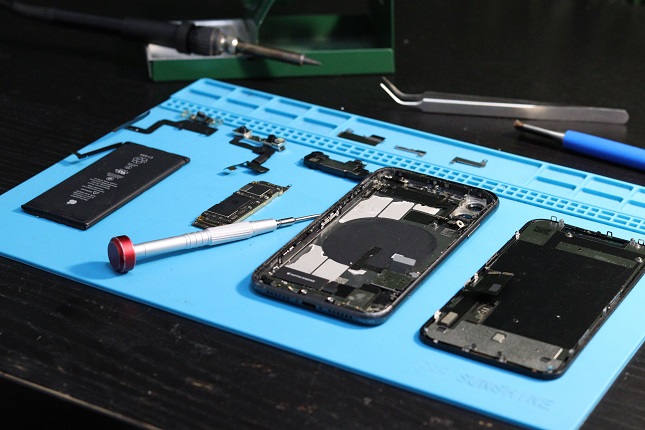
- Repairability: Phones designed to be opened up are phones that can be saved.
Here’s a tip most people miss…
Whenever you purchase a refurbished, used, heck… ANY pre-owned device be sure to look who Certified it was. Proper certification includes testing of the battery, screen, camera, ports, speakers, microphones & internal hardware. If there is no certification, walk away.
This is why purchasing from a legitimate dealer is significantly more important than purchasing off Craigslist.
Cost & Sustainable Phone Buying
Now to the topic everyone really cares about… Price.
New flagships routinely reach prices north of $1,000. For many people, that’s a month’s rent. Buying phones sustainably isn’t just good for the planet. It’s also good for your wallet.
Consumer appetite is met with demand, as the refurbished smartphone market is projected to grow rapidly. In fact, worldwide spending on refurbished smartphones is expected to increase from USD 65.20 billion in 2025 to USD 96.99 billion in 2031.
Why? Because sustainable phone buying makes real financial sense.
Here are the main ways to save:
- Buy refurbished or recertified: Save 30-60% on flagship models.
- Skip yearly upgrades: Stretch your phone’s life to 3-4 years instead of 1-2.
- Trade in your old phone: Use the value to offset your next purchase.
- Avoid carrier financing traps: Hidden fees and locked-in contracts cost more long-term.
One more thing…
Extending phone lifetimes reduces demand for new devices. Less demand means fewer materials mined. Fewer phones manufactured. Less electronic waste in landfills.
It’s a win for your bank account and a win for the planet.
Another large consideration? Repairability. New phones have a reputation for being extremely costly to repair, and parts continue to grow more expensive each year. A recertified device can also be easier (and less expensive) to repair, since testing it beforehand allows any weaknesses to be found prior to it arriving in your possession.
How To Build Your Own Strategy
Here’s the simplest way to put this all together.
Start with one question: What do you actually need your phone to do?
Really though. Be honest with yourself. If your answer is “phone calls, text messages, social media, pictures…” Then you don’t need the latest and greatest flagship phone. You need a dependable mid-range or refurbished flagship that will stand the test of time.
Now follow these steps:
- Write down your top 5 use cases (don’t lie to yourself).
- Set a maximum budget — and stick to it.
- Research 3-4 phones that fit your needs and budget.
- Compare them across performance, reliability, and value.
- Buy from a certified, reputable seller — not random marketplace listings.
That’s the entire framework. No hype, no FOMO, no upgrade pressure.
Just smart, intentional buying.
Bringing It All Together
Mobile hardware strategy is really just common sense applied to phone shopping.
You don’t need the latest gadget. You need the correct gadget for your requirements, your budget and your lifestyle. Understanding the tradeoffs between power, stability and price is what makes you a smart buyer instead of an impulse buyer.
To quickly recap:
- Performance is about your real needs — not specs on a box
- Reliability is what makes a phone last
- Cost is where sustainable phone buying wins big
- Certified and recertified phones offer the best balance of all three
Green phone purchasing isn’t a fad. It’s the way responsible consumers will buy electronics in the future. Start building a solid plan now and you can save yourself money — and devices– down the road.