





























Hiring the right people is already challenging. Leaving tax credits on the table makes it even harder.
That’s one reason employers pay close attention to the Work Opportunity Tax Credit (WOTC). This federal tax credit rewards employers who hire people from certain groups that often face barriers to employment. One of those groups includes qualified Supplemental Security Income (SSI) recipients.
Here’s where things get confusing.
Many employers hear “Social Security” and assume every person receiving a government benefit qualifies for WOTC. That’s not how the program works. SSI and Social Security benefits are not the same thing, and understanding the difference can have a direct impact on WOTC eligibility.
Let’s break it down.
Understanding the Difference Between SSI and Social Security Payments
At first glance, SSI and Social Security benefits sound similar. They both come from the federal government and are administered by the Social Security Administration. That’s where the similarities mostly end.
Supplemental Security Income, commonly called SSI, is a needs-based program that provides financial assistance to people with limited income and resources who are elderly, blind, or disabled.
Social Security benefits, on the other hand, are generally earned through a person’s work history and payroll tax contributions. These benefits may include retirement payments, survivor benefits, or disability benefits.
For employers participating in the WOTC program, this distinction matters a lot.
A person receiving SSI may qualify under one of the WOTC target groups. Someone receiving standard Social Security retirement benefits generally does not qualify based solely on receiving those benefits.
That’s a big difference.
Why SSI Recipients May Qualify for WOTC
The WOTC program was designed to encourage employers to hire people who may face challenges entering or reentering the workforce.
Qualified SSI recipients fall within one of the recognized target groups.
To qualify, an applicant generally must have received SSI benefits for a specified period before being hired. Employers must also complete the required screening and certification process within the established deadlines.
When eligibility requirements are met, employers may receive valuable tax credits that help offset hiring costs.
That’s a win for businesses and job seekers.
It also creates opportunities for employers to expand hiring efforts while supporting people who may benefit from greater access to employment opportunities.
Do Social Security Benefits Affect WOTC Eligibility?
This is where many employers get tripped up.
Receiving Social Security retirement benefits does not automatically make someone eligible for WOTC.
Neither does simply collect Social Security payments through a work-based benefit program.
WOTC eligibility is tied to specific target groups established under federal guidelines. SSI recipients may qualify because they belong to one of those groups. Standard Social Security beneficiaries usually do not qualify based on benefit status alone.
Think of it this way.
The government isn’t offering tax credits because someone receives a monthly benefit payment. The credit is tied to specific workforce development goals and target populations.
That’s why accurate screening is so important.
How Employers Should Screen Applicants Receiving SSI Benefits
The best time to identify potential WOTC eligibility is during the hiring process.
Waiting until after onboarding often leads to missed opportunities and filing deadlines.
Employers should have a consistent screening process that asks applicants whether they received SSI benefits within the qualifying period. Documentation should be reviewed carefully, and all information should be recorded accurately.
Many organizations now rely on automated screening platforms to simplify the process. A comprehensive WOTC HR software solution, such as the one provided by Walton Management, helps hiring teams identify potential eligibility during onboarding, reduce paperwork, and minimize costly filing errors.
Automation reduces manual errors, helps track deadlines, and improves the chances of identifying qualified candidates before certification windows close.
For employers with high-volume hiring needs, that can make a huge difference.
Using Form 8850 to Verify SSI-Related WOTC Eligibility
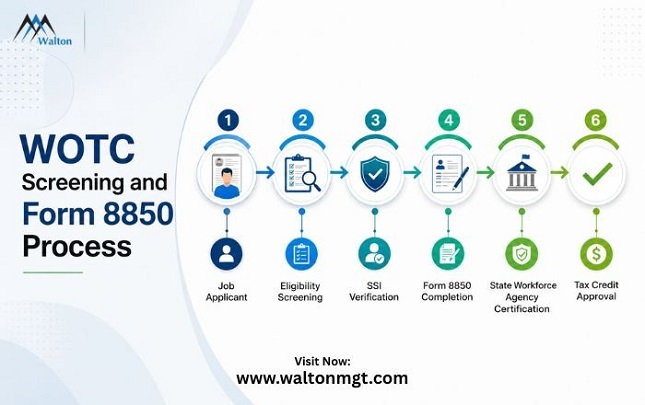
Form 8850 is one of the most important documents in the WOTC process.
The form helps employers identify whether a newly hired employee may belong to a WOTC target group, including qualified SSI recipients.
Once completed, the form must be submitted according to federal and state requirements. Missing deadlines can result in lost tax credit opportunities, even when an employee would have otherwise qualified.
The paperwork may seem small, but the financial impact can be substantial.
Common Mistakes Employers Make When Evaluating SSI and Social Security Benefits
A few mistakes show up again and again.
Some employers assume every Social Security recipient qualifies for WOTC.
Others confuse SSI with Social Security Disability Insurance (SSDI).
Some businesses fail to collect documentation early enough.
And plenty of employers simply miss Form 8850 deadlines because they don’t have a reliable screening process in place.
These mistakes are surprisingly common.
They’re also avoidable.
A clear understanding of benefit programs and WOTC requirements helps prevent unnecessary certification issues.
How Employers Can Maximize WOTC Opportunities Through Accurate Benefit Screening
The employers that consistently capture WOTC credits usually follow the same playbook.
They screen applicants early.
They maintain organized records.
They use technology to track deadlines and certification requirements.
And they stay informed about eligibility rules.
Businesses looking to improve compliance and streamline the process can benefit from solutions such as Walton Management’s Work Opportunity Tax Credit program and WOTC HR software tools that help identify qualified candidates and manage certification workflows more efficiently.
The reality is simple.
If employers don’t correctly distinguish between SSI and Social Security benefits, they risk missing valuable tax credits that could support hiring and workforce growth.
Conclusion
Understanding the relationship between Social Security Benefits and WOTC starts with recognizing that not all government benefit programs are treated the same under federal tax credit rules.
Qualified SSI recipients may help employers unlock valuable WOTC opportunities, while traditional Social Security benefits generally do not create eligibility on their own.
For businesses that hire regularly, accurate screening isn’t just a compliance task. It’s a practical way to capture available tax credits, reduce administrative headaches, and strengthen hiring outcomes. A reliable process, supported by the right technology and expertise, can make sure eligible opportunities don’t slip through the cracks. That’s why many employers turn to Walton Management at www.waltonmgt.com for WOTC HR software and workforce solutions that help simplify screening, improve compliance, and maximize available tax credit opportunities.