




























Most small business owners already have too much on their plate to manage every task by hand. That is exactly why automation has moved so fast: recent data on small business AI adoption found that AI has become part of daily operations for the majority of businesses already using it, not just an occasional experiment. But not every workflow benefits equally from automation, and a small team cannot afford to roll out ten new tools at once. Here are ten of the highest-return workflows to automate first, whether you are just getting started or already using it on a modest budget.
1) Customer Support Triage
Most incoming questions from customers are repeat questions: order status, return policy, hours, pricing. An AI chatbot trained on your FAQ page can resolve these without pulling a person away from higher-value work, and it can flag anything unusual for a human to handle personally. Start with your five most repeated questions and automate those first.
2) Content Repurposing
One blog post, one video, or one client case study can become a week of social captions, an email newsletter, and a set of short-form clips. Feeding your existing content into an AI writing tool to generate variations is a faster path to consistent output than starting from a blank page every time.
3) Social Media Scheduling and Captioning
Batching a month of posts in one sitting, then letting an automated scheduler handle the publishing and an AI assistant draft caption variations, keeps a feed active without requiring daily attention from the owner.
4) Invoicing and Bookkeeping
Recurring invoices, late payment reminders, and expense categorization are all rules-based tasks that automation software handles more reliably than a busy owner remembering to do it manually at the end of the month.
5) Email Prioritization
An inbox that mixes client requests, vendor invoices, and newsletters wastes time every single day. AI-based email triage tools can sort, flag, and even draft first-pass replies to routine messages, leaving only the decisions that actually need a human.
6) Recruiting and Applicant Screening
Hiring is one of the more time-consuming processes for a small team, and it is also one of the areas where AI automation has matured quickly. Mind My Business NYC recently covered the AI recruiting platforms built for smaller teams, and screening resumes and scheduling first-round interviews are two of the easiest places to start.
7) Data Reporting and Analysis
Sales dashboards, weekly performance summaries, and expense trend reports used to require someone to pull numbers manually every week. AI-connected reporting tools can generate this automatically and flag anomalies worth a closer look.
8) Meeting Scheduling
Back-and-forth emails to find a meeting time cost more hours across a year than most owners realize. An AI scheduling assistant that reads calendar availability and proposes times directly removes an entire category of small friction.
9) Multilingual Customer Communication
If your business is scaling into new international markets, multilingual support stops being optional. CSA Research’s global consumer language preference survey found that 76% of online shoppers prefer to buy products described in their native language, and a meaningful share will not buy from a site in another language at all. That is a lot of revenue riding on a workflow that many small teams still handle by pasting text into whatever AI chat window happens to be open.
The problem with that approach is that a single AI model can get a translation wrong in ways that are hard to catch, especially in longer or more technical text. Different models often disagree on the same sentence, and if you only asked one of them, you would never know it made a different call than the others would have.
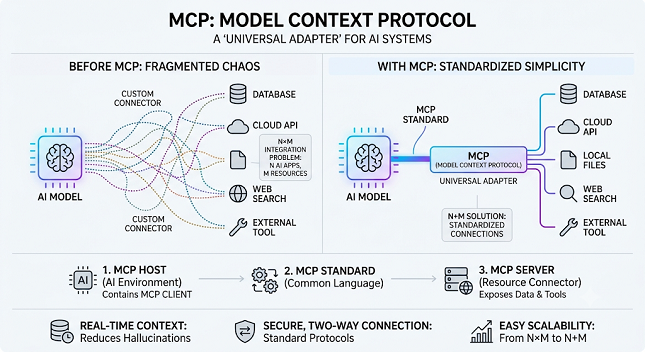
This is the specific workflow MachineTranslation.com was built to automate. Rather than trusting the output of one model, it runs a request through 22 AI models at once and surfaces the version the majority actually agree on, which is meant to reduce the kind of error a business only discovers after a customer has already read it. Since so much small business work now happens inside an AI assistant rather than a separate app, MachineTranslation.com built an MCP connector for AI translation so paying users can pull that consensus translation into the AI conversation they are already having, instead of opening a new tab to get it.
10) Compliance Document Review
For businesses in regulated industries, keeping documentation current with policy changes is a recurring, low-glamour task. AI tools that scan documents for outdated clauses or missing disclosures can flag issues for review long before an audit does.
Conclusion
None of these workflows require replacing your team with software. The businesses seeing the biggest gains are the ones that pick two or three of these, automate them properly, and only then move on to the next one, rather than trying to overhaul every process at once.
The common thread across all ten is worth repeating: automation only earns a small business owner’s trust when it can be checked, not just when it is fast. That is true of a chatbot handling a support ticket, a report flagging an anomaly, or a translation going out to a customer in another country. Start with the workflow that is costing you the most hours this month, automate it properly, and let the results decide what comes next.