


























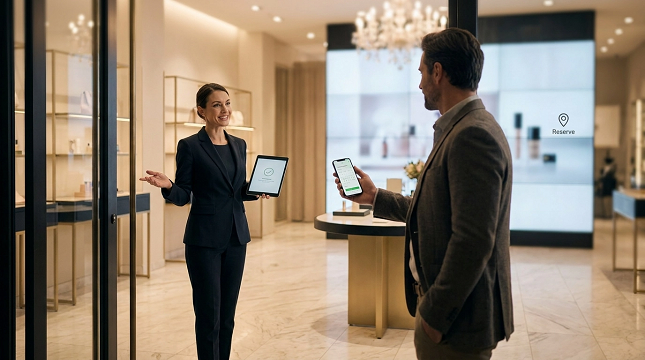
Luxury brands spend heavily to pull shoppers online, yet most of that intent never reaches the boutique floor. A client watches a collection film, saves a piece, and checks store hours, then stalls at the moment that matters most: the visit. That silent drop-off is where revenue leaks and where the brand experience falters before anyone walks through the door. This guide breaks down why online shoppers slip away, how to convert their intent into booked visits, which digital touchpoints actually drive store traffic, and how to measure the connection.
Why Online Shoppers Slip Away Before Reaching the Store
Online shoppers rarely abandon a luxury brand because they lost interest. They abandon it because the path from screen to store asks them to do the work.
The fix isn’t more marketing spend, it’s a smoother handoff from click to visit. Platforms like Booxi offer luxury appointment scheduling that lets a shopper reserve a boutique visit in the same moment they discover a piece online. Because the visit is booked while intent is high, fewer high-value shoppers slip away between the screen and the store.
The Gap Between the Click and the Store Visit
Most luxury journeys start online and end in the store, but the handoff between the two is broken. A shopper clicks a paid ad, lands on a product page, and finds no way to reserve time with an advisor. The site says “find a boutique,” so the shopper has to call during opening hours or simply show up and hope someone is free. Every extra step invites hesitation, and hesitation is where high-intent visits quietly disappear. Because the booking moment is missing, the brand pays twice: once for the click, and again in the sale that never converts.
Why Does the Luxury Journey Break Down After the Click?
Luxury shopping runs on anticipation, and anticipation needs a next step. When a client decides to visit, the brand has a narrow window to capture that decision before it cools. A generic contact form or a store locator treats a ready-to-buy client the same as a casual browser. That’s why the journey stalls: the digital experience feels premium, but the transition to the store feels like an afterthought. The result is a confident online shopper who arrives unannounced, waits, and receives a welcome that doesn’t match the brand’s promise, if they arrive at all.
How Can Luxury Retailers Turn Online Intent Into Store Visits?
Turning intent into a visit comes down to one principle: capture the decision the moment it happens. The most reliable way to do that is to let clients book a specific time, with a specific service, directly from the channel where they discovered the brand.
Why Does Appointment Booking Bridge Online and Offline?
Appointment booking closes the gap because it converts a vague intention into a committed visit. When a client picks a slot online, the brand gains a confirmed arrival, a named client, and the context needed to prepare. That’s why booked visits behave so differently from walk-ins: the client has already invested in the visit, so they arrive ready to buy rather than to browse. Booking also gives the boutique something a walk-in never provides, which is advance notice. Teams can assign the right advisor, pull the client’s history, and plan the floor around confirmed demand.
The Role of Real-Time Availability and Reminders
Real-time availability is what makes online booking trustworthy. A client will only commit if the times shown are the times actually open, so live calendars across every boutique matter as much as the booking button itself. Automated reminders then protect the slot once it’s reserved. A timely email or SMS confirmation reduces no-shows and reassures the client that the visit is expected. Because the reminder carries the appointment details, the client arrives on time and prepared, and the advisor’s calendar stays full instead of dotted with empty, unrecoverable gaps.
Which Digital Touchpoints Drive Qualified Store Visits?
A booking button only works if it sits where shoppers form intent. Luxury brands can plant booking entry points across the exact moments a client decides to visit.
How Does “Reserve With Google” Capture Local Search Intent?
Many luxury journeys begin with a local search: a brand name, a nearby boutique, opening hours. When the search result offers a direct way to reserve a visit, the brand captures intent at its peak instead of sending the shopper back to a homepage. A booking link surfaced in Maps and Search turns a quick lookup into a confirmed appointment. Because the client never has to hunt for a phone number, the friction that usually ends the journey disappears.
Turning Product Pages Into Booking Entry Points
Product pages are where desire becomes decision, so they’re the natural place to invite a visit. A client admiring a watch or a handbag online should be able to reserve time to see it in person, try it on, or consult an advisor. Adding a book-a-visit option beside the product removes the guesswork of an unplanned trip. The client knows the piece will be ready and an expert will be waiting, which raises both the odds of the visit and the value of it.
How Does Social Media Convert Browsers Into Visitors?
Social media builds the aspiration that drives luxury purchases, but inspiration fades fast without a clear next step. A collection launch on Instagram or a styling video earns attention the brand should redirect immediately. A booking link in a bio, a story, or a paid campaign lets an inspired follower reserve a private viewing while the desire is still fresh. Because the path from post to appointment is short, the brand converts fleeting attention into a scheduled, high-intent visit.
How Do You Personalize the Journey From Screen to Store?
Bringing a shopper in-store is only half the win. The visit has to honor the intent the client showed online, and that requires the store to know who’s arriving and why.
Why Client Data Should Reach the Floor Before the Visit
A booked visit carries information the boutique can act on. When the booking system syncs with the brand’s CRM and clienteling tools, the advisor sees the client’s history, preferences, and past purchases before the client walks in. That preparation turns a standard greeting into a tailored welcome. Because the advisor already knows the context, the client feels recognized from the first moment, and the visit starts where the online journey left off rather than from scratch.
How Should VIC Clients Be Recognized on Arrival?
Very important clients expect the store to reflect the relationship they’ve built with the brand. A booking system can flag a VIC arrival, alert the right advisor, and trigger priority access automatically. That recognition is what separates a luxury visit from an ordinary one. When a top client is greeted by name, on time, with a prepared selection, the brand reinforces exclusivity without a single manual step, and the client’s loyalty compounds with every visit.
Measuring the Online-to-Store Connection
What isn’t measured gets cut, and in-store conversions are notoriously hard to trace back to digital effort. Closing the online-to-store gap means proving that the gap is closing.
Which Metrics Prove Digital Campaigns Drive Store Revenue?
The key is to connect the online action to the in-store result. When a client books online and completes a purchase in the boutique, that sale should trace back to the campaign, channel, or page that started it. Tracking booked visits, appointment-to-purchase conversion, and revenue per appointment gives marketing teams the evidence that digital spend produces store sales. Because those numbers make the store visible in reporting, brands can defend and refine the budgets that fill their boutiques instead of cutting them blind.
Key Takeaways for Bringing Online Shoppers In-Store
Online intent is abundant in luxury retail, but it evaporates without a bridge to the store. The brands that win give shoppers a way to book a visit at the exact moment they decide, place those booking points across search, product pages, and social, and prepare the floor to deliver a personalized welcome. When the online-to-store handoff is seamless, every click has a clear path to the boutique, and every visit reflects the excellence the brand promises online.
Frequently Asked Questions About Bringing Online Shoppers In-Store
How Do You Convert Website Visitors Into In-Store Customers?
Give visitors a direct way to book a store visit from the pages where they show intent. When a shopper can reserve a specific time and service from a product page, a search result, or a social post, their online interest becomes a confirmed appointment. The booking captures the decision before it fades and gives the store the context to deliver a visit worth making.
Does Booking an Appointment Increase In-Store Spending?
Booked clients tend to spend more than walk-ins because they arrive with clear intent and meet a prepared advisor. The appointment gives the team time to understand the client’s needs, pull relevant pieces, and offer thoughtful cross-sell. That preparation raises both conversion and average basket, which is why appointment-based traffic is so valuable to luxury retailers.
How Can Luxury Brands Reduce In-Store Appointment No-Shows?
Automated reminders are the most effective lever. A confirmation and a timely reminder by email or SMS keep the appointment top of mind and let clients reschedule instead of vanishing. Real-time availability also helps, because clients book slots that genuinely fit their plans, so the appointments they set are the ones they keep.