





























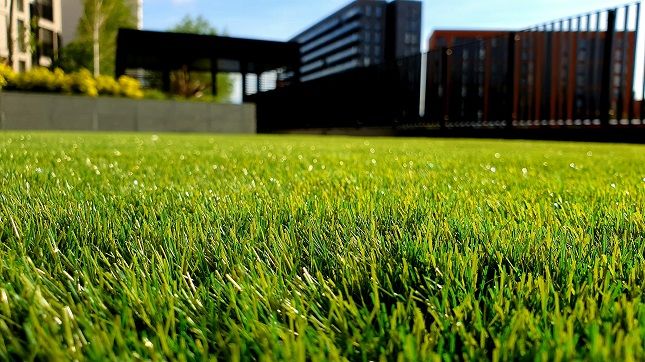
Drought-tolerant lawn varieties do something that conventional turf doesn’t: they give you a genuine choice about how much maintenance you apply during the hottest months, rather than requiring intensive intervention just to survive. The question during an Australian summer isn’t really whether your lawn is going to need water, but how much, when, and what other decisions interact with that watering to produce the best outcome for the least effort.
Getting summer management right is partly about knowing what to do and partly about knowing what not to do. Several common summer lawn practices that seem reasonable actually make warm-season turf work harder rather than easier.
Water Timing Is More Important Than Water Frequency
The conventional advice to water in the morning isn’t arbitrary. Early morning watering, before the heat of the day, allows moisture to penetrate into the soil root zone rather than evaporating before it gets there. A morning watering at six or seven gives the lawn several hours to absorb the water before temperatures peak, and the surface dries during the day which reduces the fungal conditions that evening watering can promote.
Evening watering is the most common summer mistake. Wet grass through a warm night is the ideal environment for fungal disease, and while drought-tolerant lawn solutions like buffalo hybrids have reasonable disease resistance, they’re not immune. If evening is genuinely the only option, then a day or two of morning watering done properly achieves more than daily evening watering.
Midday watering is waste, plain and simple. The evaporation rate from exposed surfaces at peak summer temperatures means a significant proportion of any water applied goes to the air rather than the soil. Early morning is the most efficient time by enough of a margin that it’s worth adjusting your schedule to make it work.
Deep, Infrequent Watering During Summer
This is the watering principle that separates people who understand drought-tolerant lawn care from those who apply conventional turf thinking to a different type of grass. Drought-tolerant varieties develop their water efficiency through deep root systems that access moisture lower in the soil profile. Frequent, shallow watering encourages roots to stay near the surface where they can access the frequent moisture. Once you stop providing that frequent surface moisture, the shallow-rooted lawn struggles.
During summer, the goal is to water infrequently enough that the top centimetres of soil dry out between waterings, encouraging roots to grow deeper to find moisture, while watering deeply enough when you do water that moisture reaches the depth where those deeper roots are developing. In practice, for most Australian clay-loam soils, this means allowing two to three days between waterings in moderate summer heat and watering for long enough that moisture penetrates at least 150 millimetres into the soil.
How do you know when it’s time to water? Drought-tolerant lawn solutions have a specific sign: the grass blades begin to fold along their central vein, and footprints stay visible in the lawn rather than springing back. This is early water stress, not damage, and it’s the appropriate trigger to water. Waiting until this point and then watering deeply trains the root system in exactly the way that builds the long-term drought tolerance the variety is capable of.
Raise the Mowing Height in Summer
This is counterintuitive to many lawn owners but is one of the most effective summer management practices available. Longer grass blades shade the soil surface below them, which reduces soil temperature and slows evaporation from the soil surface. The same amount of water applied to a lawn mowed at 40 millimetres goes further than applied to a lawn mowed at 20 millimetres, because the higher cut maintains a cooler, moister soil environment.
Raise the mowing height by one setting from your normal cutting height in late spring and maintain the higher cut through summer. This single change reduces the water requirement of the lawn meaningfully, without any other intervention.
Avoid mowing when the lawn is under heat stress. If the grass blades are folding and the lawn looks tired, mowing removes the photosynthetic capacity the plant needs to manage the stress it’s under. Wait until conditions improve, either through natural rainfall or an irrigation cycle, and mow when the lawn has recovered.
Never remove more than a third of the blade height in a single mow. This rule matters year-round but is particularly important in summer, when the plant’s ability to recover from stress is being used by the heat rather than being available for recovery from aggressive mowing.
Fertilising in Summer: Less Is More
High-nitrogen fertiliser applications in summer push rapid new growth that increases the lawn’s water demand at exactly the time when water is most limited. Summer fertilising with a nitrogen-heavy product is one of the more reliable ways to create a lawn that looks great for a week and then struggles badly when the water demand of that new growth can’t be met.
If fertilising during summer, slow-release formulations that provide modest, sustained nutrition are appropriate. A high-potassium fertiliser, applied at the start of summer, supports drought tolerance by improving the efficiency of the plant’s water use at a cellular level without pushing the rapid top growth that creates problems.
Skip the nitrogen in the hottest months and apply it in early autumn when the turf can use it for growth without the thermal stress of peak summer conditions.
What Dormancy Looks Like and When to Accept It
All warm-season grasses can enter a state of reduced metabolic activity during extended hot, dry periods. The grass doesn’t die, but it slows significantly and may brown off in patches before recovering when conditions improve. This is dormancy, not death, and for drought-tolerant lawn solutions, it’s a normal part of how the plant manages an extreme dry period.
Accepting partial dormancy rather than fighting it with intensive watering is sometimes the right decision, particularly during water restrictions or prolonged heat waves. A buffalo lawn that goes partially dormant in February and recovers fully in April with the first autumn rains is healthier than one that was pushed through the summer with water volumes that stressed both the lawn and the household’s water supply.
The visual cue that distinguishes dormancy stress from drought damage that won’t recover is colour and pattern. Uniform yellowing or browning across an otherwise healthy lawn is usually dormancy. Brown patches with dead, crispy centres surrounded by healthier grass are more likely to be a disease or localised damage. Drought-tolerant varieties recover from dormancy readily when moisture returns; disease damage may require intervention.
Foot Traffic and Summer Stress
A lawn under summer heat stress has reduced capacity to recover from physical damage. What would be a normal afternoon of backyard activity in autumn can produce visible wear in the same lawn under peak summer conditions, because the growth rate that repairs footfall damage is significantly reduced in the heat.
During the hottest weeks, reduce foot traffic on the lawn when possible. Early morning or evening are times when heat stress is lower and the turf is more resilient. If the lawn needs to be used, that’s fine, but a summer of normal traffic on a heat-stressed lawn will produce a patchier result by autumn than a lawn that had some relief from traffic pressure during the hardest weeks.
The reward for reasonable summer management is a lawn that comes into autumn in genuinely good condition, ready for the growing season that the cooler temperatures promote. Getting through the hottest months isn’t just about survival: it’s about arriving in autumn with the root system and turf density that sets up a strong growing cycle before the following summer arrives.