































Key Takeaways
- Track every TFSA in one master record, even when accounts are held at different institutions.
- Review contributions, withdrawals, and transfers separately because they affect available room differently.
- Use personal records alongside CRA information, especially when recent transactions may not yet appear in CRA records.
- Update the record monthly and perform a full reconciliation before the end of each calendar year.
- Act promptly if an excess contribution may have occurred, and retain documents that support every calculation.
A Tax-Free Savings Account can be used for cash savings, investments, or both, but its flexibility can make record-keeping surprisingly easy to overlook. A person may have a TFSA at a bank, another through a brokerage, and a third at a credit union, while all contributions still draw from the same personal contribution room.
That is why it helps to understand possible errors before they happen. Questrade, a Canadian online investment dealer that provides self-directed investing, managed portfolios, and registered-account services, explains how a TFSA overcontribution penalty may arise, how the monthly excess tax is calculated, and practical steps for correcting an overcontribution. Its experience serving Canadians with TFSA investing makes this a useful educational reference when reviewing an account issue.
Why TFSA Records Can Get Messy
Each financial institution generally reports and displays activity for the accounts it administers. That means one provider cannot give a complete picture of deposits made into a TFSA elsewhere. Automatic monthly deposits, reinvested cash, withdrawals, new investment accounts, and transfers can further complicate the picture.
Timing is another challenge. A contribution reduces available room when it is made, but a recent contribution may not be reflected immediately in CRA account information. The CRA advises Canadians to calculate their own available room and compare their records before making another contribution. Its guidance also emphasizes that the contribution room applies across all TFSAs combined.
Build One Master TFSA Record
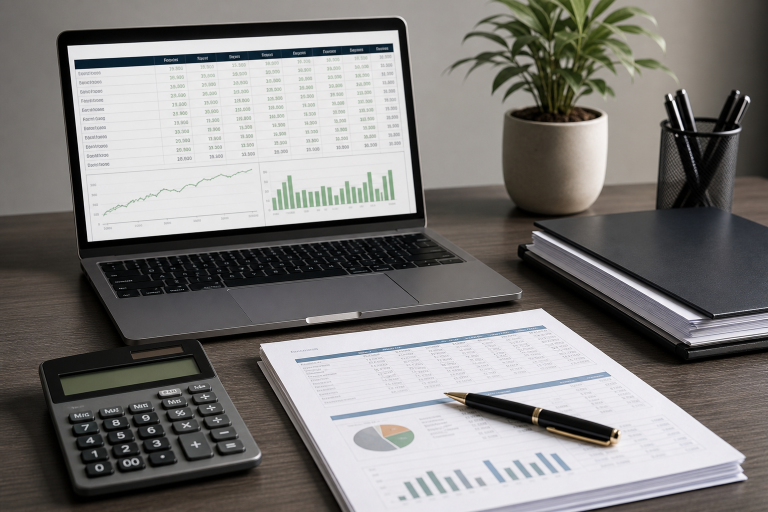
A basic spreadsheet, notes app, paper ledger, or budgeting file is enough. The goal is to keep every TFSA transaction in one place rather than searching through several provider portals when a large deposit is planned.
For each account, record:
- The financial institution and an account nickname or partial account number.
- The date and amount of each contribution.
- The date and amount of each withdrawal.
- Whether money moved through a direct transfer process.
- The year-end account balance.
- Notes for unusual activity, including residency changes or corrected transactions.
Account balances are useful for monitoring investments, but transaction dates and transaction types are more important for contribution-room tracking. A market gain does not create new room, and an investment loss does not restore room. A withdrawal is what matters for future room, not whether the investments rose or fell in value.
Separate Contributions, Withdrawals, and Transfers
Classifying each transaction correctly prevents many common mistakes.
- Contribution: New cash or assets added to a TFSA. It uses the available contribution room.
- Withdrawal: Cash or investments removed from a TFSA. The amount withdrawn is generally added back to the contribution room on January 1 of the following calendar year.
- Direct transfer: Assets moved from one TFSA to another through the receiving institution’s transfer process. Properly completed direct transfers do not use the new contribution room.
Withdrawing money personally and then depositing it into another TFSA is not the same as a direct transfer. The new deposit can count as a contribution, even if the money came from another TFSA. Record the transfer form, the sending account, the receiving account, and the completion date whenever accounts are moved.
Use a Calendar-Year Review System
A few scheduled checks can make the process manageable.
- January: Note the available room shown in CRA records, then compare it with the prior year’s personal tracking file.
- Before a large deposit: Add all current-year contributions across every TFSA and confirm the remaining room from your own records.
- After a withdrawal: Log the amount and date, then mark it as room expected to return in the following calendar year.
- December: Reconcile statements, deposits, withdrawals, and direct transfers before the calendar year ends.
Watch for Common Record-Keeping Errors
- Treating the contribution room as separate for each TFSA instead of shared across all accounts.
- Forgetting a scheduled monthly deposit or a one-time transfer from a savings account.
- Replacing a withdrawal during the same year without unused room available.
- Recording a direct institution-to-institution transfer as a new contribution.
- Relying on a single provider statement when other TFSAs exist.
- Contributing after becoming a non-resident of Canada without first confirming the applicable rules.
- Discarding receipts, confirmation numbers, and transfer paperwork.
How to Check a Possible Excess Contribution
If the numbers do not match, avoid guessing. Pause further TFSA deposits while reviewing the situation, then work through a short sequence:
- Download recent statements from every TFSA provider.
- List every contribution, withdrawal, and direct transfer by date.
- Compare the transaction list with CRA account information and prior-year records.
- Ask the financial institution to clarify any transaction that is missing, delayed, or incorrectly labeled.
- Consider tax advice if the amount is significant, the issue covers several years, or residency changed during the period.
Know What Documents to Keep
Save annual TFSA summaries, contribution receipts, withdrawal confirmations, transfer forms, CRA notices, relevant tax forms, and notes about a residency change. Digital folders work well when file names make documents easy to find. A consistent format, such as 2026-03-15-TFSA-Contribution-BrokerageName, can sort records by date and activity.
Use Data Without Letting It Replace Personal Records
Broad data can provide useful context. The Government of Canada’s TFSA statistics include information on account holders, contributions, withdrawals, account values, age groups, income ranges, and the number of TFSAs held. However, national statistics cannot determine an individual’s available room. Only personal transaction records, provider documentation, and CRA information can help establish that calculation.
Simple Questions Readers May Ask
Can Someone Have More Than One TFSA?
Yes. Multiple TFSAs are allowed, but the available contribution room is shared across all of them.
Does a TFSA Withdrawal Create Room Right Away?
No. A withdrawal generally creates a new room on January 1 of the next calendar year. It can be re-contributed in the same year only if the unused room already exists.
Should CRA Records Always Be Treated as Final?
CRA information is important, but recent activity may not yet be reflected. Compare it with current provider statements and your own master record.
What Is the Best Way to Track Several TFSAs?
Maintain one consolidated record, update it monthly, and review it before making a major deposit.
Make the System Easy to Maintain
The best TFSA tracking system is the one that gets updated. A simple spreadsheet and a few calendar reminders can offer more clarity than scattered statements. Keep all account activity together, check the numbers before adding money, and seek qualified help when the records still do not reconcile.