






























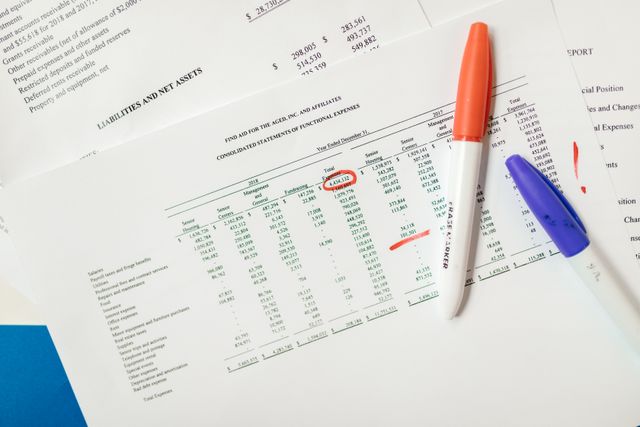
Core Infrastructure: Accounting Methods, Payroll, and Service Models
At the heart of every financially sound small business lies a robust core infrastructure for managing money. This involves understanding fundamental bookkeeping basics, ensuring compliance with relevant accounting principles, and establishing efficient systems for managing employee compensation. Without these foundational elements, even the most promising ventures can struggle to maintain financial clarity and meet their obligations.
Selecting Cash vs. Accrual Accounting Methods
One of the earliest and most critical decisions a small business owner faces is choosing an accounting method: cash or accrual. This choice dictates how and when your business recognizes revenue and expenses, significantly impacting your financial statements and tax liabilities.
Cash accounting is the simpler of the two. Under this method, transactions are recorded only when cash actually changes hands. Revenue is recognized when you receive payment, and expenses are recorded when you pay them. This approach closely mirrors your bank account activity, providing a straightforward view of your immediate cash flow. Many very small businesses, particularly sole proprietorships or those with no inventory, find the cash method easy to manage.
Accrual accounting, on the other hand, records transactions when they occur, regardless of when cash is exchanged. Revenue is recognized when it is earned (e.g., when a service is performed or a product is delivered), even if the payment hasn’t been received yet. Similarly, expenses are recorded when they are incurred, even if they haven’t been paid. This method provides a more accurate picture of a business’s financial performance over a specific period, aligning with the Generally Accepted Accounting Principles (GAAP) standards that larger businesses and publicly traded companies must follow. While private companies in the United States are not legally required to comply with GAAP, using accrual accounting can offer a clearer, long-term view of profitability and financial health, which is often preferred by investors and lenders.
The choice between these methods often boils down to business size, complexity, and specific needs. While cash accounting offers simplicity and a direct view of cash flow, accrual accounting provides a more comprehensive and standardized insight into a business’s financial position, including outstanding receivables and payables.
Step-by-Step Payroll Structure Setup
Establishing a proper payroll structure is non-negotiable for any small business planning to hire employees. It’s a multi-step process that demands attention to detail and adherence to federal and state regulations.
- Obtain an Employer Identification Number (EIN): This nine-digit number, issued by the IRS, is essential for tax purposes, allowing you to hire employees and file various business tax returns. Think of it as your business’s Social Security number.
- Register with State Tax Agencies: Beyond federal requirements, you’ll need to register with your state’s revenue agency for state income tax withholding and unemployment insurance. Each state has its own specific requirements and processes.
- Collect Employee Information (Form W-4 and I-9): Before an employee starts work, they must complete Form W-4 for federal income tax withholding and Form I-9 to verify their eligibility to work in the United States. Ensure these forms are accurately filled out and retained for the required duration.
- Choose a Payroll Schedule: Decide how often you’ll pay employees (e.g., weekly, bi-weekly, semi-monthly, or monthly). Consistency is key here.
- Understand Wage and Hour Laws: Familiarize yourself with federal laws like the Fair Labor Standards Act (FLSA) regarding minimum wage, overtime, and child labor, as well as any stricter state-specific regulations.
- Calculate and Withhold Taxes: For each pay period, you’ll need to calculate federal income tax, Social Security, and Medicare taxes (FICA), as well as any state or local income taxes. You’re also responsible for withholding the employee’s share of FICA and remitting both the employee and employer portions.
- Report New Hires: Most states require businesses to report newly hired employees to a state directory within a short timeframe, often 20 days from their hire date. This helps with child support enforcement and other state programs.
- Pay Employment Taxes: You’ll need to deposit federal employment taxes (income tax withholding, Social Security, and Medicare taxes) to the IRS, typically on a monthly or semi-weekly schedule, depending on your total tax liability. State employment taxes will have separate deposit schedules.
- File Payroll Tax Forms: Regularly file forms such as Form 941 (Employer’s Quarterly Federal Tax Return) and Form 940 (Employer’s Annual Federal Unemployment (FUTA) Tax Return). At year-end, you’ll issue W-2 forms to employees and file W-3 with the Social Security Administration.
- Maintain Records: The IRS mandates that businesses keep records of employment taxes for at least four years. This includes Forms W-4, I-9, payroll registers, and tax deposit records.

Hiring a CPA vs. Utilizing Online Accounting Solutions
When it comes to managing your financial records and tax preparation, small business owners have a spectrum of options, ranging from hiring a dedicated professional to leveraging sophisticated online accounting software. The choice often depends on the complexity of your business, your budget, and your personal comfort level with financial management.
Hiring a Certified Public Accountant (CPA) offers a high level of personalized expertise. A CPA can provide comprehensive financial oversight, from setting up your chart of accounts and performing complex reconciliations to offering strategic tax planning advice and representing you during an audit. Their deep understanding of tax law and accounting principles means they can often identify deductions and credits you might miss, and help structure your business for optimal tax efficiency. While the cost of a CPA is typically higher than online solutions, the value they provide in customized insights, risk mitigation, and peace of mind can be substantial, especially for growing businesses or those with intricate financial structures. They can be invaluable for navigating complex transactions, understanding the nuances of capital versus operating leases, and ensuring all regulatory filings are precise.
Online accounting solutions and automated tools, such as popular software platforms, have revolutionized financial management for many small businesses. These tools offer user-friendly interfaces, automate routine tasks like invoicing, expense tracking, and bank reconciliation, and can generate essential financial reports. They are often more affordable than hiring a full-time CPA or bookkeeper and provide real-time financial data at your fingertips. Many platforms also integrate with other business tools, such as payment processors and CRM systems, streamlining operations. However, while these tools are powerful for data entry and basic reporting, they generally don’t offer the strategic financial advice or the human touch of a CPA. They require the business owner or an internal team member to understand the outputs and make informed decisions. For businesses that need more than just transactional processing, combining online tools with professional bookkeeping services or periodic consultations with a CPA can be an effective hybrid approach.
The decision hinges on balancing cost trade-offs with the level of expertise and support your business requires. For some, a robust online platform suffices, perhaps with occasional expert consultation. For others, particularly those with significant growth ambitions or complex financial situations, the strategic guidance and compliance assurance offered by a CPA are indispensable.
Key Components of Small Business Financial and Tax Services
Beyond the basic infrastructure, small businesses must actively manage their entity structure, understand ongoing tax obligations, and ensure consistent regulatory compliance. These components are dynamic, evolving with the business’s growth and changes in federal and state laws.
Navigating Federal and State Tax Obligations by Structure
The legal structure of your small business—whether it’s a sole proprietorship, partnership, LLC, S corporation, or C corporation—profoundly impacts its federal and state tax obligations. Understanding these differences is crucial for tax planning and compliance.
- Sole Proprietorships and Partnerships: These are “pass-through” entities, meaning the business itself does not pay income tax. Instead, profits and losses are passed through to the owner(s) and reported on their personal income tax returns (Form 1040). Sole proprietors also pay self-employment taxes (Social Security and Medicare) on their business earnings. State tax obligations typically mirror federal treatment, though some states may have specific registration or gross receipts taxes.
- Limited Liability Companies (LLCs): An LLC offers liability protection similar to a corporation but can choose how it’s taxed. A single-member LLC is typically taxed as a sole proprietorship, while a multi-member LLC is taxed as a partnership. However, an LLC can elect to be taxed as an S corporation or a C corporation, which changes its tax treatment significantly. State tax obligations for LLCs can vary, with some states imposing an annual franchise tax or minimum tax based on revenue or number of members.
- S Corporations: An S corporation is a special type of corporation that elects to pass corporate income, losses, deductions, and credits through to its shareholders for federal tax purposes. This avoids the “double taxation” typically associated with C corporations. Owners who work for the business can be paid a “reasonable salary,” and any remaining profits distributed to them are generally not subject to self-employment taxes. State tax treatment for S corporations generally follows federal guidelines, but some states may still impose a corporate-level tax.
- C Corporations: A C corporation is a separate legal entity from its owners and is subject to corporate income tax on its profits. When profits are distributed to shareholders as dividends, those dividends are then taxed again at the individual shareholder level, leading to “double taxation.” C corporations offer maximum liability protection and can retain earnings for reinvestment without immediate personal tax implications. State tax obligations for C corporations often include corporate income taxes and potentially franchise taxes.
Beyond income taxes, businesses with 50 or more full-time equivalent employees are required by the Affordable Care Act (ACA) to report health coverage details to the IRS. All businesses with employees must also contend with federal and state employment taxes, as discussed in the payroll section. Furthermore, some states require businesses to obtain specific state tax IDs for sales tax, use tax, or other excise taxes, depending on their industry and operations.
Ongoing State and Federal Filing Requirements
Staying legally compliant requires a proactive approach to ongoing filing requirements. These obligations ensure your business maintains its legal standing and adheres to various regulatory frameworks.

At the federal level, beyond quarterly or annual income tax filings, businesses must regularly submit employment tax forms (e.g., Forms 941, 940, W-2, W-3) if they have employees. Certain industries may also have specific regulatory filings with agencies like the FDA, EPA, or FTC.
State-level requirements are often more diverse and can include:
- Annual/Biennial Reports: Most states require corporations and LLCs to file annual or biennial reports with the Secretary of State or equivalent agency. These reports update basic business information like registered agent, principal office address, and sometimes officer/director details. Failure to file can lead to administrative dissolution or loss of good standing.
- Franchise Tax Payments: Many states impose a franchise tax, which is a tax on the privilege of doing business in the state. This can be based on net worth, capital, or income, and is separate from income tax.
- Licenses, Permits, and Recertifications: Depending on your industry and location, your business may need specific professional licenses (e.g., for contractors, beauticians, healthcare providers), operational permits (e.g., health permits for restaurants, environmental permits), or business licenses (e.g., general business license for a city or county). These often require periodic renewal or recertification, sometimes annually.
- Sales and Use Tax Filings: If your business sells taxable goods or services, you’ll need to collect sales tax and remit it to the state at regular intervals (monthly, quarterly, or annually).
- Property Taxes: Businesses that own real estate or significant tangible personal property may be subject to local property taxes.
Choosing the correct tax year—calendar year (ending December 31) or fiscal year (ending on the last day of any month other than December)—is also an important consideration. While most small businesses use a calendar year, a fiscal year can sometimes better align with a business’s natural operating cycle, especially for seasonal businesses. Once chosen, changing your tax year typically requires IRS approval.
Evaluating Small Business Financial and Tax Services for Long-Term Growth
Strategic financial decision-making is paramount for long-term growth. Two powerful tools in this arena are cost-benefit analysis and a nuanced understanding of how asset acquisition methods impact your balance sheet and tax position.
Cost-benefit analysis is a systematic process for comparing the total expected costs of a project or decision against the total expected benefits. It’s a critical tool for making informed choices, whether you’re considering expanding your product line, investing in new equipment, or implementing a new marketing strategy. For instance, a small food service business might use it to evaluate if adding $5,000 in annual profit from outdoor seating outweighs $3,000 in permitting and equipment expenses. The goal is to determine if the benefits outweigh the costs, resulting in a positive return on investment (ROI). This analysis can be streamlined as a practical formula for non-critical business investments by measuring simple cash inflow against expenditures over a specific timeline. By categorizing recurring and nonrecurring expenses on your balance sheet, you can ensure accurate cost-benefit evaluations.
When acquiring assets and equipment, the choice between leasing and buying has significant financial and tax implications. Within leasing, the distinction between an operating lease and a capital lease is particularly important:
- Operating Lease: This functions much like a traditional rental. Payments are treated as operational expenses on your income statement, and the leased asset does not appear on your balance sheet. This can keep debt off your books and improve financial ratios. Operating leases generally offer lower ongoing maintenance, risk, and tax burdens compared to capital leases, and often include options for upgrades or returns at the end of the term.
- Capital Lease (or Finance Lease): This is essentially an asset purchase financed by the lessor. For accounting purposes, the business is considered the owner of the asset. The asset is added to the balance sheet, and depreciation is claimed over its useful life. The lease payments are split into interest expense and a reduction of the lease liability. This choice fundamentally alters how equipment is accounted for on balance sheets and business tax returns. An attorney should review asset leases prior to signing to identify early-termination penalties and buyout terms.
Understanding these distinctions and conducting thorough cost-benefit analyses allows small business owners to make decisions that not only support immediate operational needs but also contribute to the business’s long-term financial health and tax efficiency.
Strategic Risk Management, Fraud Prevention, and Technology
In today’s interconnected business environment, financial security, fraud prevention, and the strategic integration of technology are no longer optional but essential for the resilience and efficiency of small businesses.
Leveraging AI with Small Business Financial and Tax Services
Artificial intelligence (AI) is rapidly transforming how small businesses manage their finances and prepare for taxes. AI tools can automate many routine and time-consuming tasks, freeing up valuable time for owners to focus on core business operations and strategic growth.
Automated bookkeeping is one of the most immediate benefits. AI-powered software can automatically categorize transactions, reconcile bank statements, and generate financial reports with minimal human intervention. This significantly reduces manual data entry errors and ensures that financial records are consistently up-to-date. For instance, AI can learn from past categorizations to instantly classify recurring expenses, making month-end closing much faster and more accurate.
Beyond basic automation, AI can enhance fraud detection. By analyzing vast amounts of transactional data, AI algorithms can identify unusual patterns or anomalies that might indicate fraudulent activity, such as unauthorized purchases or suspicious payment requests. This proactive monitoring helps safeguard business assets and prevents financial losses. AI can also assist with input validation, ensuring that data entered into financial systems meets specific criteria, thus improving data quality and reducing errors that could lead to compliance issues or incorrect tax filings.
While AI offers immense potential, it’s crucial for small businesses to understand its limitations and risks. Over-reliance on AI without human oversight can lead to errors if the underlying data is flawed or if the AI’s algorithms are not properly trained. However, when used strategically as a tool to augment human financial management, AI can significantly improve efficiency, accuracy, and security in small business financial and tax services.
Safeguarding Assets from Financial Fraud and Scams
Small businesses are increasingly targets for financial fraud and scams, making robust protection measures absolutely essential. Protecting your assets requires a multi-faceted approach, combining strong cybersecurity practices with vigilant internal controls.
Cybersecurity measures are foundational. Implementing strong, unique passwords for all financial accounts, using multi-factor authentication, and regularly updating software are non-negotiable. Employee training on phishing awareness and secure data handling is also critical, as human error is often a primary vulnerability. Encrypting sensitive financial data, both in transit and at rest, adds another layer of protection.
Scam prevention involves educating yourself and your team on common tactics used by fraudsters. These often include phishing emails, fake invoices, business email compromise (BEC) scams where criminals impersonate executives or vendors, and tech support scams. Always verify unusual requests for payment or changes to vendor banking details through a separate, trusted communication channel (e.g., a phone call to a known number). Be wary of unsolicited offers that seem too good to be true.
Implementing strong payment controls within your business is also vital. This includes segregating duties so that no single person has control over an entire financial transaction, requiring multiple approvals for large payments, and regularly reconciling bank statements. Using secure payment platforms and avoiding public Wi-Fi for financial transactions further reduces risk. Conduct a regular risk assessment to identify potential vulnerabilities in your financial processes and systems, and then implement strategies to mitigate those risks. Protecting your business from identity theft, both for the business itself and its employees, should also be a priority, involving secure data storage and careful handling of sensitive personal information.
Emergency Preparedness, Disaster Recovery, and Exit Strategies
The unexpected can strike any business, from natural disasters to economic downturns. Having a plan for emergency preparedness, disaster recovery, and even an eventual exit strategy is a hallmark of resilient small business financial management.
Emergency preparedness involves having contingency plans for various scenarios. This includes backing up all critical financial and operational data off-site or in the cloud, establishing communication protocols for employees and customers during an emergency, and ensuring you have adequate business interruption insurance. Knowing how to access funds or credit lines quickly can be vital in the immediate aftermath of a crisis.
Disaster recovery focuses on the steps needed to resume operations and recover financially after an event. The Small Business Administration (SBA) offers various forms of assistance, including low-interest disaster loans, to help businesses rebuild and recover. Understanding these resources before a disaster strikes can significantly shorten recovery time. Recovery planning should also consider supply chain disruptions and how to pivot your business model if necessary. This might involve identifying alternative suppliers, exploring new sales channels, or adapting services to meet changed market demands. In cases where tax issues become overwhelming during or after a crisis, seeking comprehensive tax resolution services can provide crucial support in navigating complex IRS procedures and finding solutions to outstanding tax liabilities.
Finally, every small business owner should consider their exit strategy. This involves planning for the eventual closing or selling of the business, or transferring ownership. Key financial and tax considerations include:
- Business Valuation: Understanding the true market value of your business is essential, whether you’re selling to a third party, transferring to a family member, or buying out a partner.
- Asset Transfer: Planning how business assets will be transferred, whether through sale, gift, or inheritance, has significant tax implications for both the business and the owner.
- Tax Implications: The sale or closure of a business can trigger various capital gains, ordinary income, or recapture taxes. Proper planning can help minimize these liabilities.
- Liquidation: If the decision is to close the business, understanding the process for filing for bankruptcy or liquidating assets in an orderly fashion is crucial to fulfilling all legal and financial obligations.
Proactive planning for these scenarios ensures that your business can withstand unforeseen challenges and transition smoothly when the time comes for a change in ownership or operations.
Frequently Asked Questions about Small Business Financial and Tax Services
What is the difference between cash and accrual accounting methods?
The fundamental difference lies in timing. The cash method records financial transactions only when cash is received or paid out. This means revenue is recognized when you get paid, and expenses are recognized when you make a payment. In contrast, the accrual method records transactions when they occur, regardless of when cash changes hands. Revenue is recognized when it’s earned (e.g., service rendered, product delivered), and expenses are recognized when they are incurred, even if payment hasn’t been made or received yet. Accrual accounting provides a more accurate picture of a business’s long-term financial performance.
How long should small businesses keep employment tax records?
The IRS mandates that businesses must keep records of employment taxes for a minimum of four years from the date the tax becomes due or is paid, whichever is later. This includes Forms W-4, I-9, payroll registers, copies of tax returns (like Form 941 and 940), and records of tax deposits. Maintaining these records is crucial for compliance and in case of an audit.
How do operating leases and capital leases differ on a balance sheet?
The distinction is significant for financial reporting. An operating lease is treated like a rental agreement; the leased asset does not appear on the business’s balance sheet, and lease payments are recorded as operating expenses on the income statement. This keeps debt off the balance sheet. A capital lease (or finance lease), however, is treated as if the business has purchased the asset. The leased asset is recorded on the balance sheet, along with a corresponding lease liability. The business then depreciates the asset over its useful life, and lease payments are split into interest expense and a reduction of the lease liability. This impacts a business’s asset base, debt levels, and financial ratios.
Conclusion
Navigating the intricate landscape of small business financial and tax services can seem daunting, but with a structured approach and reliable resources, it becomes a manageable and empowering aspect of entrepreneurship. From the initial decisions about accounting methods and payroll setup to the ongoing demands of tax compliance and strategic risk management, each step contributes to the overall health and longevity of your venture.
Achieving financial clarity, ensuring compliance adherence, and engaging in strategic planning are not just regulatory burdens; they are essential practices that drive sustainable growth and protect your hard-earned success. By embracing these principles and proactively seeking the right expertise and tools, small business owners can confidently manage their finances, meet their tax obligations, and build a resilient foundation for the future in today’s dynamic market.