

























Families researching childcare programs often begin with operational questions, yet long-term outcomes depend equally on institutional values. Parents exploring Little Scholars daycare encounter an early learning model where developmental psychology, structured care, and community belonging operate as interconnected systems.
Early childhood education in Bensonhurst reflects broader NYC demographic realities: multilingual households, working parents, and diverse cultural expectations toward schooling. Effective daycare programs therefore balance academic readiness with emotional stability, porque early education is fundamentally a process of identity formation rather than academic acceleration alone.
Why early education is also about values, not only academics
Neuroscience research consistently demonstrates that executive functioning, emotional regulation, and social competence develop before formal academic mastery. Children internalize behavioral frameworks through repeated social experiences, meaning that classroom culture functions as curriculum itself.
Values-based education does not replace academics; it organizes learning context. When children feel secure, respected, and understood, attention span increases, exploratory behavior expands, and intrinsic motivation becomes sustainable.
Programs operating across Brooklyn and Manhattan increasingly adopt holistic models aligning with NYC DOE and Universal Pre-K standards. These frameworks ensure academic continuity while preserving developmental appropriateness during infancy, toddlerhood, and preschool years.
Which core values shape strong early childhood development
Core values in early education are operational practices rather than abstract ideals. They become visible in classroom routines, educator communication, peer interaction, and family engagement structures.
A strong early learning center integrates emotional learning with cognitive exploration. Children learn cooperation and reasoning simultaneously instead of treating behavior management and education as separate domains.
Independence, empathy, and social responsibility
Independence begins with predictable routines that allow children to make safe choices. Structured environments encourage self-help skills such as organizing materials, transitioning between activities, and expressing needs verbally rather than through frustration behaviors.
Key developmental practices supporting independence and empathy include:
- Guided peer collaboration during play-based activities
- Age-appropriate responsibility tasks promoting autonomy
- Teacher modeling of respectful communication
- Conflict resolution strategies emphasizing emotional vocabulary
These practices gradually shift children from adult-directed participation toward self-regulated learning. Social responsibility emerges when children recognize themselves as active contributors to a shared classroom community.
Programs that emphasize belonging reduce anxiety during separation transitions. Over time, children develop confidence navigating both structured learning and open-ended exploration.
Creativity, critical thinking, and cultural awareness
Creative learning environments integrate arts, music, storytelling, and STEM exploration into everyday activities rather than isolating them as enrichment sessions. Creative expression strengthens neural flexibility, allowing children to approach unfamiliar problems with adaptive thinking.
Modern early education programs also prioritize cultural awareness. Multicultural classrooms expose children to varied languages, traditions, and perspectives, fostering empathy while preparing them for urban social environments.
| Value Area | Classroom Application | Developmental Outcome |
| Creativity | Arts, music, creative crafts | Symbolic thinking |
| Critical Thinking | STEM exploration & inquiry | Problem-solving skills |
| Cultural Awareness | Multilingual interaction | Social adaptability |
| Collaboration | Group play projects | Cooperative behavior |
| Emotional Literacy | Guided discussions | Self-regulation |
Values become measurable when translated into observable behaviors. Children demonstrate growth through communication clarity, collaborative play, and sustained curiosity rather than memorized academic outputs.
How Little Scholars brings these values into daily learning
Since approximately 2013, Little Scholars NYC has expanded to multiple NYC locations while maintaining consistent educational philosophy. Institutional longevity suggests stable pedagogy supported by educator training, standardized safety practices, and continuous program refinement.
The center’s approach blends play-based learning with DOE-aligned curriculum frameworks. Learning meets fun through structured exploration where music, arts, movement, and early STEM concepts operate as integrated developmental tools.
Five areas of development in a play-based setting
Holistic education addresses multiple developmental domains simultaneously rather than sequentially. Children experience learning through interaction, experimentation, and guided discovery.
Core developmental domains emphasized daily include:
- Cognitive development through inquiry-based learning activities
- Social-emotional growth via cooperative play and reflection
- Physical development supported by movement and sensory play
- Language acquisition reinforced through storytelling and dialogue
- Creative expression through arts, music, and imaginative exploration
Balanced programming prevents early academic burnout while preparing children for structured schooling expectations. Programs spanning infant care through UPK create continuity, allowing developmental progress without repeated environmental adjustment.
Nutritious meals prepared according to CACFP standards further reinforce holistic care. Physical wellness supports concentration, mood stability, and sustained engagement during learning activities.
Experienced educators and a multicultural environment
Educator qualifications strongly predict classroom quality. Teachers trained specifically in early childhood education understand developmental pacing, differentiated instruction, and emotional scaffolding techniques.
Little Scholars emphasizes continuous professional learning among staff members. Teaching methods to evolving research while maintaining consistent classroom expectations across Brooklyn and Manhattan locations.
The multicultural environment fosters inclusion and belonging for children and families. Acceptance of ACS/HRA vouchers broadens accessibility, ensuring that diverse socioeconomic backgrounds participate in shared educational experiences.
Daily communication through the Brightwheel app strengthens parent-educator partnerships. Transparent reporting regarding meals, activities, naps, and milestones keeps families actively connected to classroom life.
What parents can look for during a school visit
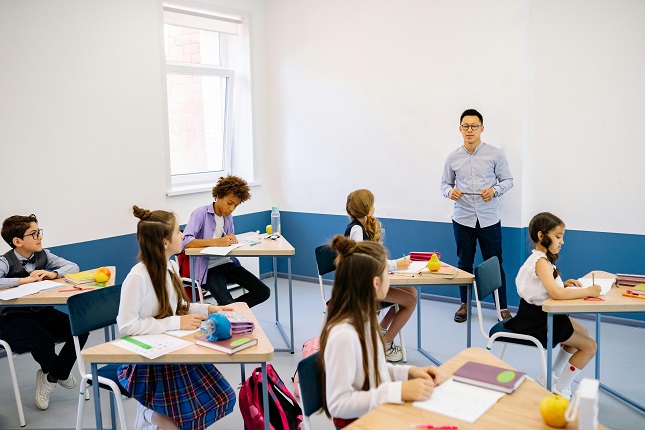
A school visit should function as a structured evaluation rather than a promotional walkthrough. Parents benefit from observing real interactions rather than staged demonstrations.
During tours, families may evaluate:
- Teacher responsiveness to children’s emotional cues
- Classroom organization supporting independence
- Evidence of individualized attention within group settings
- Safety, cleanliness, and supervision consistency
These observations provide insight into whether values described online are genuinely practiced. Effective centers demonstrate calm environments where children appear engaged rather than controlled.
Families should also review program breadth including infant programs, toddler classrooms, preschool preparation, 3K/UPK participation, extended day services, summer camp offerings, and Mommy & Me classes. Comprehensive programming reduces future transitions and strengthens continuity of care.
The strongest indicator of quality is relational atmosphere. When children interact comfortably with educators and peers, learning occurs naturally without coercion.
Schedule a tour, review program availability, and join the waitlist through Little Scholars daycare to evaluate how value-centered early education can support your child’s growth within a safe, inclusive NYC learning environment.