



























Key Takeaways
- Ontario’s updated auto insurance rules took effect on July 1, 2026.
- Medical, rehabilitation, and attendant care benefits remain mandatory for new policies.
- Several accident benefits are now optional and may require an active selection.
- A lower premium can mean higher out-of-pocket costs or less protection after a major accident.
- Drivers should compare limits, deductibles, benefits, discounts, and policy conditions together.
Ontario’s auto insurance rules changed on July 1, 2026, making a policy review more important for Windsor households. Whether you are buying a vehicle, renewing coverage, or comparing options, reviewing car insurance in Windsor should involve more than looking for the lowest premium. The details of your coverage can shape how well you are protected after a serious collision.
The changes give drivers more choices around accident benefits, but choice also means paying closer attention to what is included, what is optional, and what risks you can reasonably afford to take on. A quick review now can prevent unpleasant surprises when you need to make a claim.
Why the 2026 Changes Matter
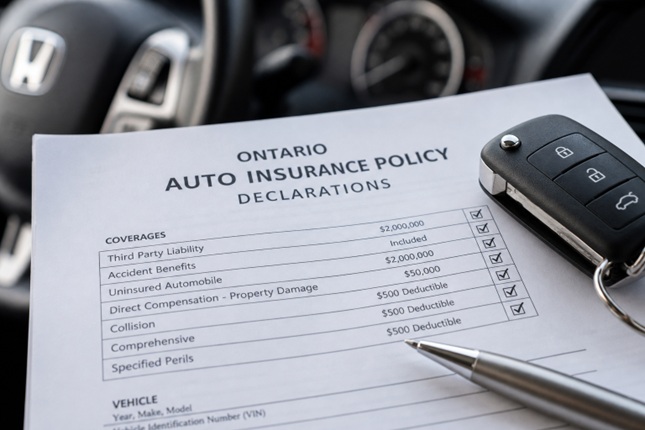
Ontario’s July 1, 2026, update changed the standard approach to statutory accident benefits for new auto insurance policies. Some coverage that many drivers may have expected to be included is now optional. That does not make any one choice right for everyone, but it does make it essential to understand the selections listed on a policy’s declarations page. The Ontario auto insurance rule changes provide additional context on the regulations that came into force.
For drivers approaching renewal, changing insurers, or purchasing a new vehicle, it is worth asking exactly how the current coverage structure applies to the policy being offered. Do not assume a new quote matches an older policy line by line.
Start With Accident Benefits
Accident benefits may help with certain costs after an automobile accident, regardless of who caused it. They can be especially important when an injury affects a person’s ability to work, provide care at home, or manage daily tasks.
Benefits That Remain Mandatory
For new policies purchased on or after July 1, 2026, the mandatory accident benefits include:
- Medical benefits
- Rehabilitation benefits
- Attendant care benefits
The Financial Services Regulatory Authority of Ontario explains the current standard policy structure and notes that accident benefits are available regardless of fault. Review its guidance on the standard Ontario auto insurance policy alongside your own policy documents.
Benefits That May Require an Opt-In Decision
Depending on the policy, optional selections may include income replacement, caregiver, housekeeping and home maintenance, non-earner, death and funeral benefits, and higher accident benefit limits. These can matter for full-time employees, self-employed drivers, parents, caregivers, students, retirees, and people whose workplace benefits have limits or exclusions.
Before declining an option, consider the practical question: if an accident prevented you from working or managing responsibilities at home for several months, what support would already be available?
Check Liability Limits
Liability coverage may protect you if you cause injuries or property damage to others. A major collision involving multiple vehicles, serious injuries, or extensive property damage can create costs that rise quickly. Choosing the lowest available limit may reduce the premium, but it can also increase financial exposure.
- Review the liability limit shown on your declarations page.
- Consider your household income, savings, and assets.
- Think about where, how often, and how far the vehicle is driven.
- Ask for the price difference between your current limit and a higher one.
Review Collision, Comprehensive Coverage, and Deductibles
Collision coverage may help pay for damage when your vehicle hits another vehicle or object. Comprehensive coverage may help with certain non-collision losses, such as theft, vandalism, fire, falling objects, or some weather-related damage. These options are often worth reviewing for financed or leased vehicles, newer vehicles, and cars that would be expensive to replace or repair.
Your deductible is the amount you pay before an eligible claim payment begins. A higher deductible can lower the premium, but it should not be so high that paying it would create a financial emergency.
Use This Three-Step Deductible Test
- Write down the deductible for each applicable coverage.
- Decide whether you could pay that amount from savings promptly after an accident.
- Compare the actual premium savings before increasing it.
For example, saving a small amount each month may not be worthwhile if the change raises your collision deductible by an amount that would be difficult to cover after a crash.
Look for Discounts That Match Real Life
Your policy should reflect your current driving habits, not the habits you had years ago. A move, a remote work arrangement, a shorter commute, a driver training course, or a vehicle safety upgrade may affect eligibility for discounts or rating adjustments.
- Winter tire discounts
- Multi-policy and multi-vehicle discounts
- Driver training discounts
- Low-kilometre discounts
- Telematics or usage-based programs
- Claims-free or safe-driver discounts
- Approved anti-theft or safety-device discounts
Eligibility requirements vary, so confirm that each approved discount is actually shown in your policy documents.
Update Driving and Household Details
Accurate details help ensure that your coverage and premium are based on the vehicle’s actual use. Tell your insurer or broker about a new address, parking location, commute distance, remote-work arrangement, new household driver, marriage or separation, vehicle purchase, or change in annual kilometers.
It is particularly important to report delivery, rideshare, or other business use before using a personal vehicle for that purpose. Personal auto coverage may not automatically apply to every commercial activity.
Compare Policies on More Than Price
A lower quote is only a fair comparison when the coverage is similar. Use the same checklist for every quote:
- Match liability limits.
- Match collision and comprehensive deductibles.
- Compare mandatory and optional accident benefits.
- Check rental vehicle or loss-of-use protection.
- Review exclusions, payment fees, and special conditions.
- Confirm discounts and ask how claims are handled.
Common Mistakes to Avoid
- Declining optional benefits without understanding what they do.
- Assuming workplace benefits cover every accident-related need.
- Raising a deductible without checking available savings.
- Forgetting to update annual kilometres or a regular household driver.
- Comparing quotes with different limits and calling them equivalent.
- Allowing a policy to renew without considering recent life changes.
A Simple 2026 Policy Review Checklist
- Read the declarations page carefully.
- List all mandatory and optional accident benefits.
- Check liability limits and deductibles.
- Confirm vehicle use, drivers, and annual kilometers.
- Ask about applicable discounts.
- Compare like-for-like coverage before renewal.
- Store updated policy documents securely.
Conclusion
Ontario’s 2026 changes do not automatically make one policy better than another. They make a careful review more valuable. Windsor drivers can make more confident choices by considering accident benefits, liability limits, deductibles, vehicle use, discounts, and household finances together. The goal is not simply to pay the lowest premium. It is to choose coverage that fits your vehicle, budget, responsibilities, and ability to manage risk.