
























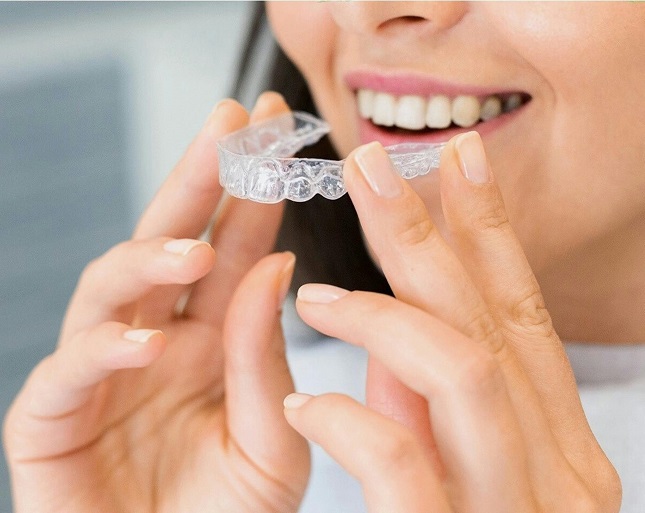
If you have ever wondered whether dental aligners are right for you, you are in the right place. In this guide, we break down everything you should know to make a smart decision.
What are dental aligners?
Dental or clear aligners are clear, removable trays that are in the shape of your teeth. It fits over your teeth snugly. And gently push them into a straighter position over time.
Unlike metal braces, aligners are transparent. Most people will not even notice you are wearing one. They are made from smooth, medical-grade plastic, which means they are comfortable to wear and do not irritate your cheeks or gums.
A series of aligners are given to you throughout the treatment. Each tray is slightly different from the last. Moving your teeth a small amount at a time. Your orthodontist will plan the entire process before it even begins.
How do dental aligners work?
The process will start with a consultation. Your orthodontist will take a 3D scan or impression of your teeth. Using this, a digital treatment plan is created. This maps out exactly how the teeth will move from start to finish.
This digital plan is then provided to the dental lab. Custom dental aligners are made. You receive them in a set by your orthodontist. You wear each one of them for about 1-2 weeks before moving on to the next one. Each new tray picks up where the last one was stopped. This gradually guides your teeth into the right position.
Key rule: For the best results, aligners should be worn for 20-22 hours a day. You take them out only when eating, drinking (anything other than water), or brushing your teeth.
The benefits of choosing a dental aligner
Aligners have become very popular over the last decade. Here are some of the advantages:
1) Transparent look
- They are clear plastic trays which are barely noticeable in social settings.
2) Removable
- You can remove it before eating, drinking and brushing. This means your daily habits and necessities don’t have to be compromised.
3) Comfortable
- They are plastic trays that fit your teeth. Unlike metal braces with wires and brackets, they don’t poke your cheek or gums.
4) Easy to clean
- You can brush and floss easily. You do not have to necessarily invest in new tools.
Beyond these cosmetic advantages, teeth straightening can genuinely improve your oral health.
Crowded or misaligned teeth are harder to clean. This leads to a buildup of food particles and bacteria. Causing cavities and gum diseases over time. Aligners will address the root cause of the problem.
Dental aligners vs. Metal braces
Both options work well for correcting misaligned teeth. But they are quite different from experience. Here is the comparison:
| Feature | Dental aligners | Metal braces
|
| Visibility | Transparent. | Clearly visible metal wires and brackets. |
| Comfort | Smooth plastic, no sharp edges. | Wires can cause soreness or irritation. |
| Removability | Yes, removable. | They are fixed. Can only be removed by the dentist. |
| Cleaning | Normal brushing and flossing. | Requires special tools and care. |
| Dietary restrictions | None. | Must avoid hard and sticky food. |
| Complex cases | Good for mild to moderate issues. | Better for severe issues. |
For mild to moderate dental issues, aligners are often the preferred choice. Whether you are 13 or 31, aligners are for everyone. However, complex cases involve significant problems with bite. Your dentist may still recommend metal braces.
Who are dental aligners for?
Dental aligners are suitable for most adults and older teenagers. They work the best for people who ae dealing with:
- Overcrowded teeth
- When there is no space in the jaw and teeth overlap.
- Gaps
- When there is too much visible space between two teeth, especially the front teeth. This makes some people conscious.
- Overbite and underbite
- When the upper and lower teeth do not meet correctly.
- Crossbite and openbite
- This can wear away the teeth and cause jaw strain over time.
Younger children whose teeth are still developing are generally not good candidates for aligners. An orthodontist will assess a lot of things including age and dental health before suggesting aligners.
How to care for your dental aligners?
Taking care of aligners is simple. Rinse them with clean water every time you remove them. Clean them gently with a soft toothbrush and mild soap, avoid toothpaste. Never leave your aligners in hot water or direct sunlight. Heat can warp the plastic.
Always store the aligner sin a case, when not in use. Leaving them on the table or in a tissue is how people lose or damage them.
Conclusion
A dental aligner is one of the most effective and comfortable ways to improve your smile. Whether you have crowded teeth or gaps, there is a good chance that aligners can help.
The best first step? Book a consultation with a qualified orthodontist. They will suggest to you if aligners are right for you.