






























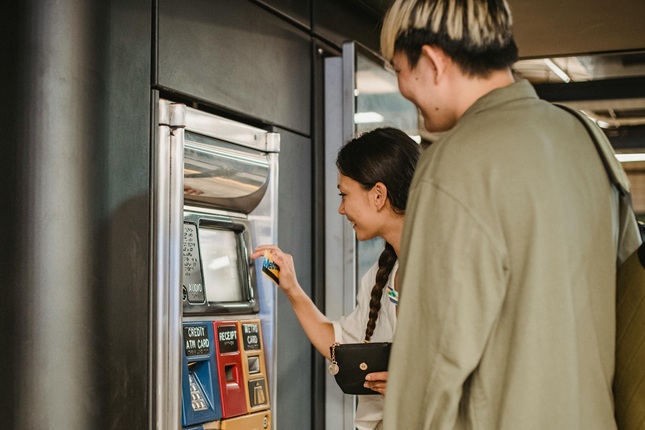
One of the greatest frustrations with unattended retail is missing sales. Customers approach a vending machine and are about to make a purchase, but suddenly understand that they have no money or cannot make a transaction on time. As a result, slow or unreliable payment methods interrupt the purchase experience and decrease the level of trust, particularly in places that have high traffic, where convenience is the most important factor.
Fortunately, cashless technologies of the present day provide an out-of-the-box solution. Specifically, both card systems and mobile payment applications eliminate cash dependency, enhance transaction speed, and make vending machines consistent with modern customer demands. However, these two possibilities are very different in the operational conditions of the real-world vending business, and for that reason, selecting the correct option becomes critical to long-term performance.
This article provides a comparison between card readers and mobile payment applications in terms of usability, reliability, security, pricing, accessibility, and future readiness to guide your decision.
1. Transaction Speed and Checkout Simplicity
Card readers for vending machines allow customers to tap, insert, or swipe a card and complete a purchase in seconds. This direct interaction reduces hesitation and supports impulse buying, which is essential in workplaces, hospitals, and transit areas where users expect fast service.
Furthermore, mobile payment apps introduce a slightly different flow. Customers need to unlock phones, open apps, and confirm payments. Hence, for users who are already accustomed to mobile wallets, this process seems more convenient than slow.
A study on retail payment friction and self-service technology indicates that familiarity with an interface significantly reduces perceived checkout effort.
2. Hardware Stability and Operational Reliability
Vending environments demand equipment that works consistently without supervision. Card readers designed for vending machines are engineered to withstand vibration, temperature changes, and frequent public use. Because these readers connect directly to machine controllers, transactions remain stable even when customer devices vary in performance.
On the other hand, mobile payment apps depend on factors outside the operator’s control, including phone battery life, operating system updates, and app compatibility. However, this dependency also shifts part of the responsibility away from the operator, reducing on-machine hardware complexity. Moreover, when this is supported by stable network connectivity, mobile payments can perform reliably on a scale.
3. Security Framework and Consumer Confidence
Security is a key component in payment acceptance. Card readers are usually in line with the standards of PCI DSS and encrypt the data that is received. This structured approach ensures that sensitive payment information is protected at the point of interaction, which is especially important in unattended environments. This will reduce the risks of fraud as well as the insecurity of users who have used standard card payment systems in public places.
If we talk about mobile payment apps, they rely on software-based security, including tokenization and biometric verification. Research indicates that robust security measures such as encryption, authentication, and transparency significantly influence consumer trust in digital payment systems across demographics. Moreover, leading platforms such as Apple Pay and Google Pay often exceed traditional card security by never exposing actual card numbers.
4. Cost Efficiency and Long-term Value
Card readers involve upfront hardware and installation costs, but they often reduce long-term expenses. Eliminating cash handling lowers labor requirements, decreases theft risk, and simplifies accounting. Integrated systems also provide automated sales reporting, which reduces administrative overhead.
Moving on, mobile payment apps may reduce or eliminate initial hardware expenses. Their cost structure is typically usage-based, which can be advantageous for low-volume machines or smaller operators. That said, transaction fees and limited integration with machine telemetry may affect long-term cost efficiency, depending on scale and operational complexity.
5. Accessibility Across Customer Demographics
Accessibility of payments will define the number of potential customers who can make a purchase.
Card readers have a broad market target, both smartphone-free and data-free, and are unfamiliar with digital wallets. This inclusivity is crucial mainly in mixed-use spaces in the form of offices, universities, and medical centers.
If we focus on mobile payment applications, they can be extremely attractive to younger and more technologically literate consumers, who like to make payments using their phones. Additionally, when offered alongside card payments, they expand rather than limit accessibility. Thus, allowing operators to capture a wider range of user preferences and increase overall transaction frequency.
6. Scalability and Future Payment Readiness
Vending systems of the future need to be flexible to the changing standards of payments. EMV, NFC, and contactless protocols are supported by modern readers of cards, which enables the operator to upgrade the functionality of devices without necessarily changing the entire equipment. This scalability can be deployed on a large network of vending machines.
In the modern lifestyle, mobile payment applications are evolving at a very high pace and putting the operators at the mercy of third-party platforms. This innovation speed can be a strategic advantage, though it also requires operators to remain aligned with third-party platforms and their policies. In practice, combining embedded readers with mobile wallet support offers both stability and adaptability.
Conclusion
When deciding on card readers versus mobile payment applications, convenience, reliability, and long-term control all need to be taken into consideration. In practice, card readers are also quick in transactions, reliable, and highly accessible, which makes them adaptable in unattended vending situations where, ultimately, simplicity leads to sales.
Mobile payment apps are making digital-first users more flexible and appealing; however, they add external dependencies that can have an impact on predictability and reliability. As a result, the most resilient approach is often a hybrid one.
This strategic approach maximizes convenience, minimizes missed sales, and positions operators to meet current demand while remaining adaptable to future payment trends.