


























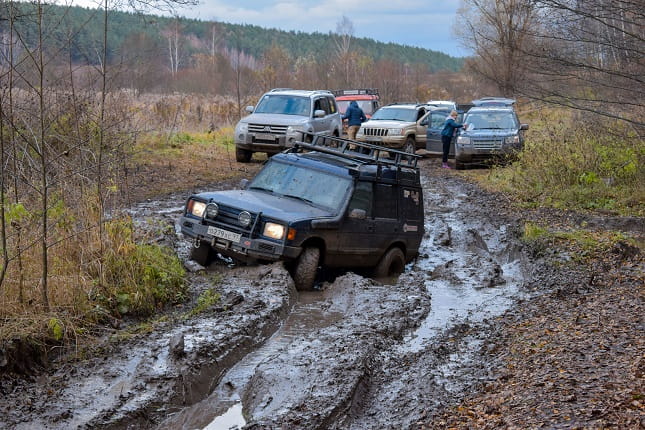
Festival muddy parking stuck after a storm is one of the most common summer recovery problems. The field looked fine when you arrived. By the time everyone leaves, the exit lane is churned grass, standing water, and buried tires.
Music festivals, county fairs, outdoor weddings, campgrounds, and sports events often turn grass fields into temporary parking lots. Those fields are not built like real parking areas. They may have poor drainage, soft topsoil, and no firm base under the grass.
Why Festival Parking Gets Muddy Fast?
A grass lot can hold vehicles for a while. Then rain, traffic, and parked weight break down the surface. Once the root mat fails, the grass stops acting like turf and starts acting like mud.
No Real Drainage
Permanent parking lots are graded to move water away. Festival fields are usually pastures, fairgrounds, or overflow lots. Water sits on the surface, then soaks into the topsoil.
Thousands of Vehicles Compact the Ground
Every truck, SUV, camper, and trailer presses the grass down. The first vehicles in may be fine. The vehicles leaving after two days of traffic and rain may not be.
Traffic Lanes Fail First
Everyone drives through the same entrance, exit, and lane paths. Those lanes lose grass first. Then they become lower than the parking spots around them, which lets water collect exactly where people need to drive out.
Camping Weight Makes It Worse
Festival vehicles are often loaded with coolers, tents, tools, food, water, and passengers. A loaded truck sitting on wet grass for days can settle into its own soft spot.
Why Pushing Usually Fails?
The push-it-out plan sounds good until the truck is heavy, the ground is slick, and the tires are sitting in ruts. A loaded pickup on wet grass needs traction at the drive wheels, not just people pushing from behind.
Pushing may help on dry pavement. It rarely works on wet grass with a loaded vehicle and a slight grade. It also puts people near a moving truck on a slippery surface, which adds risk.
What Festival Staff May Not Do?
Many event teams cannot pull patron vehicles because of liability rules. Even when staff want to help, they may be told to direct drivers to a paid tow service instead.
That means the driver who brought their own recovery gear is in a better position than the driver waiting for an event-approved wrecker.
What to Pack for Event Vehicle Stuck Situations?
A compact kit can fit behind the seat or under camping gear. It should cover traction, digging, safety, and cleanup.
- A tire-mounted traction aid for the drive wheel.
- Two folding wheel chocks.
- A small shovel or entrenching tool.
- A tarp for wet seats, muddy gear, or kneeling during recovery.
- Gloves and a flashlight.
- A tire pressure gauge and small inflator if you plan to air down.
The TruckClaws Light Truck Kit works for this kind of event recovery because it does not need another vehicle, a tree, or a clear dry surface. It mounts to the drive tire and gives the tire a hard edge to bite with.
How to Recover in a Festival Lot?
Stop Spinning Immediately
If the truck is not moving but the wheels are spinning, stop. Every extra rotation cuts the rut deeper and turns more grass into mud.
Walk Around the Truck
Find the drive wheel with the firmest ground around it. Look for slightly higher ground, gravel edges, or grass that has not been torn apart.
Mount the Recovery Aid
Wrap the traction aid around the drive tire. Place the cleat across the tread and tighten the strap firmly.
Use Low Gear and Gentle Throttle
Do not stomp the gas. Ease forward slowly. Once the truck moves, keep rolling until you are past the muddy lane and onto firmer ground.
How to Avoid Getting Stuck at Outdoor Events?
- Park nose-out when the lot is dry.
- Choose higher ground instead of the lowest spot in the field.
- Watch the weather before the exit day.
- Avoid parking in already-rutted lanes.
- Look for grass that is still standing tall, not flattened and shiny.
Final Takeaway
The festival memory you want is the show, not the wrecker bill. Festival muddy parking stuck after rain is predictable, which means you can plan for it.
Park smart, pack compact recovery gear, stop spinning early, and get moving before the field turns the exit lane into a trap.