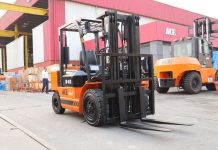





























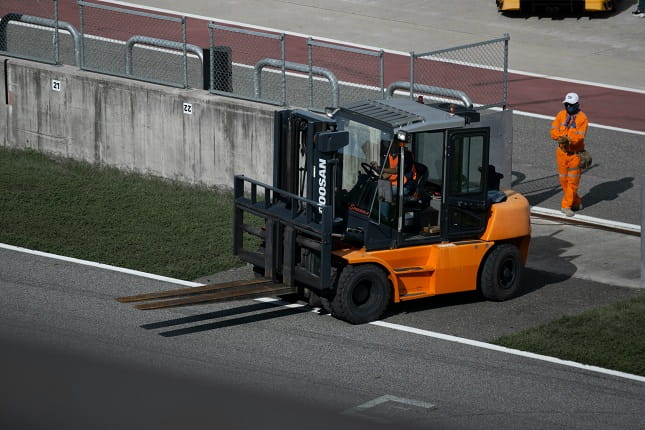
Walk down to your warehouse floor right now and take a hard look at the layout. You will likely see multi-ton machines sitting completely idle in dark corners, or drivers taking the long way around an aisle because a staging bay is blocked. Warehouse operations constantly fight the battle against invisible waste, yet the exact location, utilization, and true efficiency of their highest-value material handling assets remain a total mystery.
Most industrial facilities run on historic assumptions, guessing how many active vehicles they need to hit their daily throughput targets. Implementing a rugged, enterprise-grade Forklift Tracking system changes the equation from guesswork too hard data, pulling back the curtain on hidden operational bottlenecks and exposed margins.
ROI Loss without Real-Time Forklift Tracking
Every minute an industrial vehicle moves without a load is capital leaking directly out of your bottom line. Empty travel distance, commonly known as deadheading, quietly eats up a massive percentage of an unmonitored fleet’s daily operating capacity. Drivers spend hours wandering aisles searching for misplaced pallets, navigating poor traffic patterns, or waiting around for dispatcher instructions because nobody has immediate visibility into the floor’s actual status.
When you cannot see where the cross-docking bottlenecks form, your immediate reflex is usually throwing more hardware at the problem. Operations directors look at delayed shipments and assume they need to lease three more reach trucks next quarter. In reality, your current fleet is likely heavily underutilized, suffering from poor travel routing, uneven task distribution across shifts, and systemic communication breakdowns.
Resolving Dashboard Fatigue and Broken Infrastructure with RTLS
Traditional warehouse management systems are great at telling you what should be happening, but they remain completely blind to physical reality. They tell you a pallet belongs in Bay 4, but they cannot tell you that an operator just dropped it in Bay 12 because Bay 4 was blocked by unboxed inventory. This disconnect leads to operators hoarding specific attachments or vehicles, hiding them in low-traffic zones, so they have them ready for their next shift.
- Ghost Assets: Machines that appear active on paper but sit parked behind high racks for hours.
- Gridlock Zones: High-traffic intersections where multiple vehicles bottleneck due to poor facility path planning.
- Calibration Failures: Vehicles missing critical preventative maintenance because actual runtime hours are logged incorrectly via manual clipboards.
Relying on manual logs or basic proximity sensors to manage these issues is a recipe for broken infrastructure. Your supervisors end up suffering from intense dashboard fatigue, staring at static software screens that offer plenty of historical alerts but zero actionable insight into the live chaos on the floor.
Risks of Forklift Safety Hardware Lock-In
Most operations teams hesitate to modernize their fleet management because they fear getting trapped by proprietary vendor ecosystems. They buy a temporary tracking setup from an OEM only to realize it requires proprietary tags, expensive infrastructure upgrades, and completely refuse to talk to the existing legacy warehouse architecture. You end up stuck with rigid, single-purpose hardware that cannot adapt when your facility layout changes, or when you need to expand tracking to smaller manual carts, tuggers, and pallets.
True optimization requires an architecture that plays nicely with your existing investments rather than forcing a total, budget-destroying rip-and-replace. By leveraging open, interoperable RTLS frameworks, facilities can integrate diverse positioning technologies onto a single operational floor without sacrificing accuracy or data integrity.
Engineering Real Operational Outcomes
LocaXion is the world’s first pure-play RTLS & Digital Twin systems integrator. We engineer systems for your business outcomes-not just “tracking.”
That means less risk, less integration of guesswork, and faster time-to-value. And because we’re not locked to one technology stack, you get the freedom to scale with the right technology – not the technology we happen to sell.
RTLS tracks your assets. LocaXion transforms how your operation runs.
That’s the difference. And it’s not a small one.
Stop losing margins to deadheading and ghost assets and engineer your outcomes today at https://locaxion.com/