
























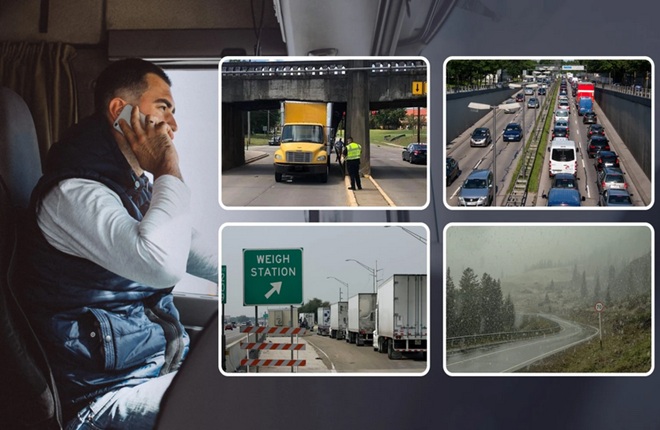
Navigating any city in a truck is difficult, but New York City presents a unique test for a driver’s patience, punctuality, and route planning skills.
The combination of rigid truck route regulations, heavy traffic, and overburdened infrastructure that has yet to be built for the freight movement of today can easily punish even the best drivers with the wrong turn.
Truck route GPS is developing into something much more than a simple navigation tool. In a metropolis like NYC, it serves as a crucial safety net.
Why NYC Truck Routing Is Its Own World
To truly understand why GPS is so vital here, you must first grasp the configuration of the city.
The entire state of New York functions on a designated truck route system. Trucks must use designated routes for travel unless they are making a local delivery. Sounds easy enough, right? Not exactly.
Drivers are dealing with:
– Limited access to parkways
– Commercial vehicle ban
– Low bridges and clearance hazards
– Quite a heavy flow of cyclists and pedestrians.
Even a minor navigation error can be converted to a compliance failure, and rapidly a safety failure. The broader safety data points to the reason why this is so important
There are hundreds of thousands of large truck crashes annually throughout the US, and urban areas such as New York increase the danger, as there is virtually no room for error.
What These Mistakes Look Like on the Ground
This isn’t just a technical problem. It appears in real life, in the daily realities faced by drivers all over the city.
1. Low Bridge Collisions
Probably the best known example of urban trucking problems is… The low bridge.
It can begin with a straightforward instruction on navigation. The driver proceeds along the road, which he believes will lead to his destination. When he reaches a bridge that is lower than his vehicle, this leads to a derailment.
The result can be severe:
– Roofs or even trailers get destroyed immediately
– Cargo is destroyed
– Traffic is due to be blocked while the scene is made safe
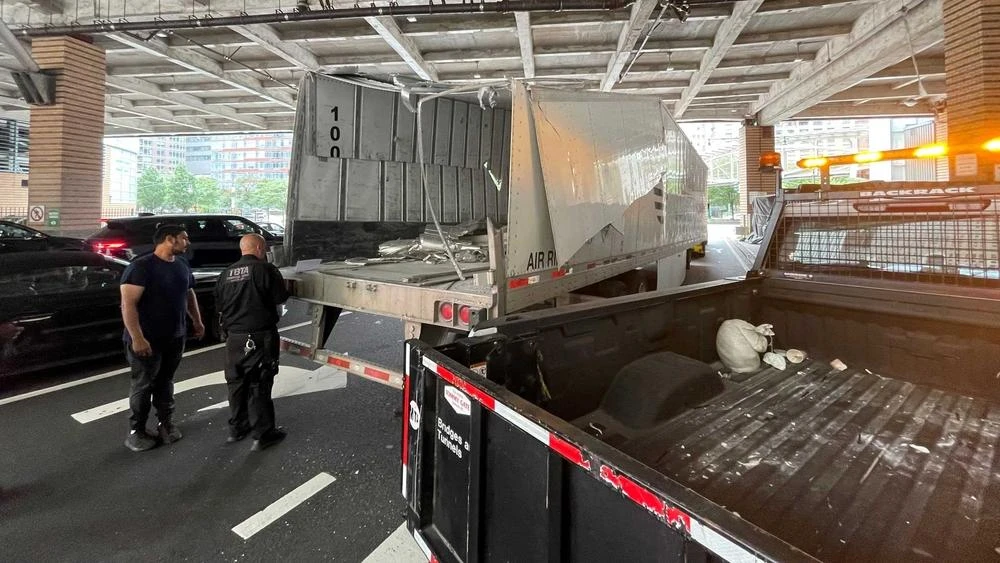
Incidents like these have a considerable cost. For example, besides the repair bills, there are also extra delays and missing deliveries. A major contributor to the cost is bridge strikes, costing billions of dollars every year.
2. Wrong Turns That Lead to Violations
Another problem that often comes up is route violations.
NYC has designated truck routes, but this is often very hard to impossible to follow in real-world traffic, especially under stress or in heavy congestion.
When that happens, drivers may end up:
– On restricted streets
– In residential areas where trucks are not permitted.
– Subject to penalty payments or enforcement proceedings
What adds to the nightmare is that it (the thing that makes the whole experience more stressful and more frustrating) usually takes place during busy delivery hours, when the driver is trying to catch up, and the city has the most traffic.
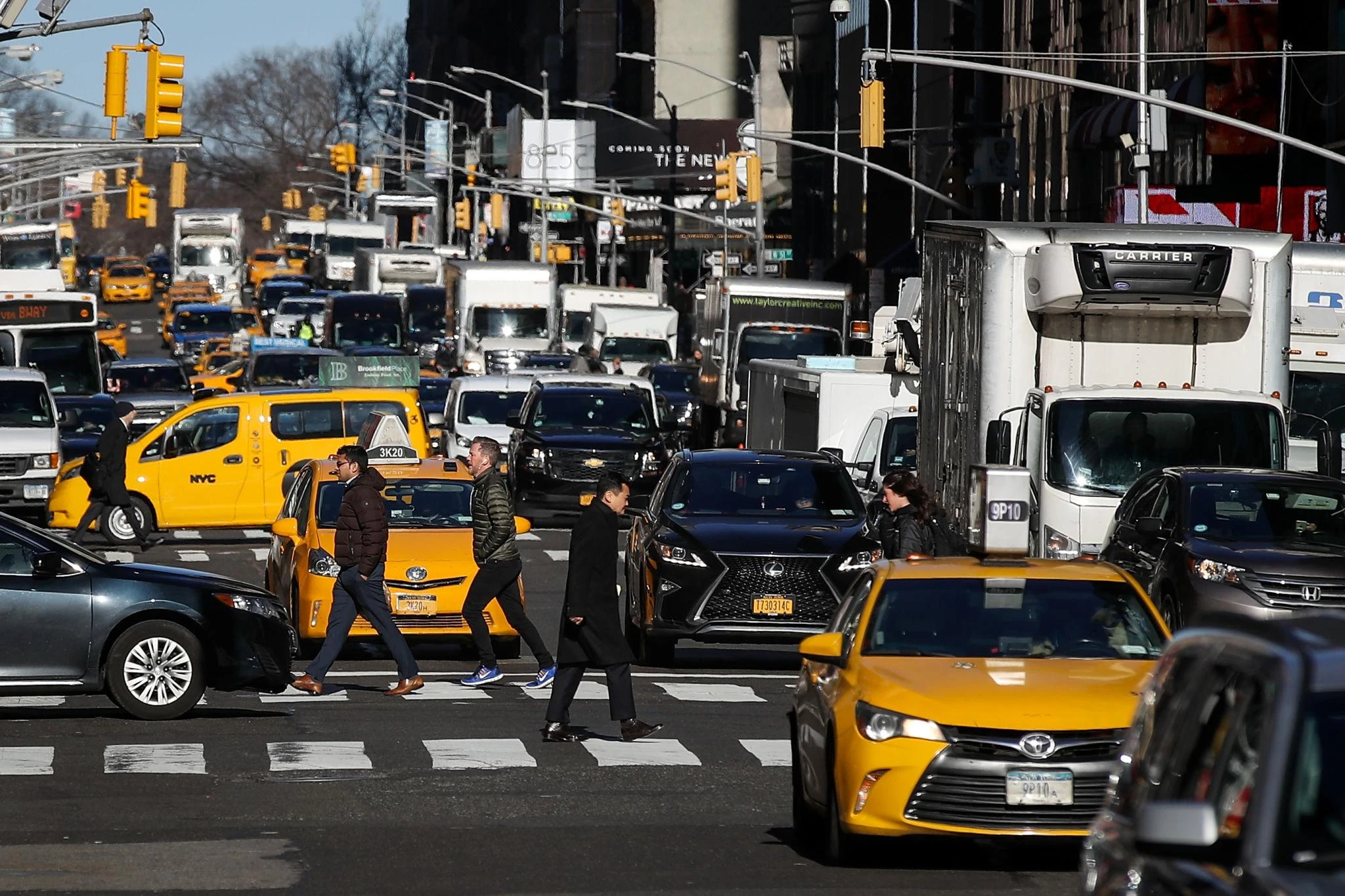
3. Tight Urban Streets and Sudden Crash Scenarios
Even when on the right path, one can still always be on the wrong route and traveling to the wrong destination, NYC.
The streets are narrow. The intersections are tight, and there is inflexibility to the constant flux of pedestrians, bikes, and vehicles.
Most incidents in these environments do not come from high-speed driving. They come from small moments like:
– Misjudging a turn
– failing to spot a pedestrian early enough
– Being caught in the box at an intersection
NYC is not just settling for seat-of-the-pants routing. The confluence of our rules, our threads, our shape, and a never-ending demand for movement means that nothing on the streets is matter-of-fact.
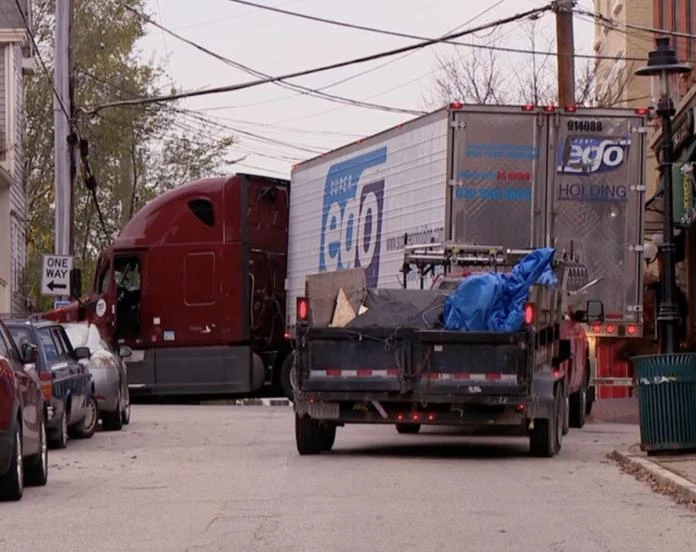
This is where a truck GPS becomes more than a convenience, but rather a silent, indispensable aid that keeps businesses like this one from adding extra difficulties to what is already a complex operation.
Because in this modern age, where a wrong turn can derail your whole day, it’s simply no longer a luxury.