






























Key Takeaways
- Smart data segmentation enables precise targeting of B2B audiences.
- Integrating AI and data analytics enhances customer experience and drives growth.
- Adapting to evolving data strategies is crucial for maintaining a competitive advantage.
Table of Contents
- Introduction
- The Importance of Data Segmentation in B2B
- AI and Data Integration: A Game Changer
- Real-World Examples of Effective Data Segmentation
- Challenges in Implementing Smart Segmentation
- Best Practices for Successful Data Segmentation
- Future Trends in B2B Data Segmentation
- Conclusion
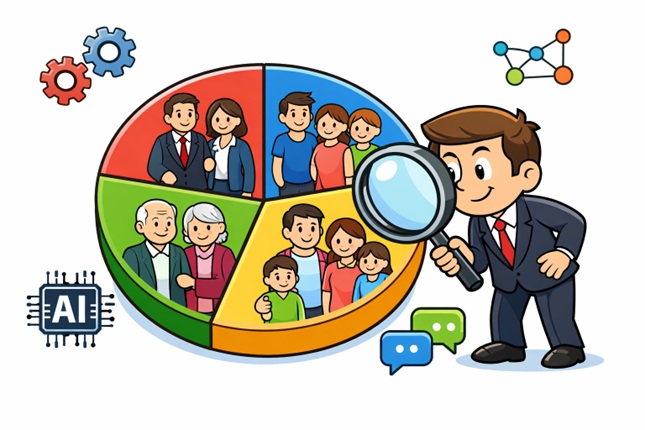
The B2B ecosystem is undergoing a profound shift toward precision marketing, wherein companies deploy smart data segmentation to sharpen their approach and deliver more impactful customer experiences. By dividing vast audiences into meaningful groups, businesses can efficiently cater to unique needs with well-tailored offerings. Early movers already see measurable benefits in engagement and conversions through such targeted strategies. Learning the fundamentals of segmentation, including firmographic data, from experts like DataLane can accelerate effective B2B outreach.
As organizations place a premium on relevancy and personalization, refining data segmentation is not just a trend but a necessity. It empowers marketing and sales teams to move beyond generic blasts and deliver insightful messages that speak directly to each segment’s priorities. Meeting evolving buyer expectations is essential for both market share growth and customer loyalty.
Increasingly, B2B marketers must also navigate data privacy laws and the expectations set by consumers and regulators. High-quality segmentation meets these requirements while laying a foundation for sustainable, complaint-friendly growth. Companies that prioritize smart data segmentation now are better positioned for future market transformations.
Ultimately, segmentation is more than just an organizational tool; it is a catalyst for integrated campaigns, intelligent automation, and value-based selling.
The Importance of Data Segmentation in B2B
Data segmentation sits at the heart of successful B2B marketing strategies. By identifying and analyzing common attributes within their target audience, businesses can separate prospects and clients into distinct segments. This process increases the relevance of communications and allows for custom product recommendations, pricing models, and service levels. Well-segmented approaches enable marketers to prioritize high-value prospects and craft journeys reflective of varied industry needs, company sizes, and buying cycles. As noted in Forbes, companies leveraging data-based segmentation consistently outperform those that do not by focusing resources on the most promising opportunities.
Furthermore, accurate data segmentation mitigates marketing budget waste, improves return on investment, and accelerates sales cycles. By categorizing based on behavior, engagement, industry, or firmographic details, brands get much closer to understanding their buyers’ needs and motivations.
AI and Data Integration: A Game Changer
The integration of AI and machine learning has fundamentally advanced B2B data segmentation practices. AI-powered solutions can process and interpret large datasets, frequently updating segments as new data flows in. This allows marketing teams to detect micro-segments with exceptional accuracy and speed, unveiling opportunities that traditional analytics may miss.
Further, AI-driven segmentation is both scalable and adaptive. It automatically adjusts as business environments change, making campaigns more agile and responsive. For example, analytics engines can track content preferences, usage patterns, and even intent signals, delivering precise recommendations to sales teams. The Harvard Business Review highlights how artificial intelligence allows companies to personalize experiences at scale for both acquisition and retention.
Real-World Examples of Effective Data Segmentation
Smart data segmentation is not simply theoretical. Leading organizations across sectors are seeing tangible results by leveraging AI and analytics. For instance, businesses adopting sophisticated data integration and orchestration report significant growth in customer experience and retention. According to recent studies, such companies improve not just their marketing ROI but also their capability to cross-sell and upsell new solutions.
AI-powered platforms in B2B e-commerce have also demonstrated that dynamic segmentation can guide buyers to the right solutions based on real-time behavior and transaction history. The level of personalization achieved rivals that seen in B2C markets, setting a new benchmark for B2B commerce.
Challenges in Implementing Smart Segmentation
Embracing smart segmentation is not without obstacles. Incomplete or inaccurate data hampers the creation of actionable segments, resulting in subpar campaign performance. Integration difficulties arise when legacy systems struggle to support modern analytics platforms. Additionally, enforcing consistency across departments requires cultural change as much as technological alignment.
Compliance with global data privacy laws is an ever-present consideration. Businesses must ensure their data-handling practices are transparent and up to date with the latest standards to avoid reputational and legal risks.
Best Practices for Successful Data Segmentation
- Invest in robust data collection and governance systems to ensure high data quality and integrity.
- Leverage AI and machine learning for ongoing analysis of segmentation performance, enabling dynamic adjustment.
- Encourage collaboration among marketing, sales, and IT to align segmentation strategy with business objectives.
- Continuously review and refresh segmentation models as new trends and data sources emerge.
Companies should also commit to ongoing education for their teams to stay ahead of both technical evolutions and compliance requirements.
Future Trends in B2B Data Segmentation
Advancements in AI and data integration indicate a future where segmentation becomes ever more sophisticated. As B2B e-commerce evolves, the push toward fewer, better-integrated platforms promises greater efficiency and insight. Automation will soon handle much of the segmentation process in real time, creating hyper-personalized experiences for every buyer journey.
Additionally, emerging data points such as account-level intent and social behavior will further refine segments and enable organizations to anticipate needs. The rapid growth in connected devices and digital touchpoints will also broaden access to actionable data for segmentation.
Conclusion
Smart data segmentation has become a foundation for success in B2B marketing. When paired with AI and rigorous data integration, segmentation empowers businesses to deliver precisely targeted experiences and to outpace their competition. As the market continues to evolve, those who invest in data-driven, dynamic segmentation will be best positioned to navigate complexity and secure lasting growth.