


























Bootstrapping a hardware idea is hard enough without bleeding cash on tooling. That’s why more and more founders are skipping pricey steel molds and using urethane casting to get investor-ready parts in weeks, not quarters.
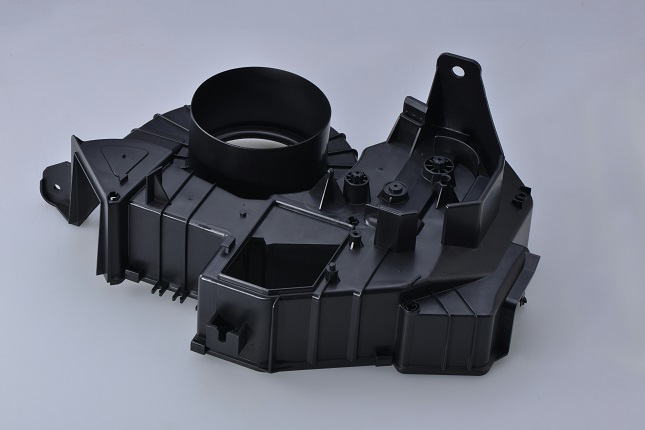
The process combines 3D-printed master patterns with rapid silicone molds, slashing upfront costs while delivering production-grade plastics. If your run size is in the dozens or low hundreds, it’s often the smartest bridge between prototyping and full injection molding.
Below, we rank the six best urethane casting services that give startups the biggest bang for their buck.
Before we dive in, let’s spell out why cast urethane is such a wallet-saver and what criteria we used to separate the true budget allies from the also-rans.
Why Urethane Casting Makes Sense for Cash-Strapped Startups
Urethane casting sits in a sweet spot between 3D printing and injection molding. Silicone tooling is cheap (hundreds, not tens of thousands, of dollars) and quick to make, yet the resulting parts look and behave like molded thermoplastics.
That means you can field-test assemblies, ship pilot runs to paying customers, or impress VCs with production-quality samples long before you can justify hard tooling.
- Urethane casting parts can cost as little as $20–$50 each when volumes stay low.
- Urethane casting avoids long steel-tooling lead times by using silicone molds, cutting turnaround from months to days.
For founders racing against the runway clock, those economics are game-changing.
Criteria We Used to Rank the Best Urethane Casting Services
- Pricing transparency and realistic minimum order quantities (MOQs)
- Standard lead-time commitments and on-time performance
- Breadth of materials, finishes, and secondary services
- Start-up-friendly extras such as online quoting portals, design feedback, and certifications (ISO 9001, ITAR, medical-grade materials)
With that yardstick in hand, let’s meet the contenders.
The Top 6 Best Urethane Casting Services
1) Quickparts — Best Overall Value for Low-Volume Runs
You’ll see the Quickparts name pop up in countless Reddit founder threads, and for good reason. The company has more than 35 years of cast-urethane history and pairs it with an automated QuickQuote® portal that spits out pricing in minutes.
For lean teams that need just a few dozen custom-colored housings, that blend of heritage and high-tech is hard to beat.
- Typical MOQ: Accommodates low-volume projects; exact minimum order quantities and tooling costs are quoted case-by-case through its QuickQuote® portal.
- Average lead time: In-house SLA master-pattern workflow as a way to deliver parts in ‘days, not months’; prospective customers should request current lead-time estimates.
- Materials: ABS-like, PP-like, medical-grade elastomers, UL94 V-0 resins, plus post-ops such as EMI shielding and insert install.
- Certifications: ISO 9001:2015 and ITAR registration reassure aerospace and defense startups.
If you need investor-ready prototypes without overextending your budget, Quickparts is often one of the first quotes teams request—and frequently one of the most competitive.
2) Prototek — Fastest Standard Lead Times
Speed is Prototek’s calling card. The New Hampshire–based manufacturer advertises five-to-seven-day ship times on small batches and routinely hits them. Its quoting team runs 24/7, so West Coast founders can submit a CAD file at 10 p.m. and wake up to DFM notes.
- Lead time claim: parts on your desk in as little as 5 days, mold in hand.
- Price band: entry molds start around $900; parts hover at $30–$45 each for fist-sized geometries.
- Materials: shore-A elastomers down to 25A, glass-filled resins for rugged enclosures.
- Value-add: optional first-article photos within 48 hours to catch design snafus early.
For Kickstarter campaigns with an iron-clad ship date, those few shaved days can prevent a PR nightmare.
3) Fictiv — Simplest Online Quoting
Fictiv turns quoting into a consumer-grade checkout experience. Upload, pick resin, choose color, checkout. Behind the sleek UI sits a global network of vetted partners, so capacity rarely bottlenecks.
- Pricing: the platform shows real-time part/control price curves as you adjust quantity—great for ROI what-ifs.
- MOQ: as low as 2 parts; volume discount tiers kick in at 25, 50, and 100 units.
- Lead time: 10–12 days standard, 7-day expedite available.
- Extras: built-in carbon-offset option lets climate-focused startups keep the optics clean.
If you’re allergic to back-and-forth emails and need a quote before the team stand-up ends, Fictiv delivers.
4) Xometry — Largest Material Library
Xometry’s AI-powered quoting engine pulls from a deep bench of domestic and overseas suppliers, unlocking obscure resin choices most job shops don’t stock. That makes it a favorite for IoT wearables and med-tech devices that need biocompatible or translucent housings.
- Material range: 30+ urethane formulations, including MRI-transparent and FDA-compliant grades.
- MOQ: 5–15 parts; mold costs average $1,200.
- Lead time: 8–11 business days domestic, 12–15 overseas economy tier.
- Certifications: Every U.S. partner holds ISO 9001; some carry ISO 13485 for medical builds.
When the bill of materials calls for something weirder than “ABS-like,” Xometry is usually the quickest match.
5) Midwest Prototyping — Best for Complex Geometries
Now part of Prototek’s family, yet running its own facility in Wisconsin, Midwest Prototyping thrives on tricky organic shapes. Their pattern-makers are known to spend absurd hours finessing hand-polished masters, so gloss-black consumer products don’t show a single layer line.
- Sweet spot: overmold-ready caps, living hinges, and undercuts that would explode the cost of hard tooling.
- Mold life: 20-25 shots typical, perfect for iterative pilot builds.
- Lead time: 10–14 days, including cosmetic painting.
- Extras: in-house color lab can nail Pantone or custom texture swatches.
If your industrial designer’s render is heavy on sweeping curves and charcoals, these artisans will keep the CMF deck intact without breaking the bank.
6) Uniflex — Most Transparent Cost Breakdowns
Uniflex publishes deep-dive blog posts on casting economics—the very article we cited earlier is theirs—and mirrors that openness in its proposals. Quotes line-item every cost driver so founders can tweak wall thickness or batch size and instantly see savings.
- Sample pricing: their blog pegs book-mold creation between $250 and $1,500, and parts at $20–$50 each.
- MOQ: flexible; they’ll run single prototypes if you foot the mold.
- Lead time: 9–12 business days for standard geometry.
- Certifications: 40-plus years of polyurethane expertise with Midwest manufacturing pedigree.
Uniflex is ideal when the board wants a defensible COGS spreadsheet, not just a lump-sum number.
Cost-Saving Tips When Working With a Casting House
- Design for uniform walls. Thick-to-thin transitions cause sink marks and longer cure times, adding post-op labor.
- Batch small parts in one mold. A multi-cavity silicone tool might cost 20% more but churn out parts at half the per-unit tooling cost.
- Negotiate flexible ship windows. Many suppliers discount if they can pour your parts during low-utilization shifts.
- Lock color early. Pigmented resin is cheaper than painting after the fact.
Follow those rules, and you might squeeze another 10%–15% off already friendly urethane economics.
When to Graduate from Urethane Casting to Injection Molding
Urethane wins the first inning, but injection molding dominates once volumes climb into the thousands. A common break-even range is 1,000–5,000 units, depending on part size.
Per-unit costs drop with volume, but upfront injection tooling can exceed $10,000.
If your forecast shows five-figure annual demand and stable geometry, start the DFM chats with mold makers early, so the transition is smooth.
[For more material-science curiosities, see ScienceABC’s explainer on Why Are We So Dependent on Plastic?]
Final Thoughts
For early-stage hardware companies, urethane casting is the fastest, least risky path to real parts that customers can hold. The six providers above combine competitive pricing with startup-savvy support, each shining in a different niche—from lightning-fast turns to exotic materials.
Pick the partner that matches your priorities, keep the design lean, and your cash can go toward the next feature drop instead of the tooling bill.