


























When your building’s heating or cooling system starts acting up, it can bring operations to a halt. Uncomfortable employees become less productive, and customers may leave if the temperature is unbearable. In some cases, you might even face regulatory issues due to unsafe indoor conditions. That’s why hiring a commercial repair service is the next step.
As a business owner or manager, you want to know what to expect during a commercial HVAC repair. Having a clear picture of the process helps everything run more smoothly and reduces stress. Here’s what typically happens:
Initial Contact and Service Scheduling
The repair process starts the moment you contact your HVAC service provider. You’ll usually speak with a dispatcher or customer service representative. They will ask about the symptoms your system is experiencing. Details like unusual noises, temperature inconsistencies, complete system failure, or strange odours are important. This information helps them determine whether you need emergency service or a standard appointment.
During this conversation, the company will also gather information about your commercial HVAC system’s make, model, and age if you have it available. You may be asked about your building size and the areas affected by the problem. Some companies provide time windows instead of exact appointments. With that in mind, plan ahead and ensure someone with building access is on site.
Scheduling HVAC repair in New Bern or your local area ensures prompt action and a faster resolution to your system’s issues. Be sure to work with a reliable provider who has a proven track record and extensive industry experience.
Arrival and Preliminary Assessment
When the service specialist arrives at your commercial property, they’ll first check in with your designated point of contact. Professional technicians carry proper identification and should introduce themselves clearly. They’ll ask you to describe the problem in your own words. Firsthand accounts often reveal details that don’t come through in phone conversations.
The system expert will want to see the affected areas. They may ask when you first noticed the issue and whether any recent events coincided with the problem. This walkthrough gives them context that mechanical diagnostics alone might miss. They’ll also inquire about recent HVAC installations, previous repairs, or system modifications. Having your maintenance records on hand can speed up this phase considerably.
Diagnostic Testing and Problem Identification
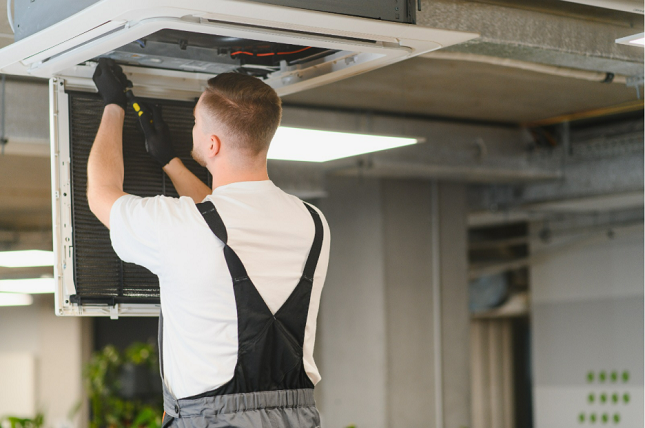
Once the preliminaries are done, the commercial HVAC service begins the inspection. They will access your heating and cooling equipment, which could be on the roof, in a mechanical room, or in a basement. Using specialised tools, they measure temperatures, pressures, electrical currents, and refrigerant levels. Many modern systems also have built-in diagnostics that store error codes, similar to a car’s computer.
This phase can take anywhere from 30 minutes to several hours, depending on the system and the issue. The technician may test components like compressors, motors, thermostats, and control boards. They check ductwork for leaks, inspect electrical connections for wear or damage, and examine refrigerant lines for cracks or corrosion. You may hear the system cycling on and off as they reproduce the problem or confirm their findings. Thorough inspection ensures your building maintains optimal air quality.
Explanation of Findings and Repair Options
After completing their assessment, a reputable technician will explain their findings in terms you can understand. They should avoid excessive jargon while still being thorough about what’s wrong and why it happened. Expect them to show you the problematic component if possible, whether it’s a burned-out capacitor, a frozen coil, or a failed control board.
The technician will then present your options, which might range from a simple repair to component replacement or, in worst-case scenarios, recommendations for system replacement. They should provide cost estimates, explain the pros and cons, and give you their professional opinion on the best path forward.
Many companies require approval before proceeding with a job that exceeds a certain amount. So, be prepared to make decisions or contact whoever has spending authority for your building. More importantly, these options can help improve energy consumption and long-term efficiency.
The Repair Process Itself
Once you’ve approved the work, the technician gets started. Simple fixes, like replacing a filter, resetting a breaker, or adjusting a thermostat, may take just minutes. More complex issues can take hours or even multiple visits if parts need to be ordered. The technician should provide realistic timeframes and keep you updated if any complications arise.
During the repair, you might experience temporary disruptions like complete system shutdowns, water or electricity being turned off in certain areas, or increased noise levels. Professional technicians work efficiently to minimise interruptions and maintain business continuity. They often coordinate timing with you to avoid peak business hours. They also take steps to protect your property, using drop cloths, wearing shoe covers in sensitive areas, and cleaning up thoroughly when the job is done. Final checks are performed to ensure your HVAC system is functioning properly before the service provider leaves.
Testing and System Verification
Repairs aren’t complete until the technician confirms that your system is working properly. They run the equipment through multiple cycles. During this, they check that temperatures reach the desired levels, airflow is adequate throughout the building, and all safety mechanisms are functioning correctly. This phase ensures the repair solved the problem without creating new issues.
The technician will also take final measurements. These are compared to the initial diagnostic readings to confirm that pressures, temperatures, and electrical values are within manufacturer specifications. Some technicians use thermal imaging cameras to check for even temperature distribution. This can reveal hot or cold spots that might indicate other problems. Thorough verification helps maintain the overall efficiency of your HVAC system.
Documentation and Follow-Up Recommendations
Before leaving, your technician should provide detailed documentation of the service performed. This usually includes a description of the problem, parts replaced, labor time, and total costs. Many companies now send digital invoices directly to your email, often with photos of the damaged components and the completed work.
Technicians will also likely suggest a maintenance plan to prevent future problems. This could involve:
- Scheduling regular preventive maintenance
- Replacing aging components before they fail
- Upgrading certain parts of your heating or air conditioning system for improved efficiency
Pay close attention to these recommendations. They’re based on what the technician observed during the repair. Some issues may not need immediate attention, but addressing them early can prevent bigger problems down the line.
Conclusion
A commercial HVAC system will eventually experience issues, no matter how well it’s maintained. Knowing what to expect and staying proactive can prevent small problems from turning into costly downtime. Clear communication with a reliable service team and proper preparation ensure repairs are handled efficiently. Taking these steps keeps your operations running smoothly and protects your investment over the long term.