





























So you just bought a piece of land in San Diego, or maybe you’re planning to build a fence in your Riverside backyard. Everything seems straightforward — until your neighbor shows up saying your fence post is three feet into their property. Suddenly, you’re in a mess you didn’t see coming.
This is exactly why so many property owners in Southern California turn to professional land surveyors before making any move. Not after the problem shows up. Before. And once you understand what these companies actually do — and what’s at stake if you skip that step — you’ll see why people trust them so much.
The Ground Isn’t Always What You Think It Is
Here’s something most people don’t realize: property lines on a map and property lines on the ground are two very different things. Paper doesn’t account for years of shifting fences, overgrown hedges, or old survey markers that got knocked over by a landscaping crew in 1987.
Southern California makes this even more complicated. You’ve got hillside lots in Laguna Beach where the terrain itself shifts. You’ve got older neighborhoods in Pomona and Pasadena where boundary records go back a hundred years and sometimes contradict each other. You’ve got new developments in Temecula sitting right next to older parcels with murky histories.
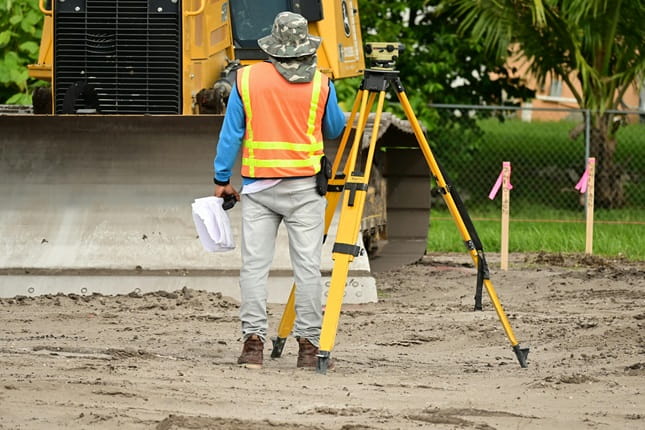
A good Southern California land surveying company knows how to cut through all of that. They pull historical records, check county assessor data, and physically walk the property with professional-grade equipment. What you get back isn’t a guess — it’s a documented, legally recognized measurement.
What Land Surveyors Actually Do (In Plain English)
A lot of people think surveyors just “measure stuff.” And sure, measurement is part of it. But the work goes deeper than that.
Here’s what a typical Southern California land survey actually involves:
- Researching property records — going through deeds, old surveys, and county records to understand the history of your parcel
- Locating existing markers — finding iron pins, concrete monuments, or other physical markers that define your boundaries
- Measuring the land — using GPS equipment, total stations, and other tools to get precise readings
- Documenting everything — creating a legal plat or survey map you can use for permits, disputes, or title purposes
That last part matters a lot. A survey isn’t just a piece of paper you file away. It becomes part of the official record for your property. Banks need it for loans. Cities need it for permits. And if you ever end up in a property dispute with a neighbor, that document is often what settles the argument.
Southern California Has Its Own Set of Challenges
You can’t just take a surveying method that works fine in Kansas and drop it into the hills above Malibu. Southern California has terrain and title quirks that keep surveyors on their toes.
Hillside and canyon properties are notoriously tricky. The lot lines on paper might look clean, but the physical slope of the land makes it hard to determine where exactly one property ends and another begins — especially after erosion or grading changes things over time.
Spanish land grants still affect some property records in Southern California. This isn’t ancient history — these old land divisions created boundaries that don’t follow modern grids, and sorting them out takes someone who really knows what they’re doing.
Wildfire and flood-affected areas add another layer. Properties in places like the San Gabriel Valley or parts of Ventura County have sometimes had their physical markers destroyed or moved. A surveyor has to reconstruct the boundary from records when the markers are gone.
Local companies that have been working in Southern California for years understand these specific challenges. They’ve seen the same types of problems hundreds of times. That experience matters more than most people give it credit for.
The Accuracy Question — Why It’s Not Just About Being Close
“Close enough” is not a phrase that you want to hear in relation to land surveying. A measurement of six inches off from the property line on a lot that is 50 feet in length can make all the difference in creating a legal addition to your home or having to deal with the consequences of an addition that encroaches on another person’s property.
Consider the following example. A homeowner from Chula Vista wanted to add a detached garage onto their property. Before the construction of the garage could begin, the homeowner had a survey of the property performed. The survey revealed that the property line was 18 inches different from where the homeowner had assumed it to be. If the garage had been built without performing the survey, the garage would have built on the neighbor’s property. The costs of fixing this issue after the fact, however, were significantly high.
That’s not a rare story. It plays out all the time across Southern California. And it’s not always about bad intentions — sometimes people genuinely have no idea where their boundary really is.
Southern California surveying companies build their reputation on accuracy because their clients come back — and they refer their neighbors. One sloppy survey can ruin a company’s name in a tight-knit community pretty fast. That accountability drives the quality of their work and the right one comes down to your finances and the prices you’re chasing. If you already own a place, home equity financing for California homeowners can be another way to free up funds for the next purchase, drawing on the equity you’ve built instead of your savings.
What to Look for When Choosing a Land Surveying Company
Not all surveying companies are the same. Before you hire anyone, here are a few things worth checking:
- Licensed by the California Board for Professional Engineers, Land Surveyors, and Geologists — this is non-negotiable. Always verify their license.
- Local experience matters — a company that’s done hundreds of surveys in LA County or Orange County knows local records, local quirks, and local regulators.
- Clear communication — the best surveyors explain what they found in plain language, not just hand you a technical drawing and walk away.
- Turnaround time and documentation — especially if you’re working on a tight permit timeline, ask upfront how long the survey takes and what exactly you receive at the end.
Word of mouth still counts for a lot. Ask your real estate agent, your contractor, or even your title company who they trust in the area. They see surveyors’ work regularly and know whose reports hold up.
It’s Not Just for Big Projects
Some people assume land surveys are only for developers or major construction projects. That’s not true at all.
Homeowners get surveys done for all kinds of everyday reasons:
- Putting up a fence and wanting to avoid a future dispute
- Settling a disagreement with a neighbor over shared property
- Getting a home equity loan when the bank requires a current survey
- Buying a property and wanting to know exactly what you’re getting
- Adding a pool, shed, or ADU (accessory dwelling unit) to the backyard
In fact, with the rise of ADUs across Southern California — especially in cities like Los Angeles, Long Beach, and Santa Ana where housing density is a big topic — surveyors are busier than ever helping homeowners figure out setback requirements and legal boundaries before they build.
The Trust Factor
At the end of the day, people trust Southern California land surveying companies because they’ve seen what happens when you don’t hire one. A fence that ends up in the wrong place. A permit that gets denied. A sale that falls through because the title company flagged a boundary issue.
Surveyors aren’t just measuring land. They’re protecting the investment you made when you bought your property. And in a real estate market as competitive and expensive as Southern California, that protection is worth every penny.
If you’re about to start a project, buy a property, or settle a dispute — don’t guess. Get it measured. A good survey today saves you from a much bigger headache tomorrow.