






























Returns are part of selling online. Every seller deals with them, but not every seller handles them well.
If you are using Fulfilled by Amazon, returns are even more layered because Amazon manages the process, but you still feel the financial hit.
This article walks you through everything you need to know about Amazon FBA returns.
How Amazon FBA Returns Actually Work?
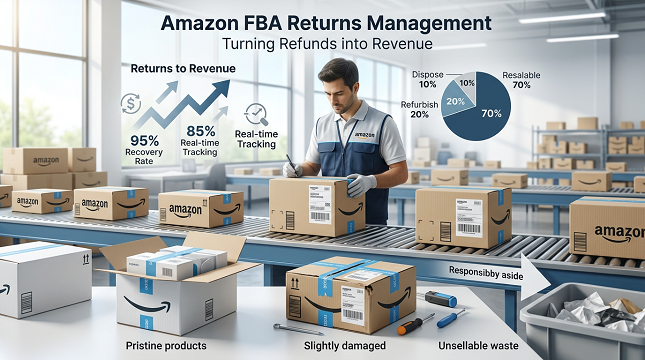
When a customer sends a product back, Amazon receives it at a fulfillment center. From there, the item gets inspected and placed into one of several conditions like sellable, damaged, or unsellable.
If Amazon marks the item as sellable, it goes back into your active inventory automatically. If it is damaged or unsellable, it sits in your account until you decide what to do with it.
Here is where many sellers lose money without realising it. Unsellable items pile up quietly. Storage fees keep running. And unless you are checking your fulfillment center returns report regularly, the problem grows without you noticing.
Amazon does have reimbursement policies for items lost or damaged on their end. But you have to file the claims yourself. It does not happen automatically, and there are time limits on when you can raise a dispute.
Understanding how fulfilled by Amazon returns flow through the system is the first step to managing them properly.
The Real Cost of Ignoring FBA Returns
Sales and ads get all the attention. Returns? Most sellers treat them like background noise until the damage shows up on their bottom line.
Here is what quietly goes wrong when nobody is watching:
Storage Fees Compound Fast
That pile of unsellable stock sitting in Amazon’s warehouse is not just dead weight. It is actively costing you money every single month. Storage fees do not care whether your items are selling or collecting dust. The longer they sit, the bigger the bill gets.
Inventory Gets Miscounted
A return that slips through the cracks does not just disappear. It messes with your numbers. You end up thinking you have more ready-to-sell stock than you actually do. That leads to overselling, unhappy customers, and reorder decisions based on bad data.
Reimbursements Get Missed
Amazon does owe sellers money sometimes. A damaged item here, a lost shipment there, a processing mistake somewhere in between. But they are not going to chase you down to hand it over. If you are not digging into your reports on a regular basis, that money just vanishes without a trace.
Account Health Takes a Hit
A product with a climbing return rate will eventually catch Amazon’s attention and not in a good way. Knowing why items keep coming back gives you a chance to sort the issue out quietly. Deal with it early and you avoid an account warning you never saw coming.
What To Do With Unsellable FBA Returns
Once an item is flagged as unsellable, you have a few options. The right choice depends on the product, its condition, and how much effort you want to put in.
Create a Removal Order
You can ask Amazon to ship your unsellable inventory back to you. From there, you can inspect items yourself, repackage anything in good condition, and resell through other channels.
Use a Third-Party Return Warehouse
Many sellers send returned stock to an amazon return warehouse that specialises in FBA returns. These facilities inspect, sort, repackage, and often relist items on your behalf. It saves time and recovers more value than simply writing stock off.
Liquidate Through Amazon
Amazon has a liquidation program that allows you to sell unsellable inventory in bulk at a discount. You will not get full value, but you recover something rather than paying ongoing storage fees.
Dispose of It
For low-value items where recovery costs more than the product is worth, disposal is sometimes the smartest move. It clears space, stops storage fees, and keeps your inventory clean.
How Amazon Warehouse Deals Fit Into the Picture
You have probably seen Amazon Warehouse Deals when shopping on Amazon. For sellers, understanding how warehouse deals work is useful for two reasons.
First, it shows you what happens to some returned inventory at scale. Amazon grades these items, prices them below retail, and sells them through a dedicated channel. This is essentially Amazon’s own version of return recovery.
Second, it gives you a benchmark. If Amazon is selling returned items at 20 to 40 percent below retail, you know roughly what recovered stock is worth in the market. That helps you decide whether to relist, liquidate, or dispose of your own returned items.
Amazon warehouse clearance stock moves quickly because buyers actively look for deals. If you are managing your own returned inventory outside of FBA, pricing it competitively is key to moving it fast.
Building a Smarter Returns Management Process
Reacting to returns is one thing. Building a process around them is another. Here is a simple framework that works for most FBA sellers:
Check your returns report every week. Amazon provides detailed data on what came back, why, and in what condition. Make this a regular habit, not an occasional check.
Audit for reimbursements monthly. Cross-reference your returns against your inventory and payment reports. If Amazon damaged an item or lost it in the system, raise a claim before the window closes.
Set a threshold for removal orders. Decide in advance how long you will let unsellable stock sit before pulling it out. Many sellers use 60 to 90 days as a cutoff.
Track return reasons by product. If the same item keeps coming back for the same reason, that is a signal. Fix the listing, improve the packaging, or reconsider the product entirely.
Conclusion
FBA returns are not just an operational headache, they are a signal worth paying attention to. Every return tells you something about your product, your listing, or your customer experience.
Sellers who manage returns well do not just cut losses. They recover value, protect their account health, and build a cleaner, more profitable operation over time. Start with the basics, build a process, and treat returns as part of your strategy, not an afterthought.
FAQ: Amazon FBA Returns
What happens to my returned FBA items?
Amazon inspects them and marks them as either sellable or unsellable. Sellable items go back into your inventory. Unsellable items stay in the warehouse until you remove or dispose of them.
Does Amazon reimburse sellers for damaged returns?
Yes, in certain cases. If Amazon or the carrier damaged the item, you can file a reimbursement claim. You need to check your reports and raise claims manually within the allowed timeframe.
What are warehouse deals on Amazon?
These are returned or open-box products sold by Amazon at a discount. They come from customer returns that Amazon has graded and repriced for resale.
How do I stop return fees from piling up?
Set up regular removal orders for unsellable stock. Do not let items sit indefinitely long-term storage fees add up faster than most sellers expect.
Is Amazon returns management something I can outsource?
Yes. Many third-party services handle the full process from receiving returned stock to repackaging and relisting. It is worth it if the return volume is high and your team is stretched.