

























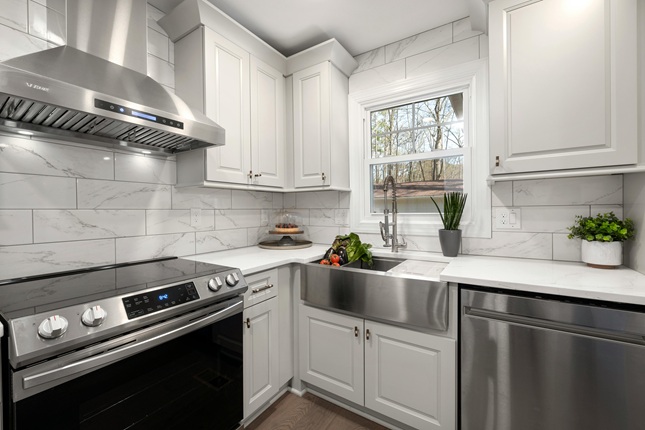
Range hoods occupy an unusual position in most kitchens. They run in the background, they don’t produce food, and they don’t announce their failure the way a refrigerator or oven does. A refrigerator that stops cooling makes itself known within hours. A range hood that’s losing suction, making noise, or venting ineffectively can go unnoticed for weeks — because most people don’t have a clear baseline for what a properly functioning range hood is supposed to feel like.
That invisibility is what makes range hood problems easy to delay addressing. The kitchen still works. Food still gets cooked. The hood still turns on, even if it’s not doing much. And so the repair call gets pushed back while the actual problem — inadequate ventilation, grease buildup in a failing motor, a fan that’s working at a fraction of its capacity — continues quietly in the background.
Appliance Care of Atlanta handles range hood repair across Atlanta alongside a full range of kitchen appliance repairs, with same-day service and flat-rate pricing. Understanding what range hood failures actually look like and what they affect is useful context before getting into what the repair process involves.
What Range Hood Problems Actually Cost You
A range hood that isn’t working properly has consequences that go beyond the appliance itself. Ventilation is the primary function — pulling smoke, steam, grease particles, and cooking odors out of the kitchen and either filtering them or venting them outside. When that function degrades, everything that would have been vented stays in the kitchen instead.
Grease particles that aren’t captured by the hood settle on surfaces — cabinets, walls, the stovetop itself. Over time this creates a cleaning problem that compounds. More practically, smoke and steam that aren’t vented properly affect air quality in the kitchen and adjacent spaces, which matters more in tightly constructed homes where airflow between rooms is limited.
There’s also the fire safety dimension. Range hoods capture grease-laden air before it circulates through the kitchen. A hood that isn’t functioning means more grease accumulation in places where it shouldn’t accumulate — including around the cooking surface itself. This isn’t an immediate danger, but it’s a relevant consideration when deciding how long to defer a repair.
The most common range hood failures follow a predictable pattern. Motor failures are the most significant — a fan motor that’s wearing out produces noise, reduced suction, or both before it fails completely. Replacing a range hood motor is a more involved repair than most people expect, but it’s considerably less expensive than replacing the entire unit, which is often the unnecessary outcome when the repair gets put off long enough that the motor fails completely.
Lighting failures — burned-out bulbs or faulty light sockets — are the simplest category of range hood repair. Control panel issues, including buttons that stop responding or speed settings that don’t work correctly, usually point to the control board or the switch assembly. Ductwork problems, where the connection between the hood and the external vent has developed a gap or blockage, affect performance significantly but are often misattributed to the hood unit itself.
What the Repair Process Looks Like and What to Expect
Range hood repair follows the same diagnostic logic as other appliance repairs — identify the actual cause of the problem before committing to a solution, confirm the repair is the right call relative to the age and condition of the unit, and give the customer clear pricing before any work starts.
Appliance Care of Atlanta arrives equipped for the most common range hood failures, which means same-day completion in the majority of cases. Flat-rate pricing means the cost is clear upfront — no diagnostic fee that turns into a separate repair estimate, no additional charge if a part needs to be ordered and a return visit is required. The repair has a price, and that price doesn’t change based on how the job unfolds.
For Atlanta homeowners with a range hood that’s lost suction, become unexpectedly loud, or stopped working altogether — the repair is usually more straightforward than replacing the unit, and getting it done sooner rather than later avoids the secondary consequences of running a kitchen without functional ventilation.